Searching for pond excavation contractors near me Allegheny County, PA usually means you've already learned the hard way that this isn't a job for a general dirt crew. Clay-heavy hillsides, rocky subsoil, and Pennsylvania's dam safety rules trip up contractors who haven't built ponds here before. This guide breaks down what a qualified local pond builder actually does, what permits apply in Allegheny County, realistic cost drivers, and the questions homeowners ask most before they call.
What to Look For in Pond Excavation Contractors Near Me in Allegheny County, PA
A pond that leaks, silts in, or caves at the edges within a few years almost always traces back to one problem. It was built by a crew without real pond-building experience.
General excavation companies know how to move dirt. Building a pond that holds water for decades requires a different skill set: soil assessment, depth planning tied to actual use, and leak-prevention techniques designed in from day one, not patched in after the fact.
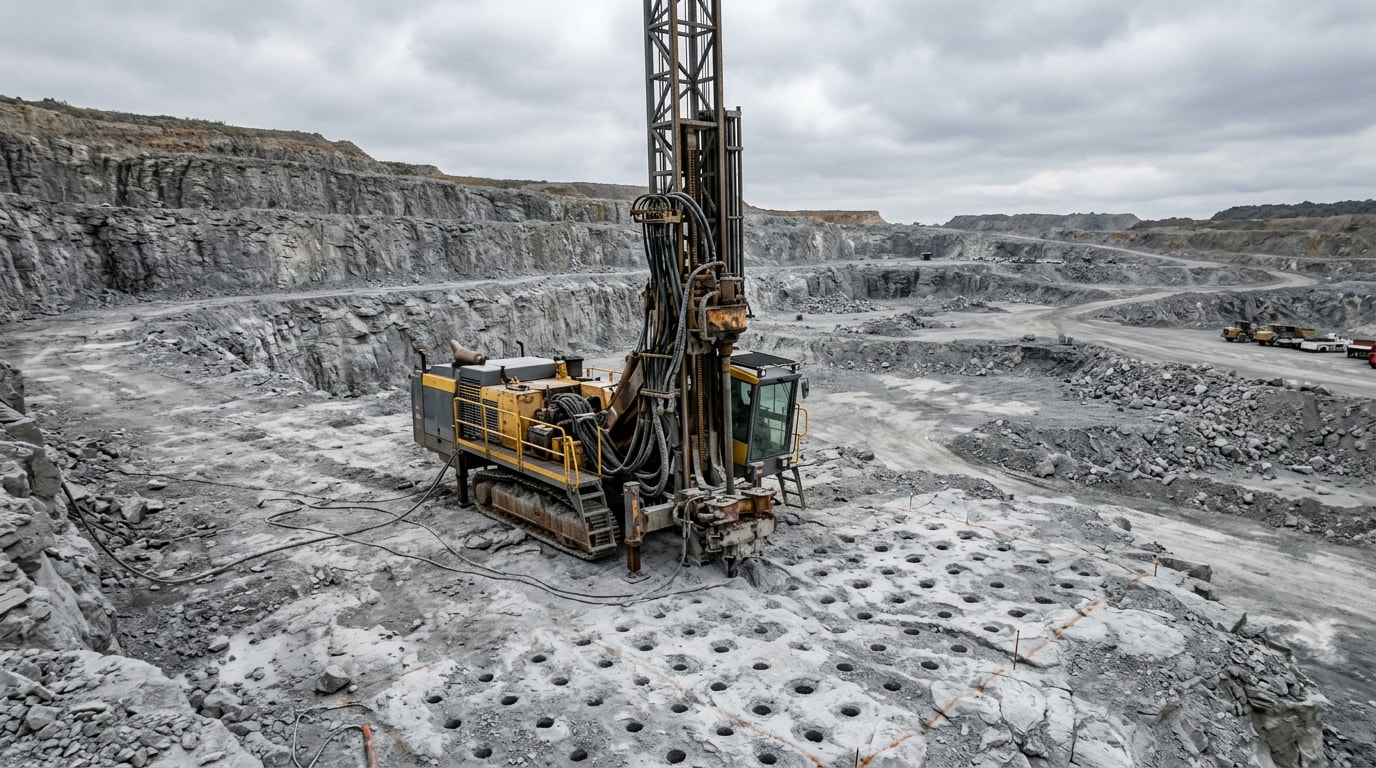
On our own pond builds across Allegheny County's hillier townships, the single biggest site-specific variable has been soil. A basin that holds water fine in loose glacial till can fail completely twenty feet away where bedrock or fractured shale sits closer to the surface. That's why a pre-dig soil evaluation matters more here than in flatter, more uniform counties.
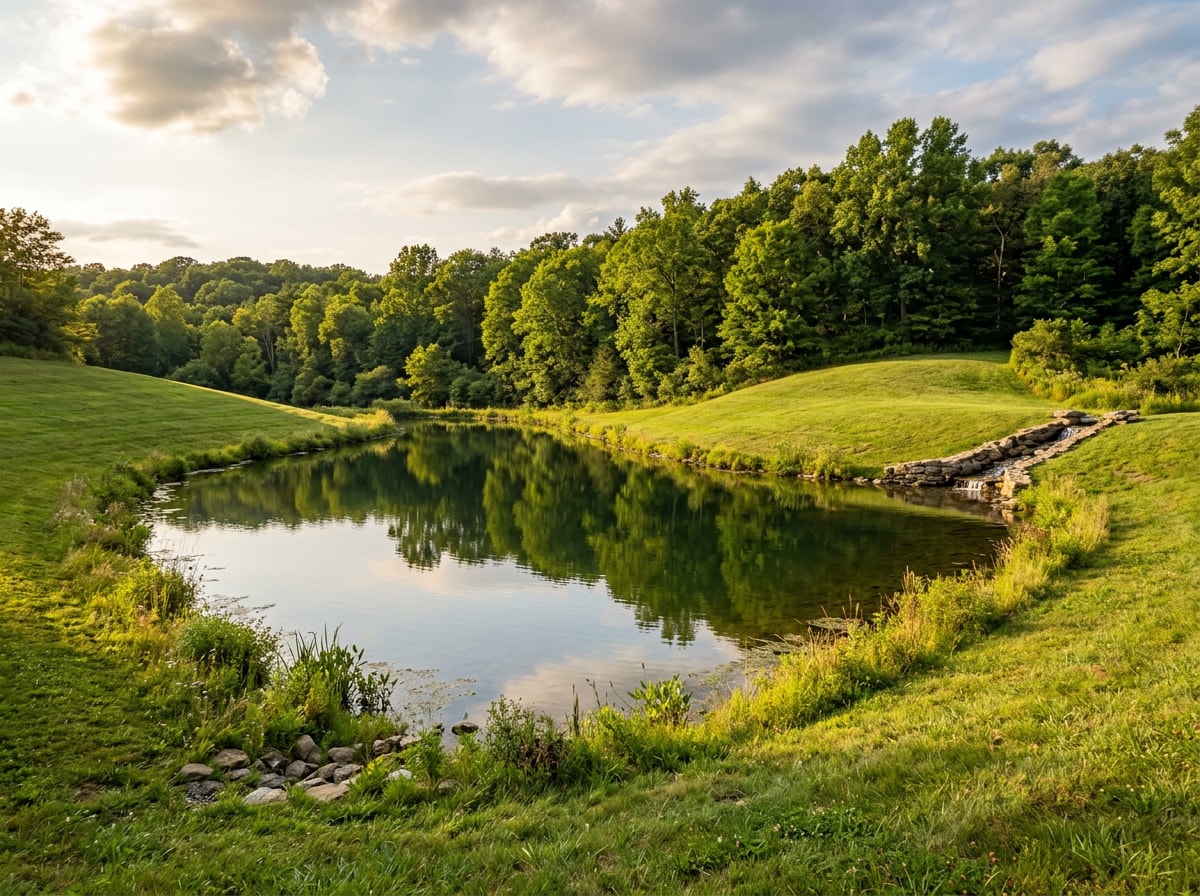
Pond Construction & Excavation Services
Pond-related work covers more ground than most homeowners expect. A full-service contractor typically handles new construction, repairs, clean-outs, and the finishing work that makes a pond functional once the digging is done.
New Pond Construction
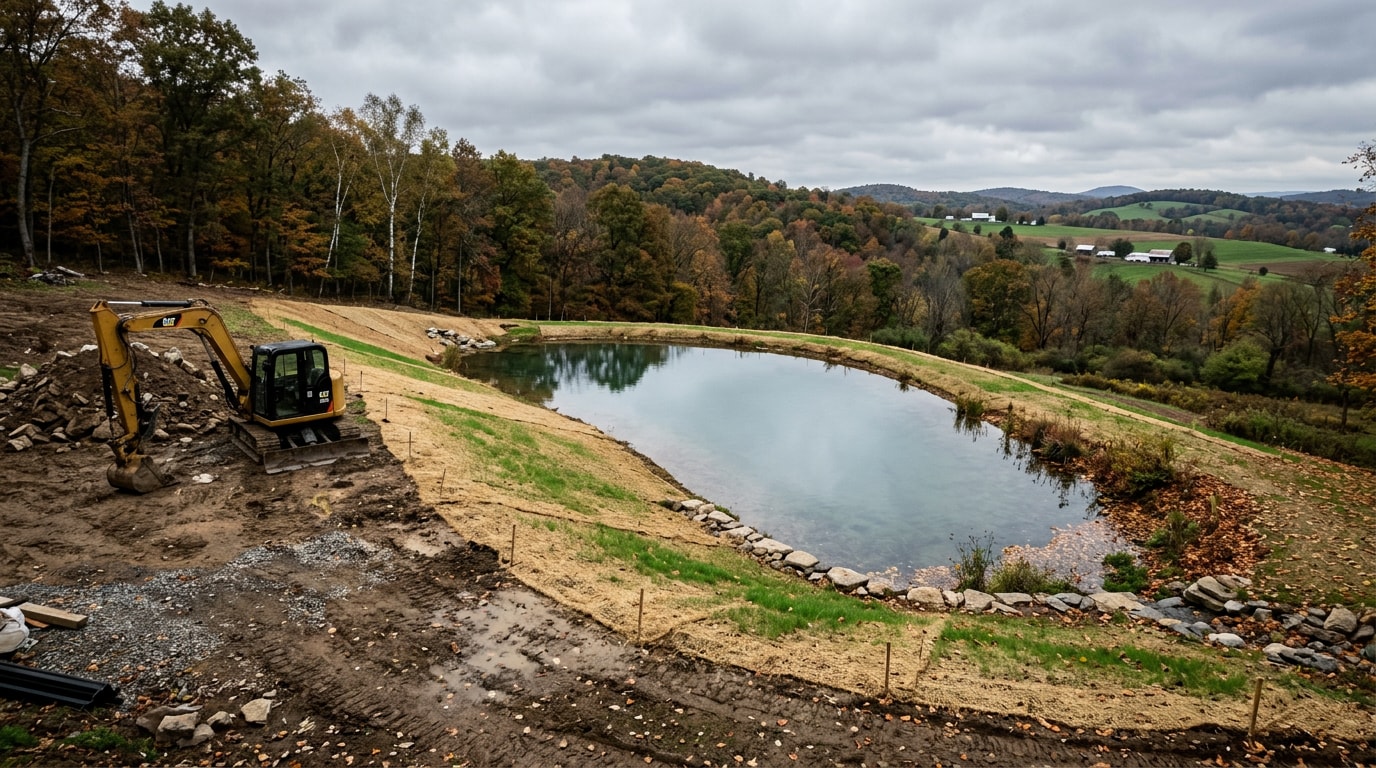
New pond construction starts with the pond's purpose, since irrigation, livestock watering, fishing, and backyard aesthetics each drive different design decisions. From there, the contractor clears the site, shapes the basin to spec, and grades the surrounding ground so water flows the right direction. Slope stability and how the finished pond sits against the existing landscape both factor into the build.
Pond Repair, Dam Reinforcement & Clean-Out
Not every call is for a new pond. Eroding or leaking dams need reinforcement before a small problem becomes a breach. Sediment buildup over the years calls for a clean-out to restore depth and water quality.
Sometimes the job is a full rebuild, tearing out a basin that was never built correctly and starting over. This is a surprisingly common request. Homeowners often discover, years after hiring an inexperienced crew, that their repair needs stem from poor original construction rather than normal wear.
Pond Digging, Water Features & Erosion Control
Digging is the foundation of any project, but finishing work is what makes a pond usable long-term. Many projects include:
- Pump, fountain, or filtration system installation for water features
- Bank sloping and vegetation buffers for erosion control
- Outlet and overflow structures sized for heavy spring rain
Allegheny County's spring runoff is hard on unprotected banks, and proper sloping prevents the slow edge collapse that untreated ponds are prone to.
Our Pond Construction Process
A properly built pond follows a defined sequence, and skipping a step is a common reason ponds fail within a few years.
- Site and soil evaluation. Soil composition and drainage patterns determine how the basin needs to be sealed.
- Permitting review. Confirming whether the project needs a Chapter 105 or Chapter 102 review before any dirt moves.
- Excavation and basin shaping. Digging to the designed depth profile with gradually sloped banks, not steep walls prone to collapse.
- Liner or clay-sealing decision. Depending on soil permeability, the contractor relies on compacted clay or installs a synthetic liner.
- Outlet and overflow construction. Built to pass runoff safely during heavy storms.
- Fill, grading, and finishing. Final grading and any bank planting to stabilize the shoreline.
This sequence generally follows the technical benchmark many contractors use for design and safety. Under the NRCS Pond Conservation Practice Standard (Code 378), a pond is defined as a water impoundment made by constructing an embankment, excavating a dugout, or a combination of both , and the standard sets minimum design criteria for low-hazard pond construction.
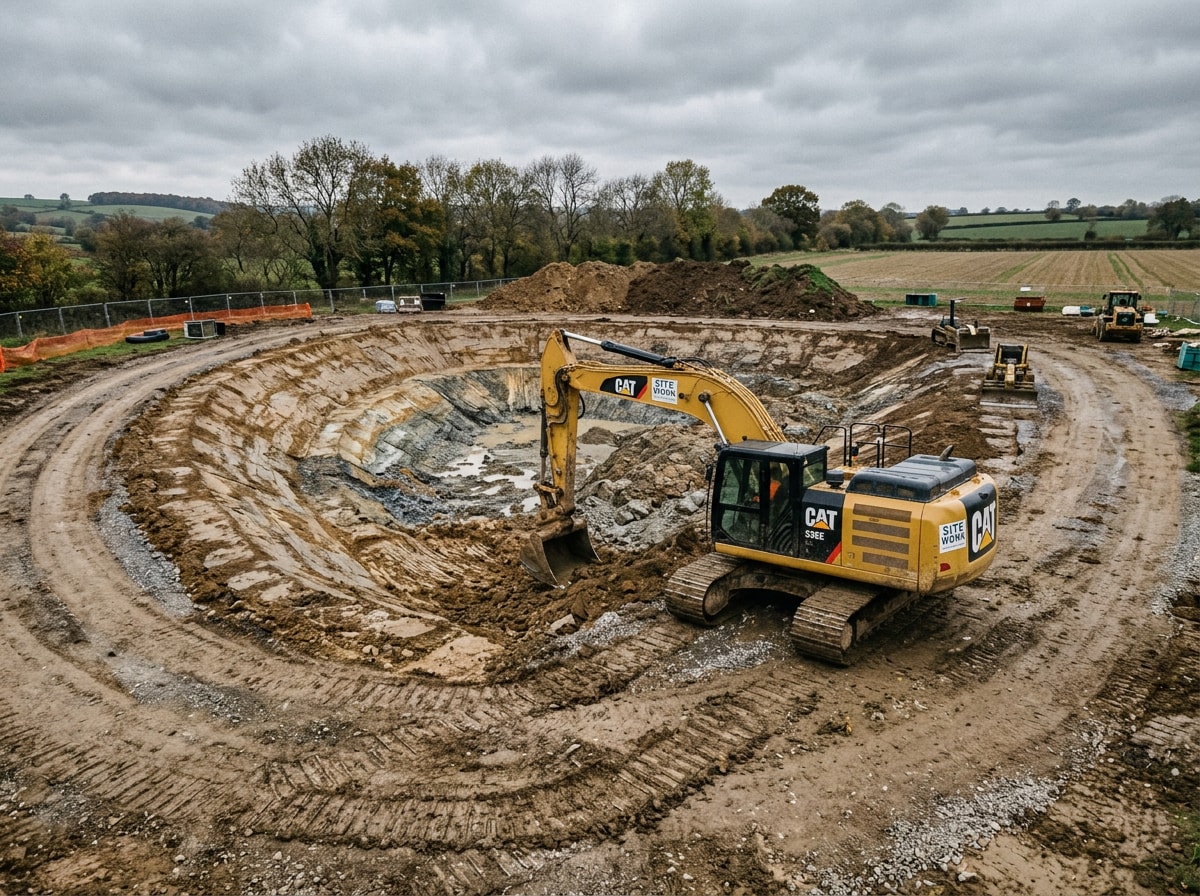
Permits: What Allegheny County Pond Owners Need to Know
This is the part generic pond articles skip, and it's exactly where Allegheny County projects get held up.
New pond construction, modifications to existing ponds, and pond maintenance may be regulated by the PA Dam Safety and Encroachments Act, Chapter 105, and the PA Clean Streams Law, and some activities require approval or permitting from the Department. Whether that applies to your project depends on dam height, drainage area, and proximity to streams or wetlands.
Separately, earthwork itself triggers its own rule. Disturbing one acre or more of land requires an NPDES permit for most construction activities in Pennsylvania, and that threshold catches larger pond digs even when no dam permit is required.
In Allegheny County specifically, that review runs through the Allegheny County Conservation District. ACCD has regulatory authority through an agreement with PA Department of Environmental Protection to operate Chapter 102, Pennsylvania's Erosion and Sediment Pollution Control Program, in Allegheny County , and in the past five years ACCD has approved over 1,100 permits and performed nearly 3,300 site inspections over 110,000 acres to protect the county's natural resources . That volume means review timelines can stretch during busy construction seasons, so it pays to file early.
Before you dig, one of the first contacts you should make is the local Natural Resources Conservation Service office, which can explain regulations, provide soil type information, and make recommendations on pond feasibility or placement .
Other Work That Often Comes With a Pond Project
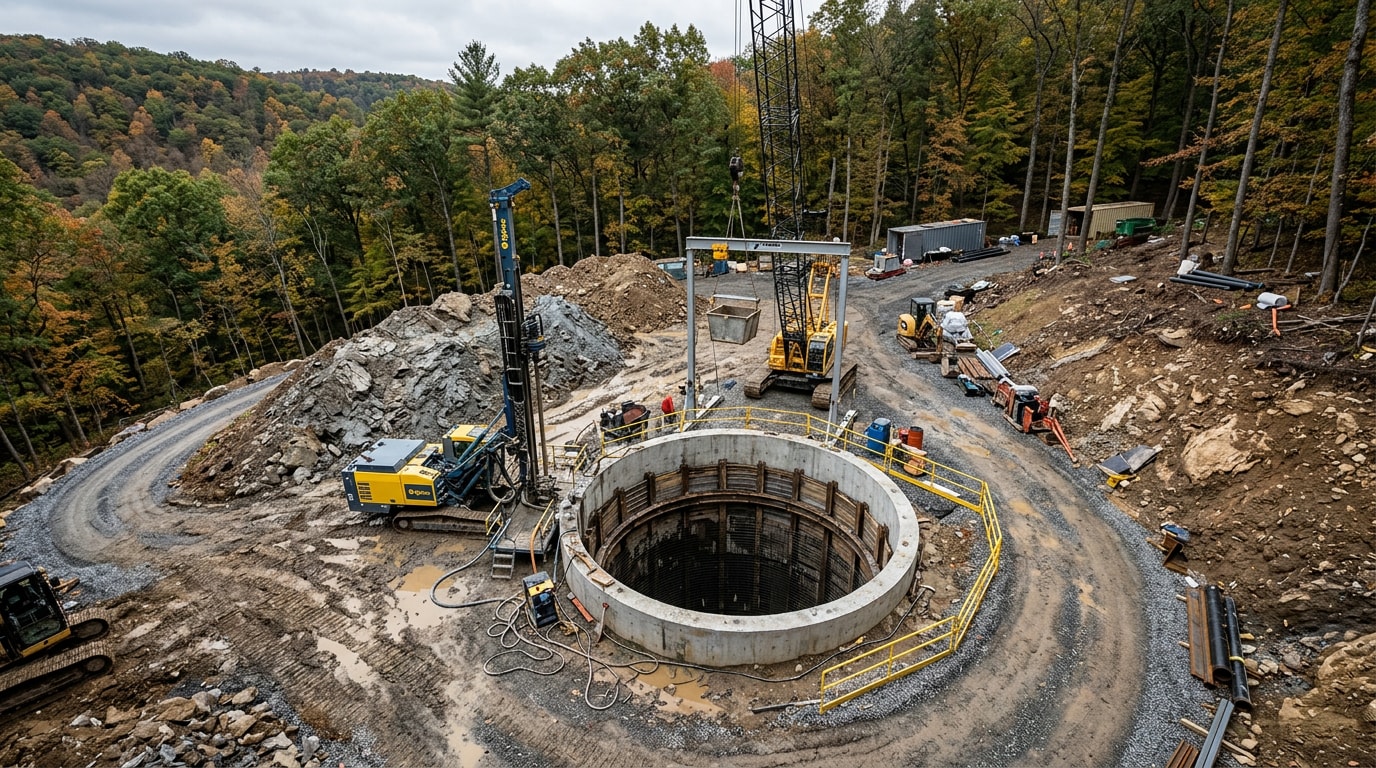
Pond projects rarely happen in isolation. Getting heavy equipment to a build site often requires improving site access, especially on wooded or sloped Allegheny County properties where equipment can't simply drive in. If the route runs through brush or mature growth, that often means pairing the dig with our land clearing services before equipment ever reaches the pond site.
Beyond the pond itself, broader site work, grading low spots, addressing drainage, or regrading areas disturbed by the dig, often gets bundled into the same mobilization. Outlet pipes and overflow lines are a form of trench excavation, and surface water routed away from the finished pond frequently calls for a drainage system installation tied into the surrounding grade.
The practical upside for homeowners is real. Handling excavation and grading alongside the pond build means one crew, one schedule, and no coordinating between separate contractors for related work. If you're also prepping a lot for new construction, our guide to new home construction in Allegheny County covers how site work and permitting overlap on a larger build.
Cost of Pond Excavation in Allegheny County, PA
Pond excavation is a meaningful investment, and the final number depends heavily on size, depth, soil conditions, and site access. Generic online calculators rarely account for Allegheny County's terrain, so it's worth understanding what actually drives the price before requesting a quote.
| Cost Factor | Typical Impact on Price | Why It Matters Locally |
|---|---|---|
| Pond size and depth | High | More cubic yards to move, more time on-site |
| Soil type | High | Rocky or dense clay, common across the county, needs heavier equipment |
| Site access | Medium to High | Wooded or steep lots often need access-road work first |
| Liner vs. compacted clay | Medium | Permeable soils may require a synthetic liner |
| Permitting and engineering | Low to Medium | Larger ponds or those near streams add review time and fees |
Rough industry ranges exist for excavation per square foot, but they rarely hold once liner installation, soil removal and disposal, pump systems, and bank landscaping get factored in. Allegheny County's hilly terrain and clay-heavy soils can push a real price well outside a generic online average, which is exactly why a site visit matters more than a calculator. For a closer look at how site conditions change bids on comparable earthwork, see our guide to concrete coring and site conditions in Washington County.
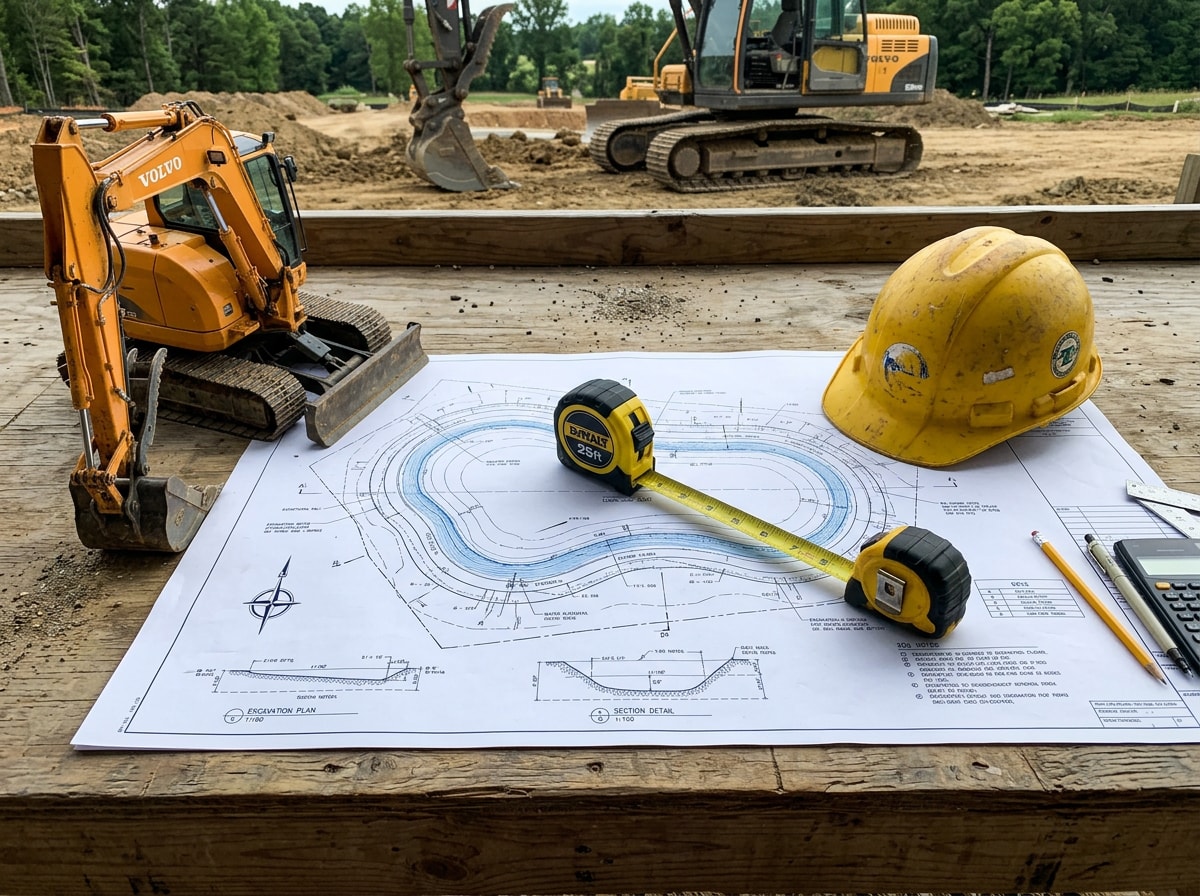
Build or Restore Your Pond in Allegheny County
Whether the goal is to build a pond from scratch or restore one that's failing, it helps to have a few things ready before calling a contractor:
- Clear property access information
- A rough idea of desired size and intended use
- Notes on any known issues like erosion, leaks, or silt buildup
As a pond and excavation contractor serving Allegheny County, we also work throughout Armstrong County, Westmoreland County, and Butler County, so distance is rarely a barrier to getting started. You can browse completed work on our projects page or head to Adirondack Land Management to see our full range of site services.
Request a Free Quote to get a soil assessment and permitting check scheduled.
FAQ
What Is Pond Excavation Service?
Pond excavation service is the professional digging, shaping, and finishing of a pond basin to meet specific design, drainage, and functional requirements. It covers site assessment through final grading, ensuring the finished pond actually holds water.
How Big of a Pond Can You Build?
Contractors build ponds ranging from small backyard features to multi-acre agricultural ponds. Realistic size depends on property dimensions, soil conditions, and permitting thresholds. Disturbing one acre or more generally triggers an NPDES review under Pennsylvania's Chapter 102 program.
Do I Need a Permit to Build a Pond in Allegheny County?
It depends on dam height, drainage area, and proximity to streams or wetlands. Smaller, isolated ponds on dry land often need little to no state-level permitting, while larger or stream-adjacent projects usually need Chapter 105 review plus an erosion and sediment control plan through the Allegheny County Conservation District.
How Long Does Pond Construction Take?
Most residential pond projects take anywhere from a few days to a few weeks of active excavation, depending on size and weather. The full timeline stretches longer once permitting lead time is factored in, especially during busy spring and summer filing seasons.
Can I Choose the Size and Shape of the Pond?
Yes. Custom shape and size are standard, tailored to the property's landscaping goals, available space, and any site-specific constraints found during the initial assessment.
How Much Does Pond Excavation Cost in Allegheny County, PA?
Cost depends on size, depth, soil type, site access, and whether a liner is needed. Rocky or dense clay soils, common across the county, typically push costs higher than easily workable soil. A site visit gives a far more accurate number than any online calculator.
What's the Best Time of Year to Build a Pond in Western Pennsylvania?
Late summer and early fall are usually best. Soil is drier, groundwater levels are lower, and the pond has time to settle before spring runoff tests the banks and spillway.
Will Clay Soil Hold Water, or Do I Need a Liner?
Dense, compacted clay can seal a basin on its own in many parts of Allegheny County. Sandier or more permeable soil usually needs a synthetic liner to prevent seepage, which is why a soil evaluation happens before any design decisions are finalized.