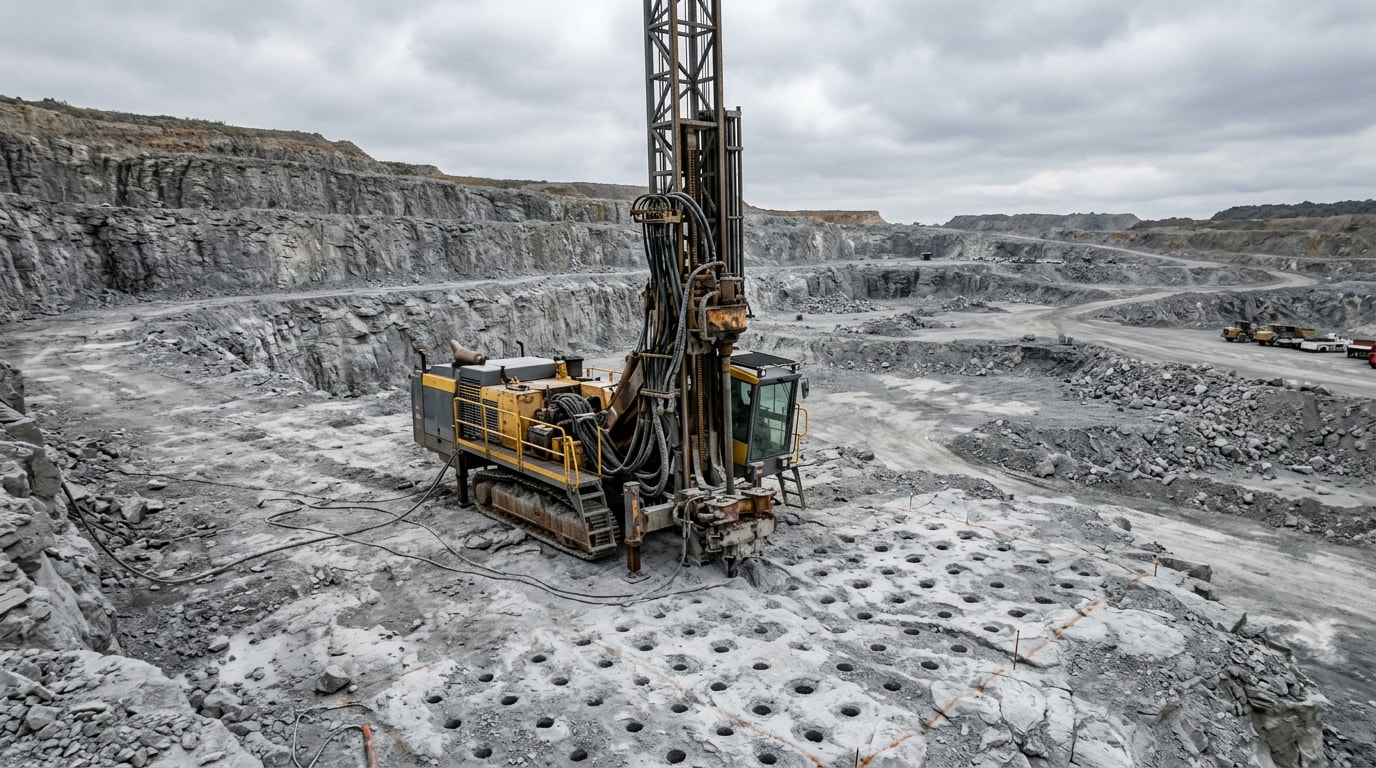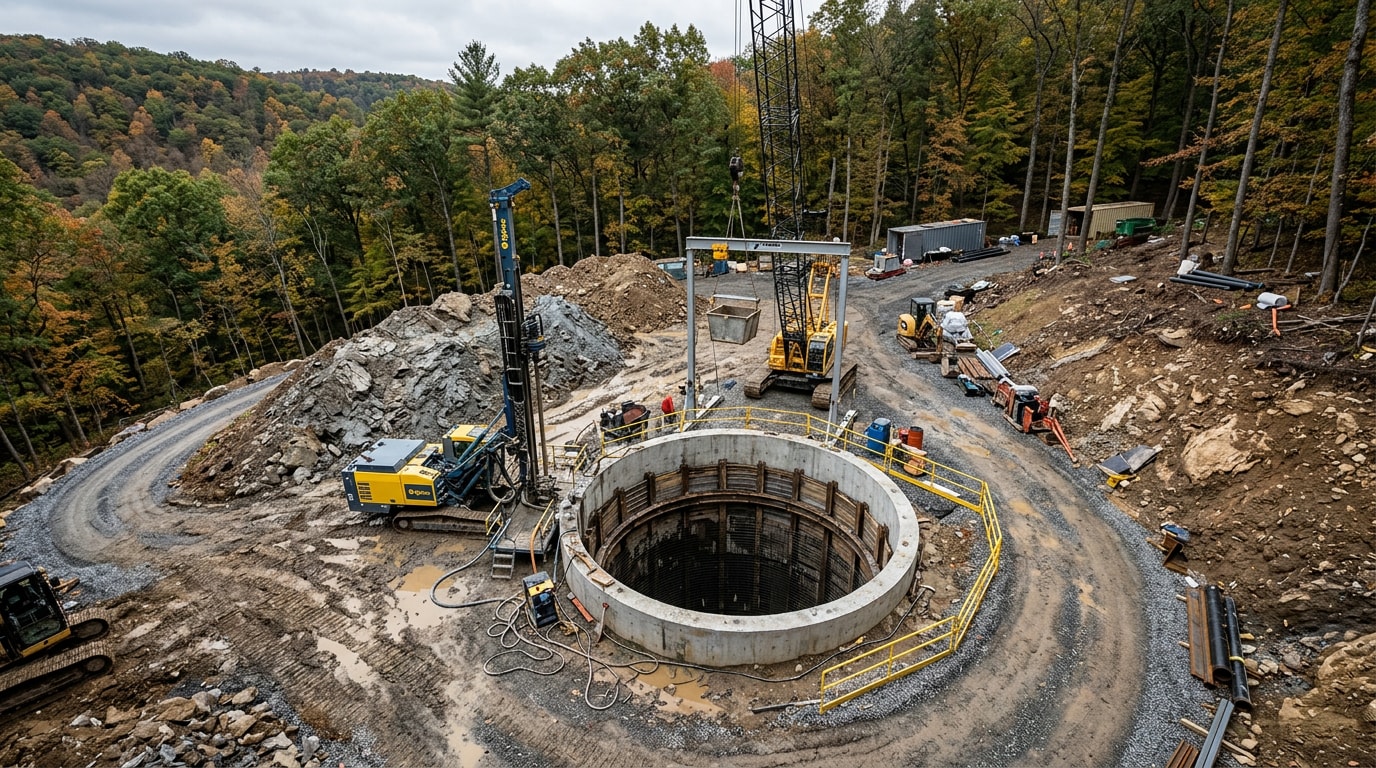

Concrete coring Washington County, PA crews rely on turns a slab, foundation wall, or driveway into a precise, damage-free opening for plumbing, electrical, or HVAC lines. Done wrong, a cored hole cracks the surrounding concrete and turns a one-hour job into a repair bill. This guide breaks down the equipment, the step-by-step process, and the real 2026 cost ranges property owners and contractors across the county can expect before requesting a quote.
Visit Adirondack Land Management to see our services and request a free estimate.
What Is Concrete Core Drilling?
Concrete core drilling uses a hollow, diamond-tipped bit to remove a cylindrical section of concrete instead of breaking the material apart like a hammer drill or jackhammer would. The result is a smooth, exact-diameter hole used for plumbing, electrical, HVAC, and structural testing penetrations.
Hammer drilling and jackhammering rely on impact force, which chips and cracks the surrounding material unpredictably. A diamond core bit cuts through concrete, brick, and even rebar with a rotating motion instead, leaving a clean cylindrical opening behind.
Around Washington County, this method shows up most often in:
- Basement utility penetrations in older stone-and-block homes
- Commercial tenant build-outs that need conduit or duct openings
- Driveway or foundation testing where accuracy matters more than speed
Adirondack Land Management's site crews ({{SITE_URL}}/) work alongside licensed coring subcontractors on these jobs regularly, especially when a utility tie-in or trench also needs grading or backfill once the hole is cut.
What Does Concrete Coring Cost in Washington County, PA?
Several variables shape concrete core drilling cost on any given job: hole diameter, concrete depth or thickness, the number of holes needed, whether rebar is present, and how accessible the drill site is.
A basement penetration with easy access costs less than an overhead commercial hole through reinforced concrete.
| Hole Size | Typical Use | Washington County, PA Price Range* |
|---|---|---|
| Small (up to 2") | Plumbing or electrical penetration | $150–$300 per hole |
| Medium (3"–6") | HVAC ducts, vents | $250–$500 per hole |
| Large (8"+) | Structural testing, sump lines | $400–$900+ per hole |
*These ranges are estimates, not quotes. Actual pricing depends on slab thickness, reinforcement, and site conditions.
Most jobs also carry a minimum charge or setup fee, since mobilizing a rig and crew costs roughly the same whether you need one hole or five. If the opening affects a load-bearing wall or structural element, a permit may be required before work starts. The UCC requires property owners to obtain a construction or building permit before starting any work , so it's worth confirming with your local code official before scheduling a crew.
Need a number tied to your specific slab, wall, or foundation? Get a Free Estimate before work begins instead of guessing from a general price table.
Hidden Costs of Core Drilling
A few fees catch people off guard beyond the per-hole price:
- Mobilization charges cover the crew's setup time and equipment transport.
- Disposal fees cover hauling away core slugs and slurry.
- Rebar surcharges may apply if the bit hits reinforcement mid-drill and needs a specialized bit swap.
This is exactly why proper scanning matters before work begins. A quote built on an accurate scan avoids the mid-job surprises that drive costs up. Paying for scanning upfront is almost always cheaper than discovering rebar the hard way.
Why Contractors Choose Concrete Core Drilling
Builders, plumbers, and electricians often request coring over other cutting methods for two practical reasons.
First, it's low-vibration and relatively quiet, which matters in occupied buildings like offices, hospitals, or homes where residents are still living on-site during the work.
Second, core drilling produces precision holes sized to fit pipes and conduit exactly, rather than the jagged, oversized openings a hammer drill tends to leave. That precision means less patching, less dust cleanup, and fewer unplanned repairs around the finished opening.
Tools & Equipment Used in Concrete Core Drilling
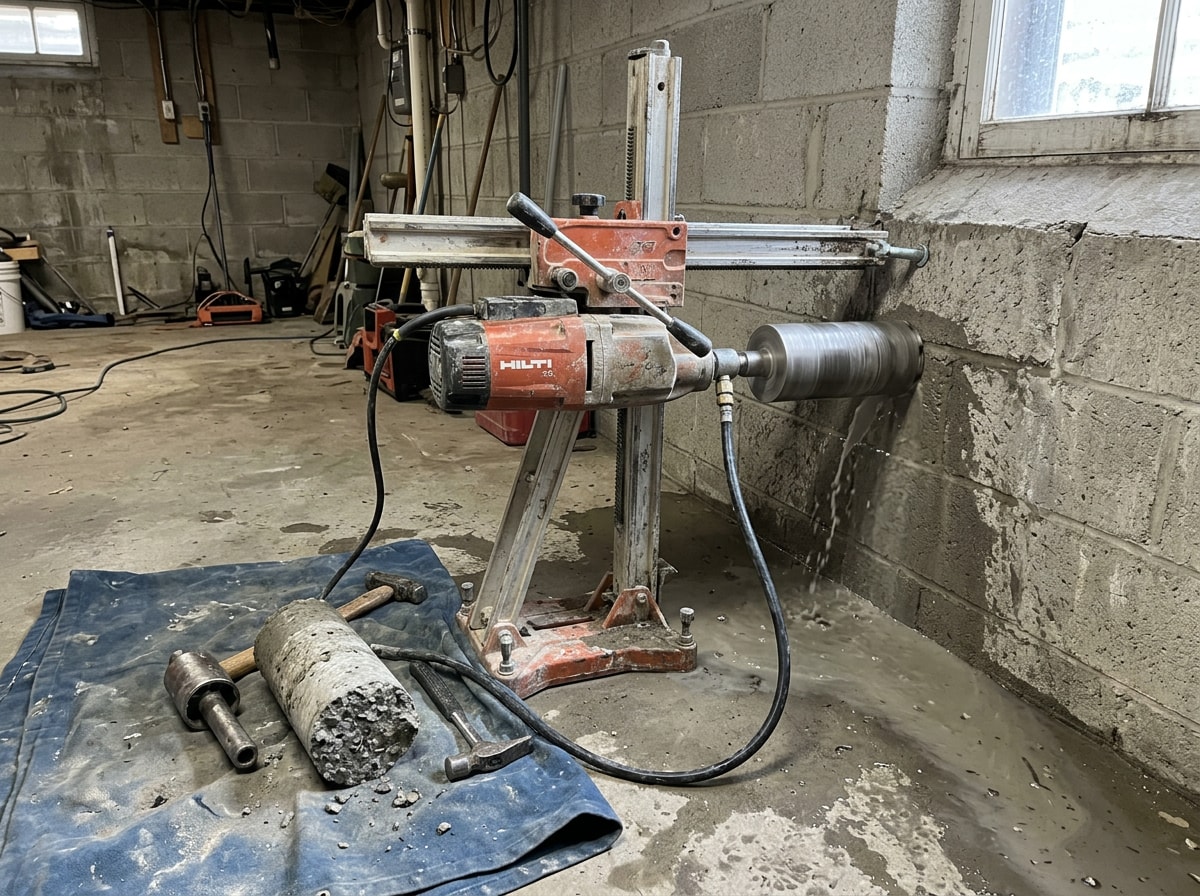
A typical core drilling setup includes a core drilling rig, a set of diamond core bits in various sizes, a water supply system for cooling, and standard job-site safety gear.
Bit size selection depends entirely on the job. A small utility penetration might need a 1-inch bit, while structural testing or large duct openings call for an 8-inch bit or larger.
Handheld vs. Stand-Mounted Rigs
A handheld core drill works fine for small-diameter utility holes, like a single conduit penetration through a thin interior wall. It's faster to set up and doesn't require anchoring.
For anything larger, or for vertical and overhead drilling, a stand-mounted rig is the safer and more accurate choice. The rig anchors to the surface, which keeps the diamond core bit steady and prevents wandering as it cuts through thicker material.
The trade-off is simple: handheld tools offer speed and flexibility, while stand-mounted rigs offer stability and accuracy on bigger or more demanding holes.
Wet vs. Dry Core Drilling
Wet core drilling uses a continuous water flow to cool the bit and control dust, producing a slurry byproduct that needs cleanup. Dry core drilling uses vacuum dust collection instead and tends to suit softer materials or sites where water access is limited.
Contractors generally choose wet drilling for finished interior spaces and exterior slabs, and dry drilling when water-cooled drilling isn't practical, such as upper-floor commercial units without easy drainage.
Why Wet Drilling Is the Standard for Concrete
Water plays two roles during concrete core drilling: it cools the diamond bit, which extends its working life, and it suppresses dust that would otherwise fill the air during cutting. Without that bit cooling, diamond segments wear out far faster and can overheat mid-job.
The one downside is slurry management. Wet drilling produces a mix of water and ground concrete that has to be contained and cleaned up, which is why indoor jobs often involve vacuum attachments or containment barriers around the drill site.
The Concrete Core Drilling Process: Step-by-Step
The core drilling process generally follows the same sequence regardless of job size:
- Scan the area for rebar and embedded utilities
- Mark the exact drill point
- Mount the bit and rig
- Drill with water or dust control running
- Extract the finished core
Here's a representative example of how that plays out on a typical Washington County job. A homeowner in a 1920s–1950s stone-and-block home (common throughout the area) needs a new sump line through the basement foundation wall.
The crew starts with GPR scanning to locate rebar, embedded electrical lines, or old plumbing hidden inside the wall. Older stone-and-block construction can hide surprises, so this step isn't optional.
Once the scan confirms a clear path, the crew marks the drill point and mounts a stand-mounted rig against the wall for stability. Water-cooled drilling begins, with the diamond core bit slowly cutting through the block and mortar while water manages heat and dust.
After reaching full depth, the crew extracts the cylindrical core, leaving a clean opening sized precisely for the sump line sleeve. Drilling itself might take twenty minutes on a job like this; scanning and setup usually take longer.
Jobs like this often pair with other site work, such as trench excavation to run the new line to daylight or a drainage system installation once the core is cut. If your project also needs grading or site preparation around the opening, that's worth scoping at the same time as the coring quote.
Safety Requirements for Core Drilling Crews
Core drilling safety starts with PPE: eye protection, hearing protection, and a respirator or dust mask when drilling dry. Rig stability matters just as much. An improperly anchored stand-mounted rig can shift mid-cut, damaging the bit or the surrounding concrete.
Before any bit touches the surface, crews should confirm there are no hidden utilities, electrical lines, or rebar in the cutting path.
Silica dust is a serious concern on concrete jobs. The standard (29 CFR 1926.1153) requires employers to limit worker exposures to respirable crystalline silica and to take other steps to protect workers , and the standard establishes a new 8-hour time-weighted average (TWA) Permissible Exposure Limit (PEL) of 50 µg/m^3, an action level (AL) of 25 µg/m^3 . Wet drilling or a HEPA-filtered vacuum on dry jobs keeps airborne dust below that limit.
Crews working throughout Washington County, PA should follow these precautions on every job regardless of size. For a closer look at how site work, permitting, and crew scheduling fit together on larger projects, see our Washington County civil constructors guide.
FAQ
How Much Does Concrete Core Drilling Cost?
Core drilling cost typically runs $150 to $900+ per hole, depending on diameter, depth, and site access. See the cost breakdown above for a fuller picture based on local Washington County pricing patterns.
How Deep Can a Core Drill Go Into Concrete?
Core drilling depth depends on the rig. Handheld drills typically manage up to 12–16 inches, while stand-mounted rigs with extended bits can cut through 24 inches or more of reinforced concrete.
How Long Does It Take to Core Drill Concrete?
Core drilling time for a single hole usually runs 15 to 45 minutes once the rig is set up. Scanning and setup often take longer than the actual drilling itself.
Is Core Drilling Priced by the Hole or by the Inch?
Most contractors price by the hole, with the rate scaling by diameter, not a flat per-inch rate. A larger diameter bit costs more to run and wears faster, so bigger holes carry a higher per-hole price even at the same depth.
Do I Need a Permit for Concrete Coring in Washington County, PA?
It depends on what the hole affects. Alterations that exceed the scope of Alterations-Level 1 work and that will be made to existing buildings that are legally occupied typically need a permit under Pennsylvania's Uniform Construction Code. A hole through a load-bearing wall or foundation is more likely to need one than a small interior utility penetration; check with your municipal code official before scheduling work.
Is Drilling a Concrete Core Safe for the Structure of My Building?
Properly scanned and executed core drilling poses minimal risk to structural safety, unlike uncontrolled breaking methods. This test method covers obtaining, preparing, and testing cores drilled from concrete for length or compressive strength or splitting tensile strength determinations under ASTM C42, the industry standard that governs how drilled cores are evaluated, confirming that controlled coring doesn't compromise surrounding material when done correctly.
Does the Type of Drill Bit Significantly Impact the Core Drilling Price?
Yes. A diamond core bit rated for reinforced concrete costs more than a standard bit, and bit wear from harder or older concrete can add time and expense to a job.
---
Ready to scope the full project, not just the hole? Get a Free Estimate and we'll coordinate trenching, drainage, or site prep around your coring timeline so the job moves in one trip instead of three.