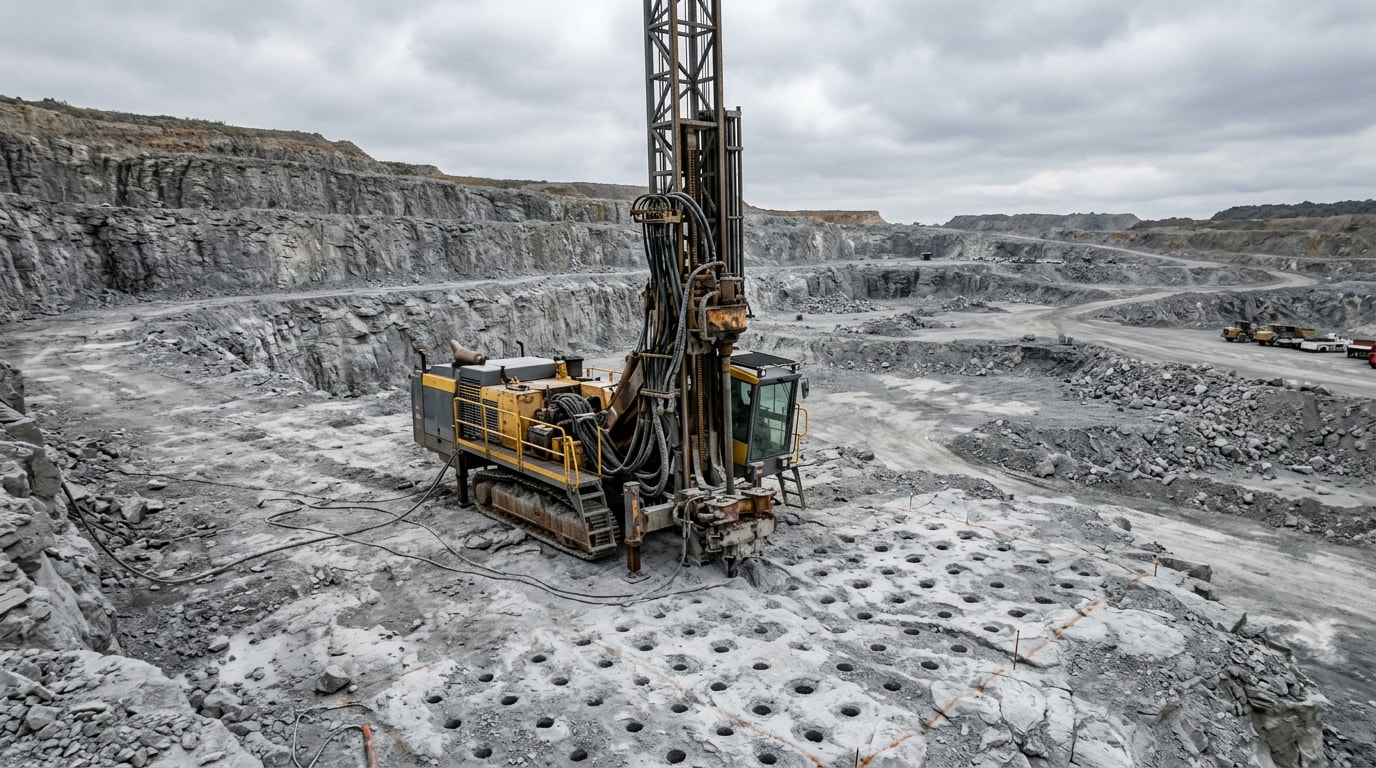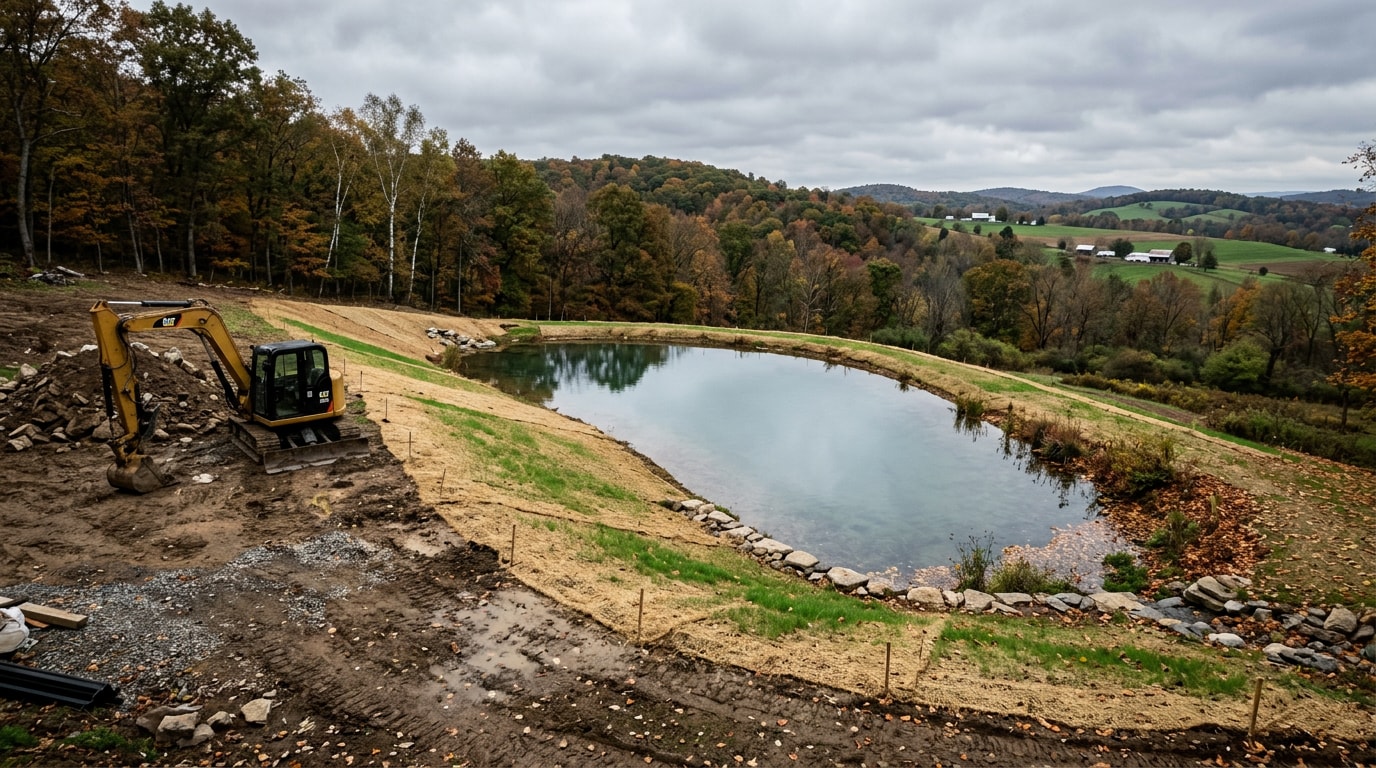
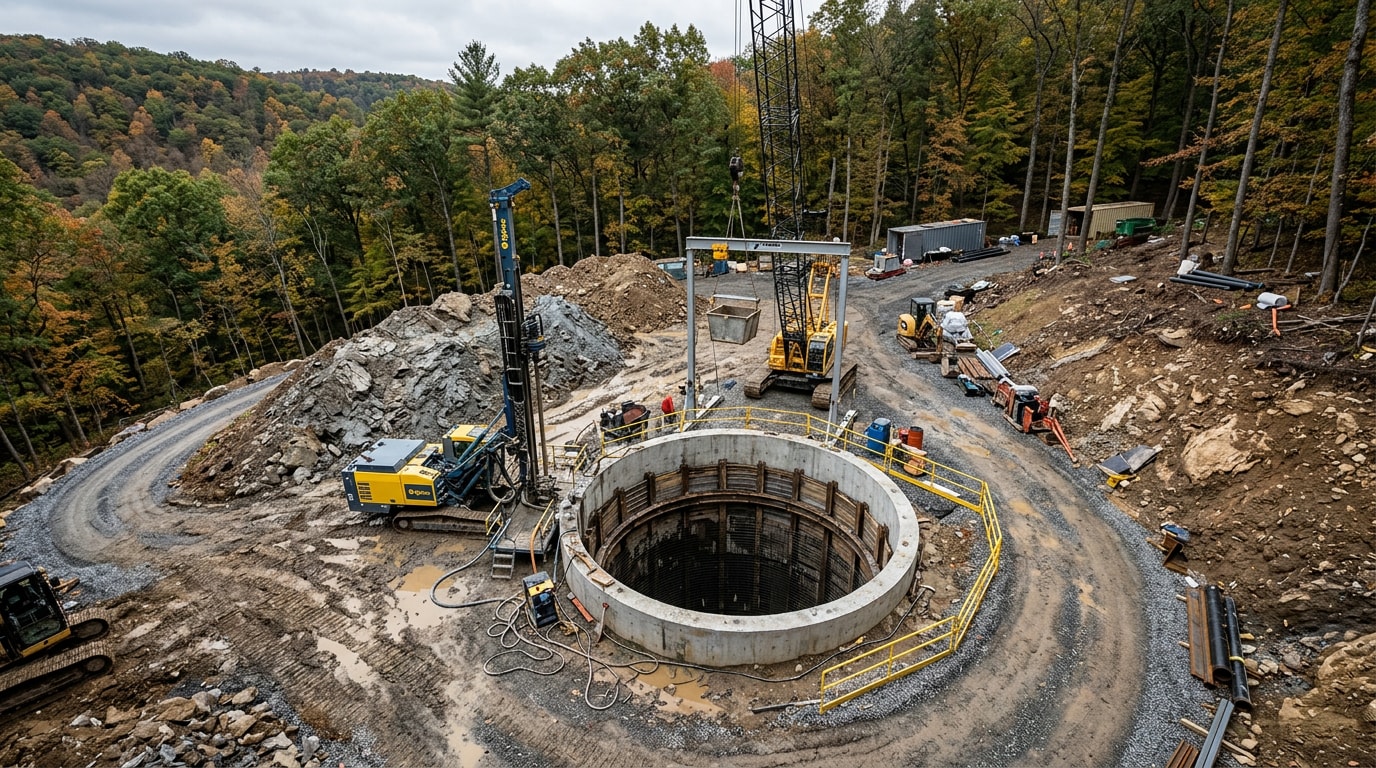
Shaft sinking in Butler County, PA is the controlled vertical excavation used for mine access, deep utility corridors, and heavy foundation caissons, and it behaves very differently from a standard dig once you're twenty feet below grade. Our crews at Adirondack Land Management handle the site-prep and civil excavation side of deep foundation and utility work across Western Pennsylvania's mixed bedrock, where a shaft that looks simple on paper can hit shifting rock or groundwater with no warning. This guide covers how the work actually happens locally, which regulations apply, and how to vet a contractor before anyone breaks ground.
What Is Shaft Sinking?
Shaft sinking is the controlled excavation of a vertical opening from the surface down to a target depth, used to access underground mine workings, install deep utility infrastructure, or support heavy foundations. It combines excavation, ground support, and dewatering techniques to create a stable, lined vertical passage through rock and soil layers.
The practice originated in mining, where crews needed reliable access to coal seams or mineral deposits far below the surface. Shaft sinking is one of the most difficult of all mining development methods, since restricted space, gravity, groundwater and specialized procedures make the task formidable. Over time, the same core techniques, controlled blasting or mechanical boring, temporary and permanent ground support, and continuous water management, were adapted for civil projects like deep foundation caissons and large-diameter utility shafts.
Unlike standard trenching or open-cut excavation, shaft sinking happens in a confined vertical space. Ventilation, structural bracing, and groundwater control all become more critical the deeper the shaft goes.
Common Shaft Sinking Methods
The method a contractor picks depends on rock type, depth, and groundwater conditions. Drill-and-blast remains the standard for hard rock, while mechanical and raise-bore methods reduce vibration in sensitive or populated areas.
| Method | Best Suited Ground | Key Advantage | Key Limitation |
|---|---|---|---|
| Drill-and-blast | Hard, consistent rock | Reliable in competent rock formations | High vibration/noise; muck removal between rounds |
| Mechanical shaft boring | Hard rock near structures or roads | Lower vibration and noise | Higher equipment cost; less common regionally |
| Raise boring | Rock with access from a lower level | Faster once a pilot hole exists | Needs an existing lower working level |
| Caisson / drilled shaft | Soil and foundation-bearing strata | Standard for deep foundation loads | Not suited for mine-depth shafts |
Contractors choose a method based on soil borings, rock competency testing, and the project's depth and diameter requirements.
Why Shaft Sinking Matters in Butler County, PA
Western Pennsylvania's geology shapes how vertical excavation projects get planned and executed, and Butler County is no exception. Understanding local ground conditions explains why shaft sinking here needs careful engineering rather than a one-size-fits-all approach.
Local Geology and Ground Conditions
Butler County sits within the Appalachian Plateau region, where bedrock layers include sandstone, shale, and limited coal seams left over from historical mining activity. These layers aren't uniform; strength and water-bearing characteristics can shift significantly within a short vertical distance.
That variability matters. A shaft passing through soft shale and then hitting a harder sandstone layer may need different support systems at each stage. Groundwater is another factor, since perched water tables and fractured rock zones can introduce unexpected seepage during excavation.
Any serious shaft sinking project in this region should start with a geotechnical investigation, including soil borings and rock core sampling, before excavation design is finalized.
Historic and Modern Applications
Coal mining shaped much of Western Pennsylvania's industrial history, and older mine openings still exist throughout the region. Pennsylvania's Abandoned Mine Reclamation program has funded award-winning reclamation work on sites including Whiskerville West and Annandale South in Butler County. That kind of project frequently involves sealing or stabilizing old shafts and portals left behind by pre-1977 coal operations, which is a direct, documented example of shaft-related work happening in this county, not a generic claim.
Property owners dealing with legacy mine openings, or planning new deep infrastructure work, should treat shaft work as a specialized subset of foundation and geotechnical engineering, not a standard excavation task.
The Shaft Sinking Process, Step by Step
Every project varies, but most shaft sinking work follows a consistent general sequence:
- Site investigation — Geotechnical borings and rock testing establish subsurface conditions and guide the excavation plan.
- Collar construction — A reinforced opening is built at the surface to anchor equipment and support the shaft's upper section.
- Staged excavation — Material is removed in controlled increments, whether through blasting, mechanical boring, or drilling, with each stage assessed before moving deeper.
- Ground support installation — Temporary or permanent linings, shotcrete, steel sets, or concrete rings, stabilize the shaft walls as excavation progresses.
- Dewatering and ventilation — Pumps and ventilation systems manage groundwater intrusion and air quality throughout the dig.
- Final lining and commissioning — Once target depth is reached, the shaft is finished according to its intended use, whether that's mine access, utility installation, or foundation support.
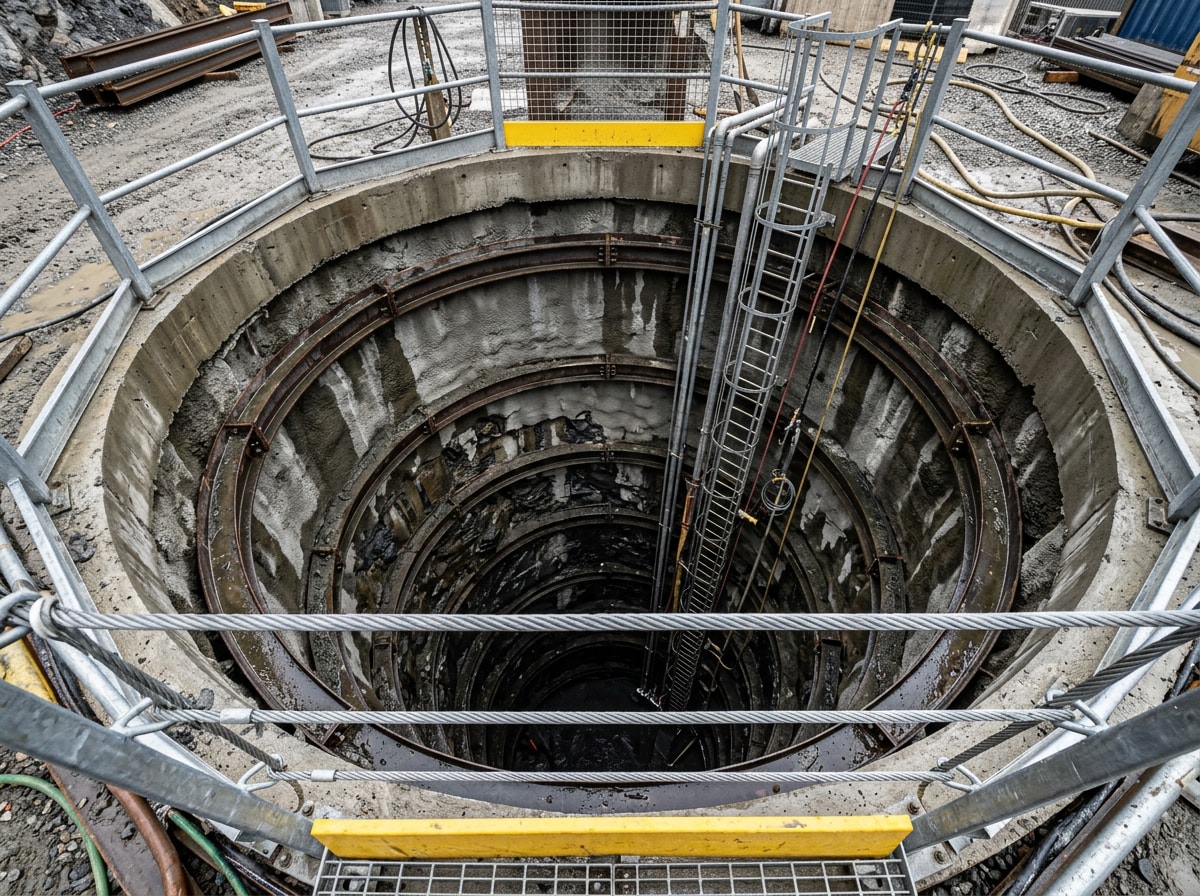
Depth, rock hardness, and groundwater all affect how long each stage takes, so timelines vary considerably between projects even within the same county. Collar construction and staged excavation overlap with standard site preparation and trench excavation work, which is where a general excavation contractor's scope typically ends and a specialized shaft crew's scope begins.
Safety Standards and Regulations
Shaft sinking sits at the intersection of mining safety law and general construction regulation, and the rules that apply depend heavily on the project's classification.
Title 30 CFR 77.1900 requires underground coal mine operators to submit for approval a plan that provides for the safety of miners in each slope or shaft commenced or extended from the surface to the underground coal mine. That plan, reviewed in full in MSHA's Subpart T regulations, governs ventilation, ground support, hoisting, and emergency procedures for any mining-related shaft.
Civil shaft projects, such as deep foundation caissons, are more likely to fall under OSHA's Excavation standards at 29 CFR Part 1926, Subpart P , which OSHA details in its Trenching and Excavation Safety guidance. Open excavation work, including shaft collars, generally falls under this excavation standard rather than confined-space rules, though entering an already-installed pipe, vault, or similar structure inside the excavation can trigger separate confined-space requirements.
Pennsylvania also runs its own oversight through DEP's Bureau of Abandoned Mine Reclamation, which becomes relevant for any project touching legacy coal workings in Butler County. Because jurisdiction can overlap, confirm early in planning which framework applies. That affects permitting timelines, required inspections, and documentation.
Choosing a Shaft Sinking Contractor in Pennsylvania
Shaft sinking is a narrow specialty, and not every excavation or foundation contractor has the equipment or experience for vertical mine-style work. Because this kind of project is relatively uncommon in the Butler County area, expect that a qualified mine-shaft specialist may be based elsewhere in the region or state, provided they carry proper licensing and insurance for Pennsylvania mining and construction work.
For the civil side, site prep, access roads, dewatering trenches, and utility tie-ins, a local general excavation contractor can often run that scope alongside a specialized shaft crew. If your project needs that kind of coordinated site work, see our Butler County site work contractor hiring guide for what to expect from bids and timelines.
Questions to Ask Before Hiring
Before signing a contract, ask any prospective contractor these questions:
- How many vertical shaft projects of similar depth and diameter have they completed?
- What ground support and dewatering methods do they recommend for this specific site?
- Are they licensed for mining-related work in Pennsylvania, if applicable?
- What geotechnical data will they require before finalizing a method and cost estimate?
- How do they handle unexpected ground conditions discovered mid-project?
A contractor who answers these clearly, and insists on a geotechnical investigation before quoting final pricing, is generally a safer bet than one offering a quick estimate without site data. If your project also needs grading, drainage, or utility trenching around the shaft site, get a free estimate from our team and we'll scope the civil portion alongside your specialist.
Costs and Timeline Considerations
Shaft sinking costs vary widely because so many factors directly affect labor, equipment, and material needs. A shallow utility shaft in stable ground costs far less than a deep mine-style shaft through fractured, water-bearing rock.
| Factor | Effect on Cost | Effect on Timeline |
|---|---|---|
| Depth | More material removed, more lining required | Longer excavation and lining stages |
| Diameter | More material removed per foot of depth | More ground support installed per stage |
| Rock hardness | Slower drilling/blasting, more wear on equipment | Slower advance rate |
| Groundwater | Requires pumps, sealing, added labor | Can pause work during heavy inflow |
| Ground support type | Steel sets or concrete cost more than minimal shotcrete | Added installation time per lift |
Timelines follow a similar pattern. Simple shafts might take a few weeks, while deeper or more complex projects, particularly those requiring staged ground support and continuous dewatering, can stretch across several months. Treat any early estimate as preliminary until geotechnical data confirms what's actually underground. If your project also involves drainage or utility installation around the shaft site, plan that scope into the same timeline rather than scheduling it as an afterthought.
About the Author
This guide was prepared by the estimating team at Adirondack Land Management, a Western Pennsylvania excavation and site-work contractor serving Butler County and the surrounding region. We coordinate the civil excavation, grading, and dewatering side of deep foundation and utility projects, and we work alongside licensed mining specialists when a project requires true mine-shaft work. For project-specific guidance, contact us directly.
FAQ
What is shaft sinking used for?
Shaft sinking creates vertical access to underground mine workings, deep utility corridors, or foundation systems that need to reach stable rock or soil layers far below the surface.
Is shaft sinking common in Butler County, PA?
It's relatively uncommon today, since active coal mining in the region has declined, but the techniques still apply to deep foundation work, utility shafts, and mine remediation projects tied to the area's historical coal seams, including documented reclamation sites in the county.
How deep can a sunk shaft go?
Depth depends entirely on the project's purpose and ground conditions. Civil shafts might run a few dozen feet, while mining-related shafts have historically gone hundreds of feet deep, depending on the target seam or formation.
What safety rules apply to shaft sinking projects?
Mining-related shafts generally fall under federal mine safety regulations (30 CFR Part 77, Subpart T), while civil shaft and caisson work typically follows OSHA's excavation standard (29 CFR Part 1926, Subpart P). Pennsylvania's own DEP mining oversight applies to legacy coal-related sites.
How much does shaft sinking cost in Pennsylvania?
There's no flat rate because depth, diameter, rock hardness, groundwater, and method all shift the price. Expect a legitimate contractor to require geotechnical data before quoting a firm number rather than giving a ballpark over the phone.
How do I find a qualified shaft sinking contractor near Butler County, PA?
Look for a contractor with documented experience in vertical shaft excavation, proper Pennsylvania licensing for mining or deep foundation work, and a willingness to base their approach on a geotechnical site investigation rather than a generic estimate.