Hiring a new home construction company in Allegheny County, PA means juggling a lot, a budget, and a build schedule at the same time. Hillside terrain, 130 separate municipalities, and wide price swings between neighborhoods make this market trickier than a flat-lot subdivision build somewhere else. Here's the real process, 2026 cost ranges, and the permit details most builder overviews skip entirely.
This guide is maintained by the site-development crews at Adirondack Land Management, who clear, grade, and run utilities on new-construction lots across the county before builders ever frame a wall. That ground-level view shapes everything below.
The New Home Construction Process in Allegheny County
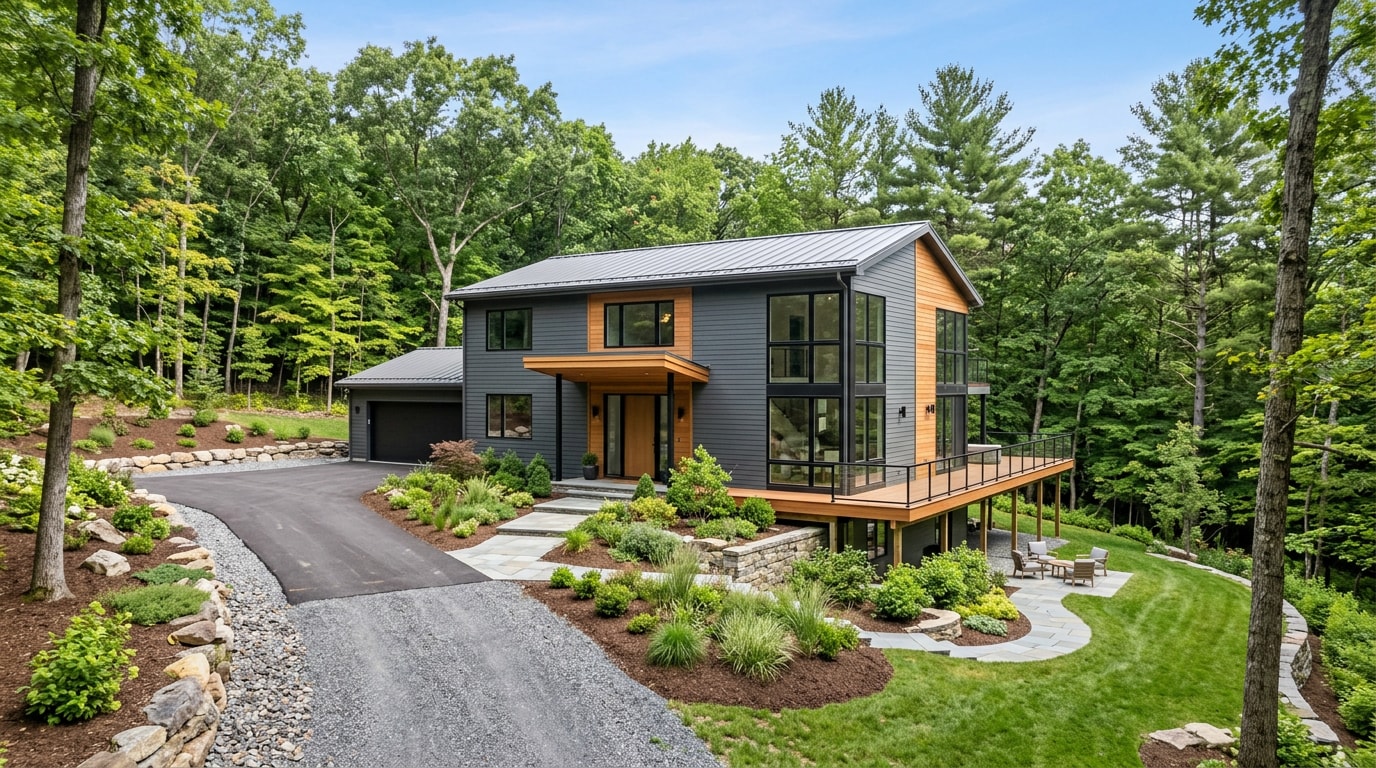
Building a new home here generally moves through five stages: securing a lot, setting a budget, finalizing a design, prepping the site, and signing a construction agreement before building starts. The order shifts slightly from builder to builder, but most reputable companies follow this same basic framework from first call to final walkthrough.
Site Selection and Securing the Right Lot
The right lot shapes nearly everything that follows: footprint, orientation, and even architectural style. Allegheny County's hillside terrain adds a layer flat-lot buyers never think about. Slope, drainage, and floodplain checks matter here as much as zoning does.
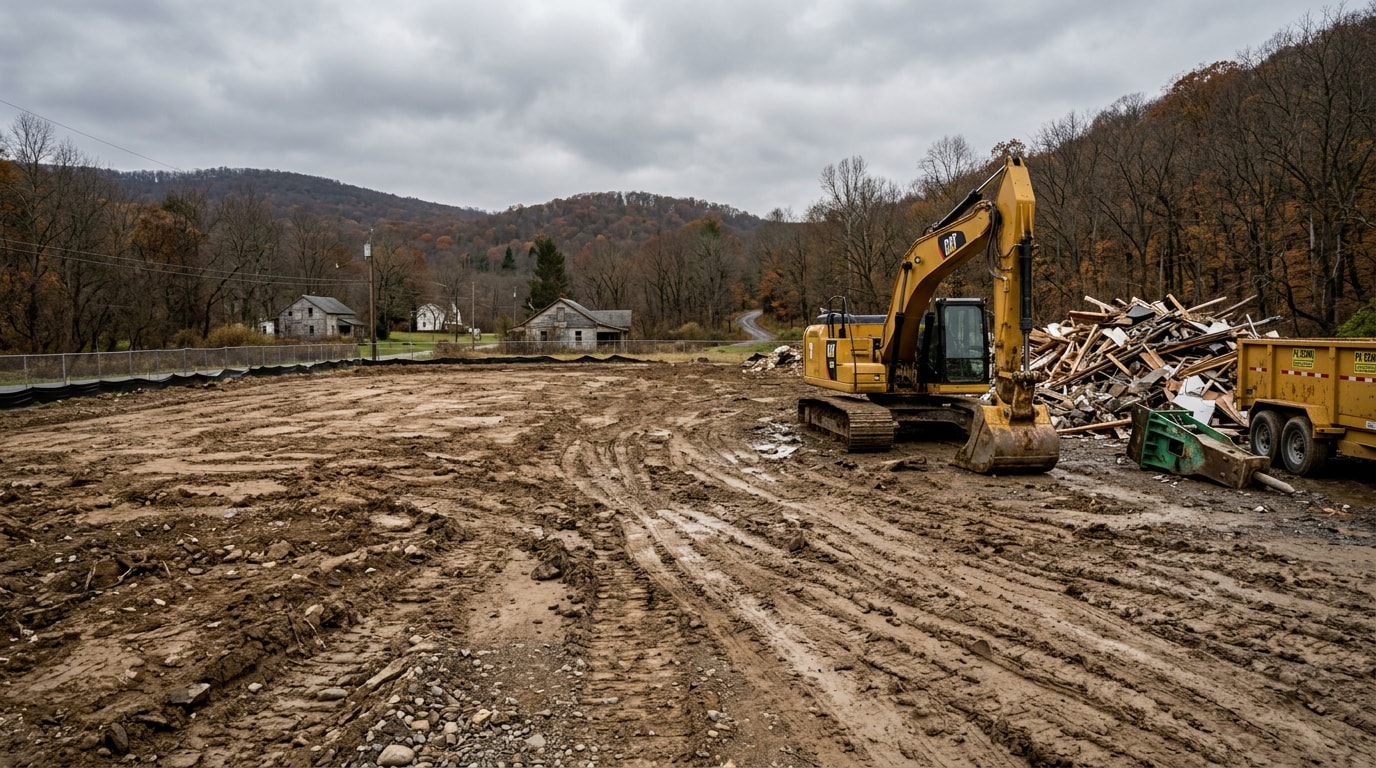
Before making an offer, confirm zoning designations, setback requirements, and whether the parcel sits in a flood-prone area. Lots that look buildable on paper sometimes carry heavy brush, dense tree cover, or decades of overgrowth that need to come out before a surveyor or excavator can even get a clear read on the grade. If you're evaluating a wooded or neglected parcel, a land clearing service or overgrown property cleanup ahead of your purchase offer can reveal problems a drive-by never would.
Budget Planning and Project Estimate
Once a lot is secured, most builders won't move into design work until they've helped you establish a realistic budget. This "budget-first" sequencing keeps design choices grounded in what's actually affordable, instead of forcing a redesign after costs come in high.
A preliminary estimate at this stage is a range, not a fixed number. It accounts for lot conditions, square footage goals, and finish-level preferences. The full cost breakdown, including per-square-foot pricing, is further down this guide.
Design Selection and Blueprint
With a budget range set, attention shifts to the home itself. This stage typically includes design consultations where you review floor plans, discuss structural options, and start narrowing finish selections.
Builders often maintain a library of base plans that can be adapted, which speeds up design selection without starting from scratch. If you want a deeper look at how architect selection and site-prep planning intersect, our custom home architect guide for Clarion County walks through the same decisions buyers face across western Pennsylvania.
Site Preparation, Grading, and Utility Hookups
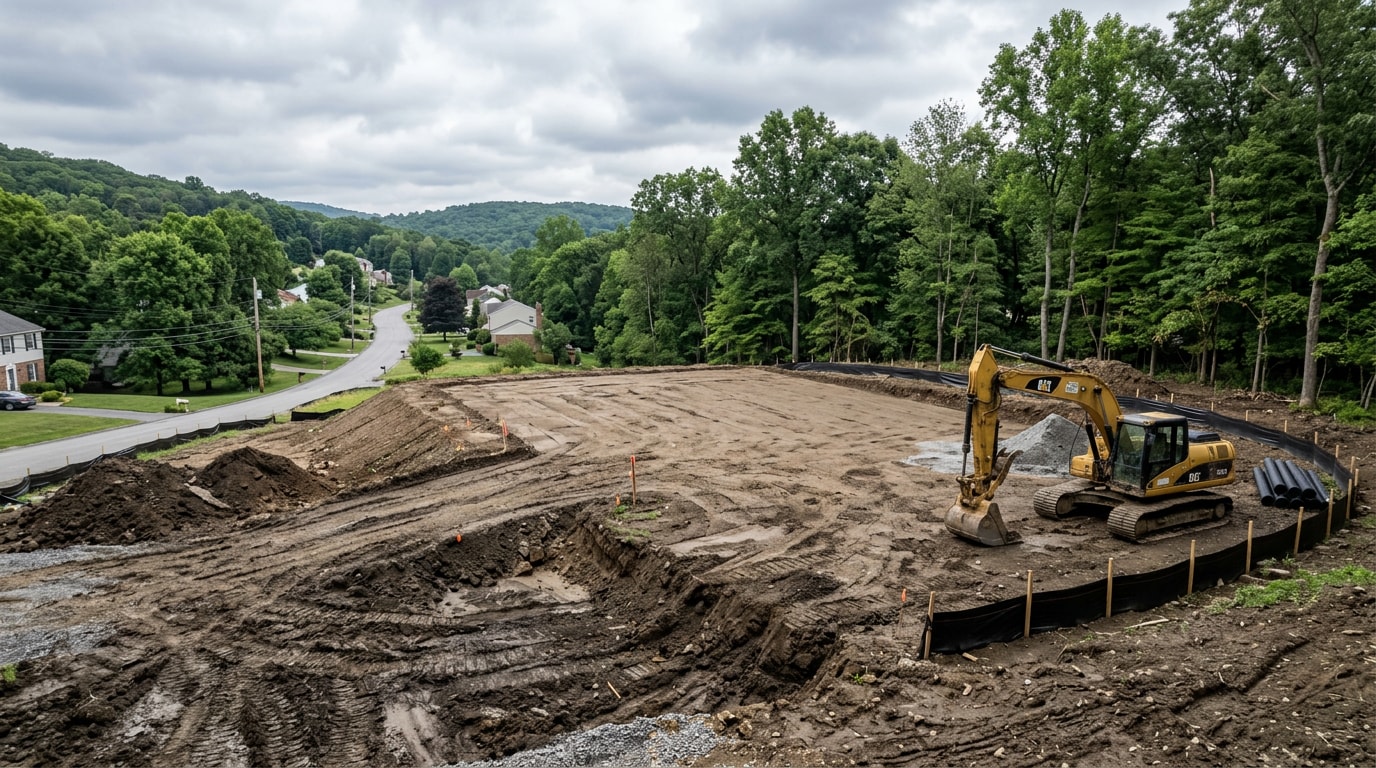
This is the stage most process overviews gloss over, and it's where Allegheny County's terrain actually bites. Before a foundation crew shows up, the lot needs clearing, grading, and excavation sized to the slope and soil conditions on that specific parcel.
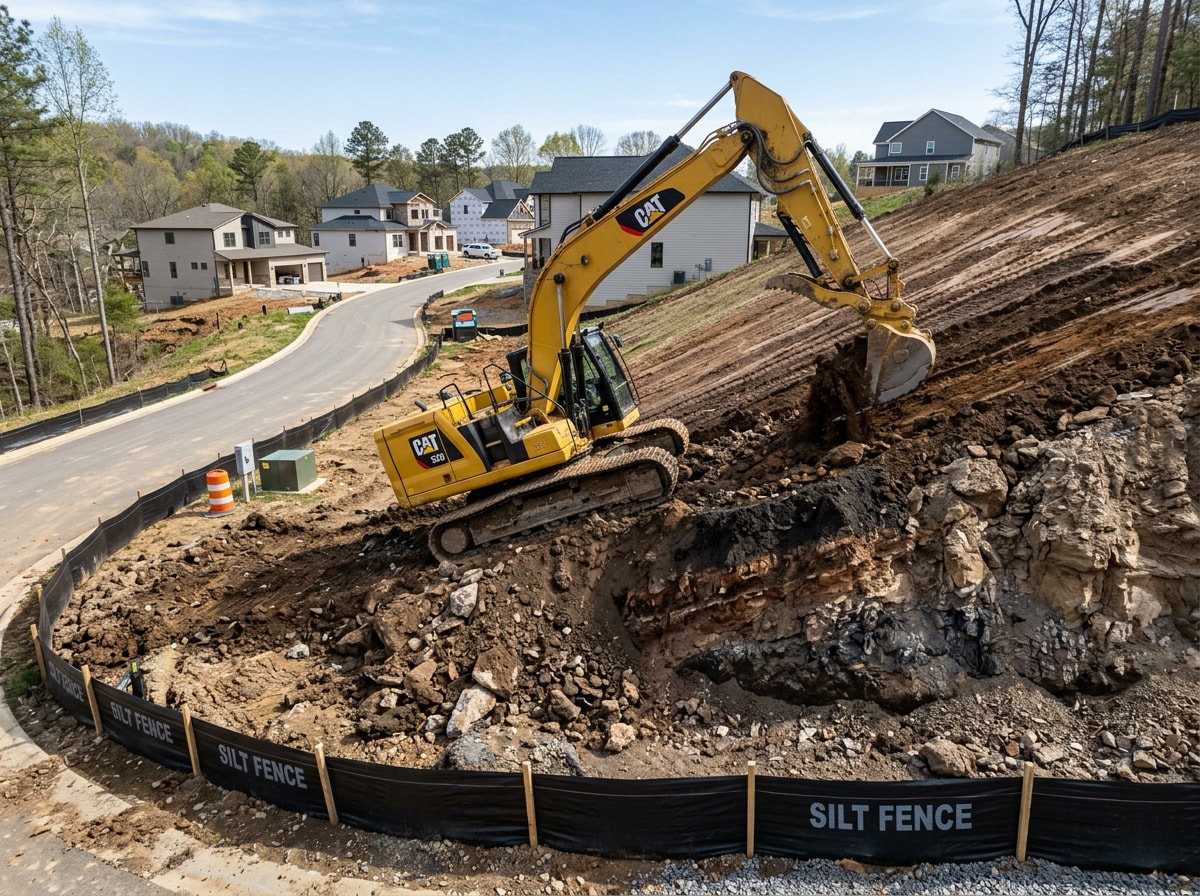
Hillside and wooded lots typically need more than a single pass. A rough sequence looks like this:
- Clearing trees, brush, and stumps from the building envelope
- Site grading and site preparation to establish a stable, properly sloped building pad
- Trench excavation for footings and utility runs
- Drainage system installation and, where needed, French drain installation to manage runoff on sloped parcels
- Waterline, sewer line, and gas line installation tying the home to existing service
Skipping or rushing this stage is where a lot of Allegheny County builds run into trouble later, since a poorly graded pad or undersized drainage system shows up as a wet basement or a cracked slab, not as a line item you can easily trace back. If you want to see completed site-prep and excavation work before committing, our project gallery shows recent lots at each stage.
Construction Agreement and Building Timeline
Before ground is broken, you'll sign a construction agreement outlining scope, pricing, and the building timeline. This is where expectations around change orders, payment schedules, and completion dates get locked in writing.
Nationally, it now takes about 8.8 months from start to finish, including 1.4 months for authorization to start construction and another 7.4 months to finish construction. Custom and owner-involved builds run longer: homes built for sale required the shortest amount of time at 7.4 months, while homes built by owners required the longest at 14.3 months, and homes built by hired contractors took about 11.7 months. Local permitting pace, weather, and site conditions can push an Allegheny County build toward the longer end of that range, especially on hillside lots.
Who Issues Building Permits for New Construction in Allegheny County?
This is the part most guides get wrong: Allegheny County itself does not issue building permits. The county receives and reviews building, demolition and occupancy permits from all Allegheny County municipalities for assessment purposes only. Property owners, representatives, or contractors must file any necessary permits in the municipality where the work is being performed.
That means your actual permit, fees, and review timeline depend entirely on which of the county's municipalities your lot sits in. Pittsburgh handles its own applications, while boroughs and townships each run their own process or contract it out to a third-party agency. Every one of those local processes still has to meet Pennsylvania's statewide building code, the Uniform Construction Code, which the Pennsylvania Department of Labor & Industry administers as the baseline every municipality must enforce or exceed.
Practical takeaway: confirm your specific municipality's permit process and fee schedule before you finalize a budget, not after. A construction company that builds regularly in your township will already know the local reviewer, the typical turnaround, and any quirks in that office's requirements.
Common Mistakes to Avoid When Building a New Home
The most expensive mistakes in new construction usually come from skipped steps, not bad luck. The recurring ones:
- Acting as your own general contractor without construction experience
- Neglecting to confirm permit requirements for your specific municipality
- Underestimating storage, garage, or mudroom space during design
- Ignoring zoning setbacks until after a site plan is drawn
- Cutting corners on drainage or grading to save money upfront
- Forgetting privacy from neighboring lots on tighter infill parcels
- Not budgeting for energy efficiency upgrades
- Failing to plan for future needs like aging in place or a growing family
None of these are fatal if caught early. They become expensive once framing is done. Managing subcontractors yourself might save on builder fees, but it often adds weeks of delay from scheduling conflicts and can trigger permit violations if setbacks or code details get missed, fixes that typically cost more than the fee you were trying to avoid.
How Much Does It Cost to Build a New Home in Allegheny County, PA?
Pricing varies widely by finish level, lot conditions, and municipality. The table below reflects typical 2026 ranges for the county.
| Finish Level | Cost Per Square Foot | Example Total (2,400 sq ft) |
|---|---|---|
| Entry-level / builder-grade | $185 – $245 | $444,000 – $588,000 |
| Mid-range custom | $250 – $340 | $600,000 – $816,000 |
| High-end / luxury custom | $350 – $630+ | $840,000 – $1.5M+ |
These figures cover construction only, not land, permits, or site work. Treat them as a starting reference, since cost per square foot shifts with lot difficulty, material choices, and labor availability.
Pre-Construction Costs to Budget For
Before framing even begins, several costs stack up:
- Site preparation (clearing, grading, excavation): generally $1,500 to $10,000+ depending on lot conditions and slope, which matters more in Allegheny County's hillier municipalities than in flatter suburbs
- Permits: fee schedules are set locally per municipality and typically scale with construction value, commonly landing between roughly $1,500 and $8,000 for a new single-family home
- Architectural fees: usually 5% to 15% of total construction cost
- Utility connections: water, sewer, gas, and electric tie-ins, which vary significantly by how far the lot sits from existing lines
Cost Differences by Municipality
Pricing shifts noticeably across the county. In East Liberty, new-home construction generally ranges from $350,000 to $800,000 or more, while Nevillewood, a golf-course community southwest of Pittsburgh, typically runs $600,000 to $1.5 million. Costs trend lower in outer municipalities such as parts of Moon Township and West Mifflin, where land costs less even as per-square-foot construction pricing stays fairly consistent countywide.
Why Choose a Local New Home Construction Company (and Site-Development Team) in Allegheny County
The gap between an experienced local company and a national volume builder often shows up in the details: permitting familiarity, terrain knowledge, and how much input you actually get on design.
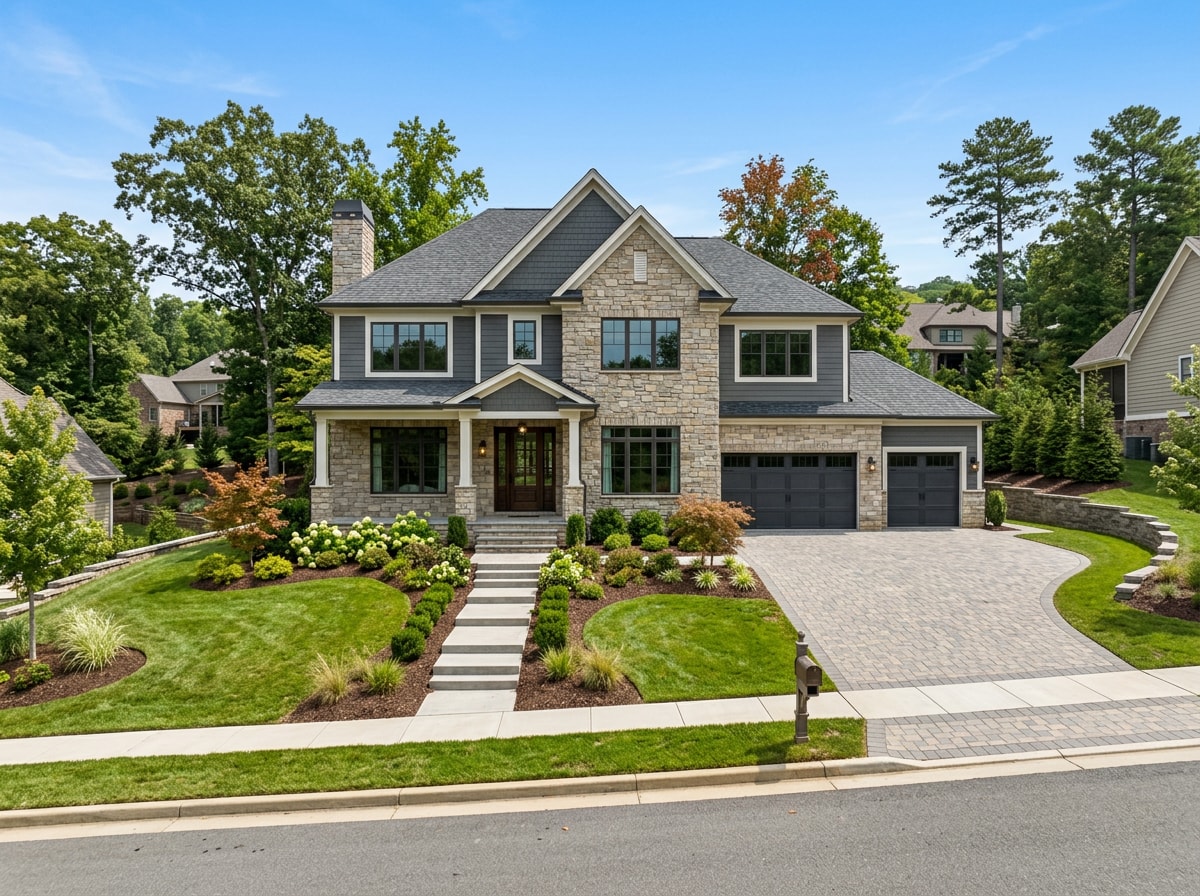
An experienced builder with a long track record in Allegheny County brings something a newer or out-of-area company can't: familiarity with local permitting offices, hillside terrain, and the municipal quirks that vary block to block. That local knowledge translates into fewer surprises during site evaluation and permitting.
Builders working toward recognized efficiency benchmarks, such as the EPA's ENERGY STAR certified new homes program, are also more likely to deliver verified energy performance beyond baseline code requirements, which matters for long-term utility costs in a region with real winters.
The same logic applies to site work. We handle excavation, land grading, and drainage and utility installation for new builds in Allegheny County as well as Washington County, Butler County, and Westmoreland County, so the site-prep side of your project stays coordinated with your builder's schedule instead of becoming its own separate headache.
If you're still comparing lots or trying to figure out what a given parcel will actually cost to prep, get a free estimate before you finalize your budget. It's easier to adjust a plan on paper than after equipment is already on site.
FAQ
How long does it take to build a new home in Allegheny County?
Most custom and contractor-built homes take 10 to 14 months from design approval to move-in, though the national average is 8.8 months from start to finish, including permitting . Larger builds, hillside lots, and homes over 4,000 square feet typically run longer. Ask your builder for a project-specific timeline rather than relying on general averages.
Who issues building permits for new construction in Allegheny County?
Your municipality does, not the county. Property owners, representatives or contractors must file any necessary permits in the municipality where the work is being performed. Allegheny County only reviews the permit data afterward for property assessment purposes.
What does it cost per square foot to build a new home here?
Expect roughly $185 to $245 per square foot for an entry-level build, $250 to $340 for mid-range custom, and $350 to $630-plus for high-end luxury construction, not including land, permits, or site work.
Do I need a separate site-prep contractor, or does the builder handle that?
Some builders subcontract site work themselves; others expect you to line up clearing, grading, and utility installation separately. Ask early in the process which model your builder uses, since it changes both your contract structure and your total budget.
What should I look for when hiring a new home construction company?
Clarify your must-haves, realistic budget, financing approach, preferred location, and timeline expectations before signing anything. Pair that with vetting the builder's municipal-specific permitting experience, since that's where Allegheny County projects most often stall.
Is building a new home in Allegheny County worth it compared to buying an older home?
For buyers wanting lower maintenance, modern efficiency, and layout control, new construction often wins over an older home that needs updates. Whether it's worth it for your situation depends on budget flexibility and timeline. Reach out for a free estimate to get project-specific numbers for your lot.