Land grading in Westmoreland County, PA is the process of reshaping a lot's soil surface, cutting high spots and filling low ones, so water moves where it should instead of pooling against a foundation or driveway. It's the ground-prep step that happens before a patio, driveway, lawn, or addition goes in. Skip it on this county's clay-heavy, hillside terrain, and the signs show up fast: soggy corners, cracked walkways, or a crawlspace that never quite dries out.
What Is Land Grading, Exactly?
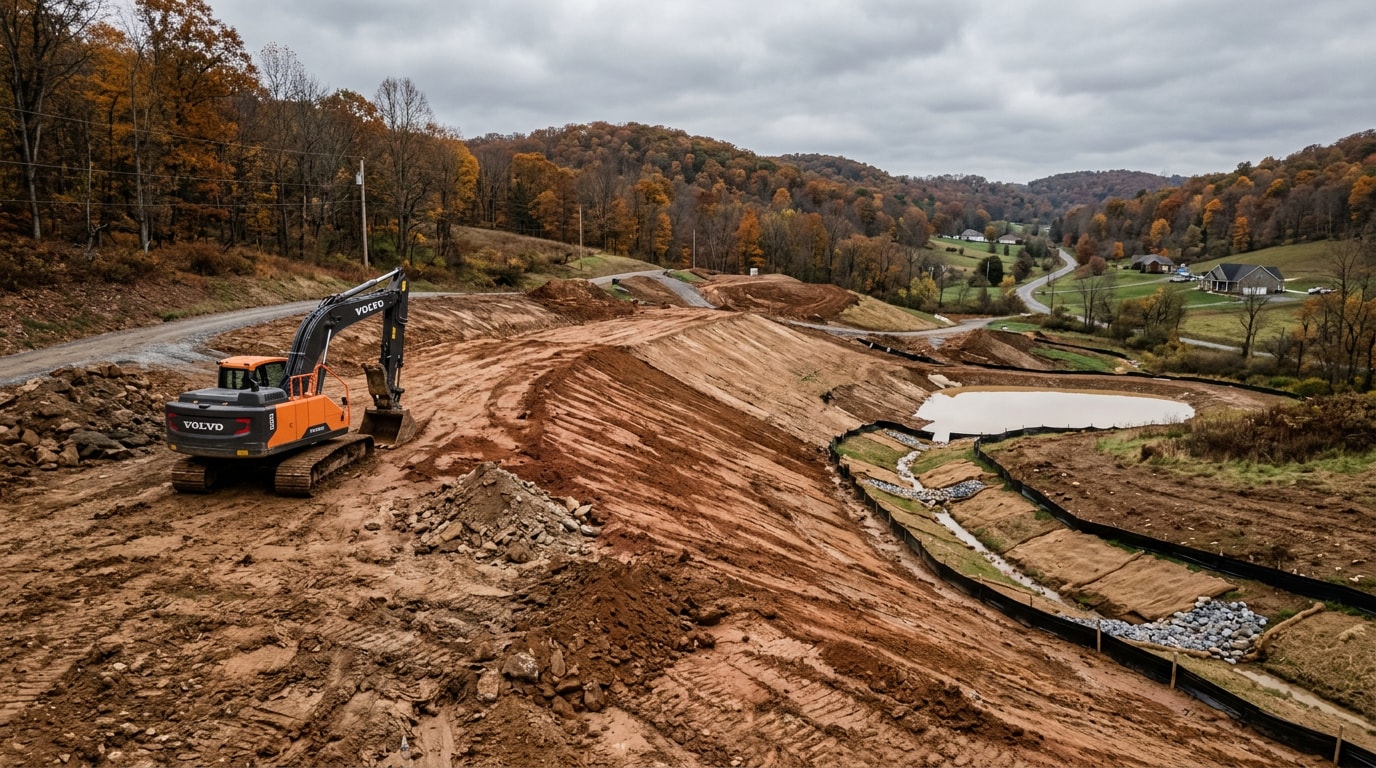
Grading means moving soil to create either a level pad or a controlled slope, usually described in terms of cut (soil removed from high points) and fill (soil added to low points). Contractors typically split the work into two stages.
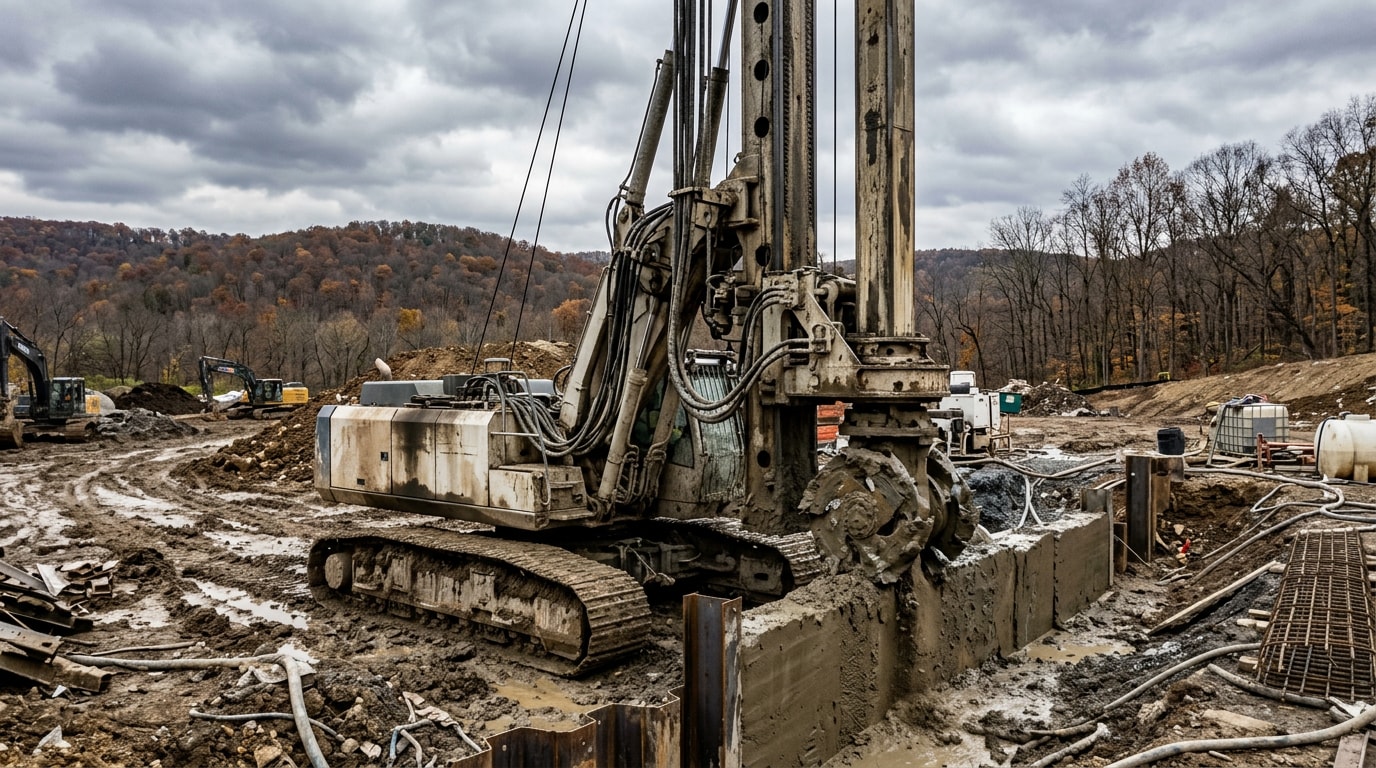
Rough grading sets the general shape and elevation using excavators or dozers, moving large volumes of soil to establish building pads and drainage paths. Finish grading comes next, refining the surface to tight tolerances before seeding, paving, or foundation work starts. Penn State Extension describes this same sequence for homeowners establishing a new lawn: rough grading involves leveling or contouring the soil to provide the grade and slope of the lawn, typically beginning on the subsoil before topsoil is replaced .
That order matters. Grading the subsoil first and topsoil second is what keeps a new lawn, garden bed, or planting area from settling unevenly a year later.
Why Grading Matters More in Westmoreland County
Much of this county sits on compacted clay subsoil and rolling or hillside ground that holds water longer than sandy soil and shifts with winter freeze-thaw cycles. Grading here isn't the same as raking a yard flat. It's an engineered process built around how local ground actually behaves.
In practice, our crews see the same pattern repeat across North Huntingdon, Greensburg, and Irwin: a yard that looks flat to the eye still pools water near the foundation because the subsoil beneath it was never sloped away from the house in the first place. Fixing that after landscaping is already in requires tearing out what was just planted. Fixing it before costs less and lasts longer.
Grading and Drainage: Two Systems, One Job
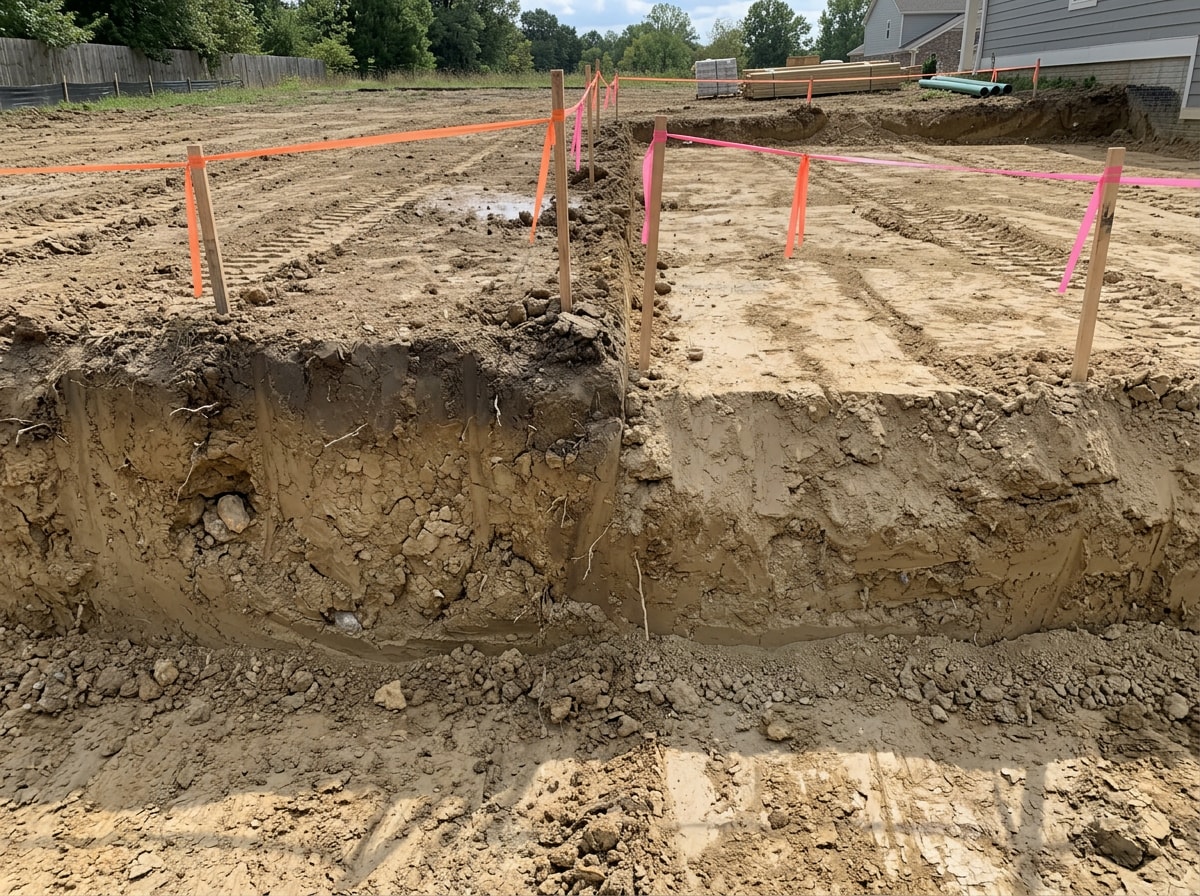
Grading slope pulls rainwater away from foundations, driveways, and low-lying structures, routing it toward a designated outlet instead of letting it collect. On flatter lots, or where slope alone can't move water fast enough, contractors add pipe systems beneath the surface to carry the excess the rest of the way.
The two systems are meant to work together:
- Grading handles the bulk of surface water movement across the lot.
- Subsurface drainage (French drains, drainage pipe, catch basins) manages what grading alone can't clear fast enough.
- Topsoil placement protects the finished grade and gives grass or plantings enough material to establish roots.
If your yard already has standing water or a soggy corner that never dries, a French drain installation paired with corrected grading usually solves it faster than either fix alone. For larger properties, a full drainage system installation may be the better long-term answer.
Do You Need a Permit for Land Grading in Westmoreland County, PA?
Permit rules depend on your municipality and how much ground you're disturbing. Pennsylvania's Chapter 102 erosion and sediment control regulations set the statewide baseline. Earth disturbance activities require an individual NPDES permit or coverage under a general NPDES permit for stormwater discharges prior to commencing the activity , with that permit trigger generally kicking in at one acre of disturbed ground. Many townships layer their own local grading ordinance on top of the state rule, so a smaller residential project can still need a local sign-off even if it falls under the state's acreage threshold.
Before any digging starts, Pennsylvania law also requires a call to 811. Call 811 at least 3 business days before beginning any digging project to get all your utility lines marked . Skipping this step risks hitting a gas, water, or electric line buried closer to the surface than most homeowners expect.
Your township office or the Pennsylvania Department of Environmental Protection can confirm exact requirements for your parcel before work begins. A reputable contractor will also flag permit needs during the initial site walk rather than leaving it for you to discover later.
Site Work vs. Landscaping: Where Grading Fits
Grading, clearing, and excavation fall under site work, the structural ground preparation that happens before anything visible goes in. Landscaping is the finished layer on top: plants, mulch, sod, and hardscaping installed on ground that's already properly prepared.
A common and costly mistake on Westmoreland County terrain is skipping straight to landscaping. Homeowners sometimes hire a landscaping crew to plant or build on soil that was never properly graded, then watch plants struggle or water pool months later because the underlying slope was wrong from the start. Fixing the grade first protects everything installed afterward. Our excavation services and site preparation work cover exactly this step.
What Grading Services Typically Include
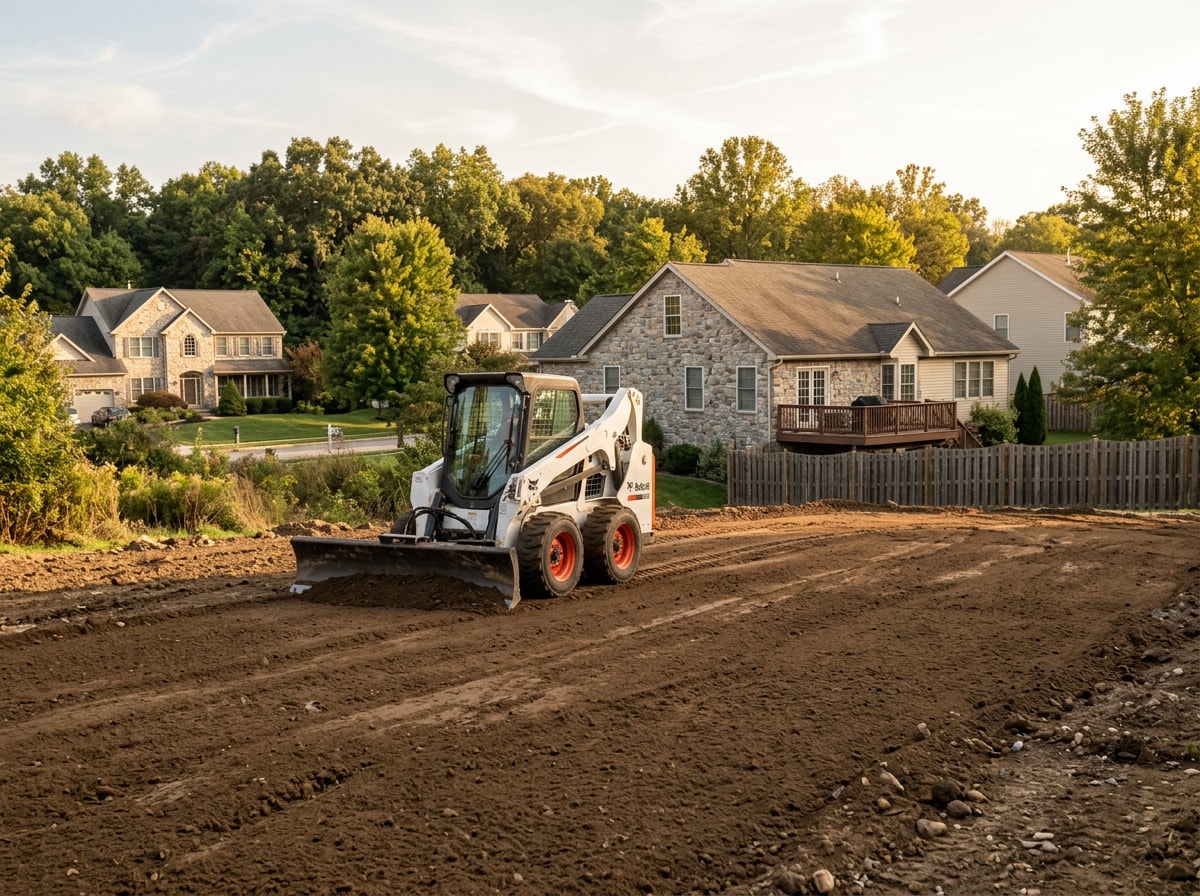
Grading services for Westmoreland County properties generally include a mix of the following, often bundled with site prep for a new driveway, patio, or landscaping project:
- Rough grading to set elevation and establish drainage patterns.
- Finish grading to perfect the final surface before seeding or paving.
- Yard leveling on lots with uneven settling or erosion scars.
- Drainage correction for spots where water already collects.
- Topsoil installation where clay or subsoil sits too close to the surface for healthy growth.
Grading and drainage work together to give driveways, patios, and foundations proper soil compaction, creating a stable base instead of one prone to settling or cracking. See our full land grading and site grading service pages for scope details, or check recent projects completed around the county.
Cost and Timeline: What Actually Drives the Number
There's no reliable flat rate without a site visit. Slope, soil type, equipment access, and how much drainage correction a property needs all shift the price. Here's the general pattern we see on residential jobs:
| Project Scope | Typical Timeline | What Drives Cost |
|---|---|---|
| Standard lot grading or yard leveling | 1-2 days | Lot size, soil condition, equipment access |
| Grading with drainage pipe installation | 2-4 days | Pipe length, outlet location, trenching depth |
| Grading tied to retaining walls or major regrading | 1-2 weeks | Wall engineering, cut/fill volume, permit review |
Western PA weather plays a role too. Heavy rain or freeze-thaw conditions can push a timeline back by days or even weeks, which is part of why experienced crews build weather buffers into their schedules rather than promising a fixed date months out.
About This Guide
This guide was prepared by the site-work team at Adirondack Land Management, which handles land clearing, grading, and drainage projects across Westmoreland County and the surrounding Western Pennsylvania region. If you're also planning a build-out after grading, our guide on room additions near me in Westmoreland County, PA covers what comes after the ground is ready. For questions specific to your property, contact us or visit the homepage to see our full service lineup.
FAQ
What does site work include on a residential property?
Site work typically includes land clearing, grading, excavation, drainage installation, and soil compaction, all of which happen before landscaping begins.
What's the difference between land grading and excavation?
Grading reshapes and levels existing soil for proper slope and drainage. Excavation involves digging out soil for foundations, trenches, or utility lines. Many projects need both, in that order.
Do I need a permit for land grading in Westmoreland County, PA?
It depends on your township and the size of the disturbed area. State rules generally trigger a permit around one acre of earth disturbance, but local ordinances can require approval for smaller residential projects too. Confirm specifics with your township or the Pennsylvania DEP before starting.
How much does land grading cost for a residential property?
Cost depends on lot size, soil conditions, and drainage complexity. There's no reliable one-size-fits-all price, which is why a site visit matters more than a phone quote.
How do I know if my property needs grading before landscaping?
Standing water after rain, unevenly settled soil, or visible erosion on slopes are signs grading should happen before any planting or hardscaping starts.
How long does a land grading project take?
A standard residential grading or leveling job often wraps up in a day or two. Projects involving drainage pipe installation or retaining walls can run one to two weeks, longer if weather interferes.
Will grading alone fix a drainage problem?
Not always. Grading fixes problems caused by surface shape and slope. If water is being concentrated by a downspout, hardscape runoff, or another concentrated source, you may also need a French drain or piped system alongside the regrading.
Request a free estimate to find out what your property needs before the next rainy season.