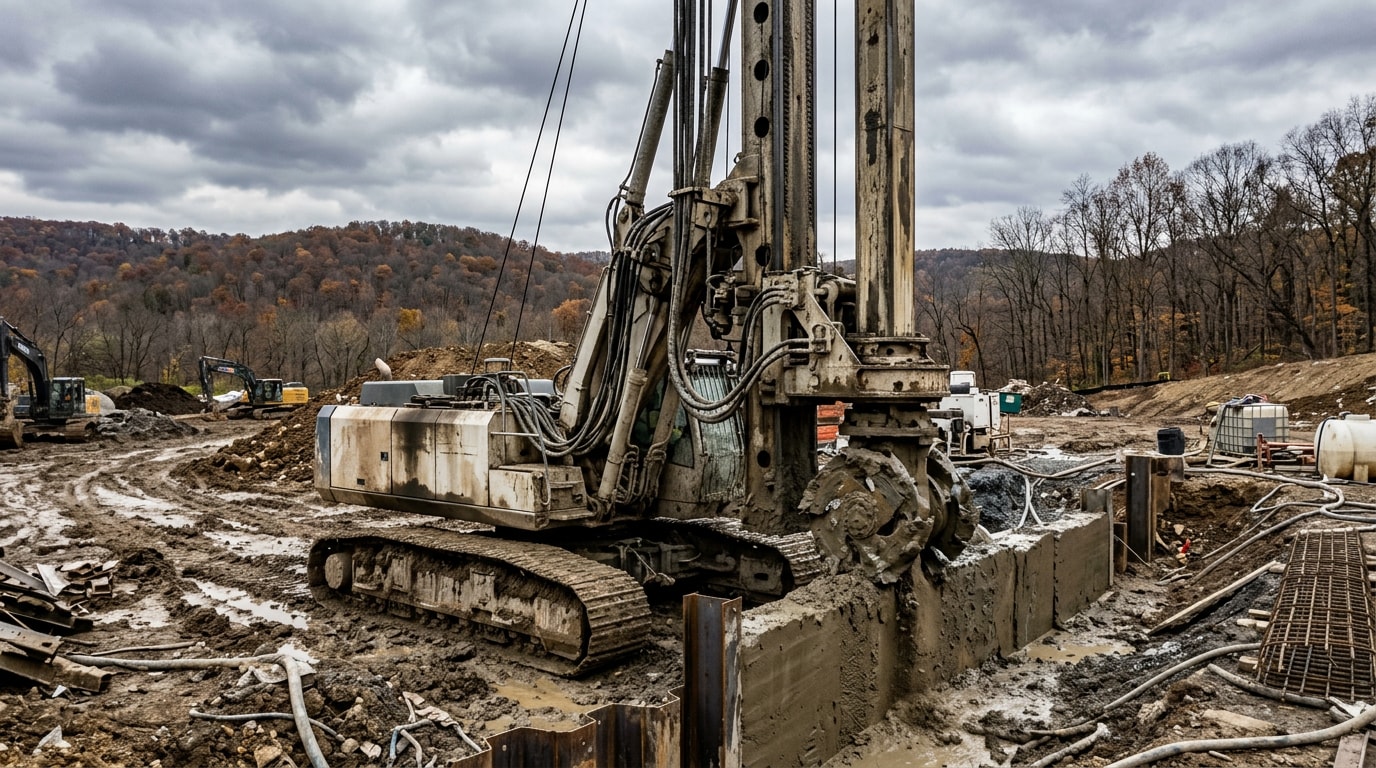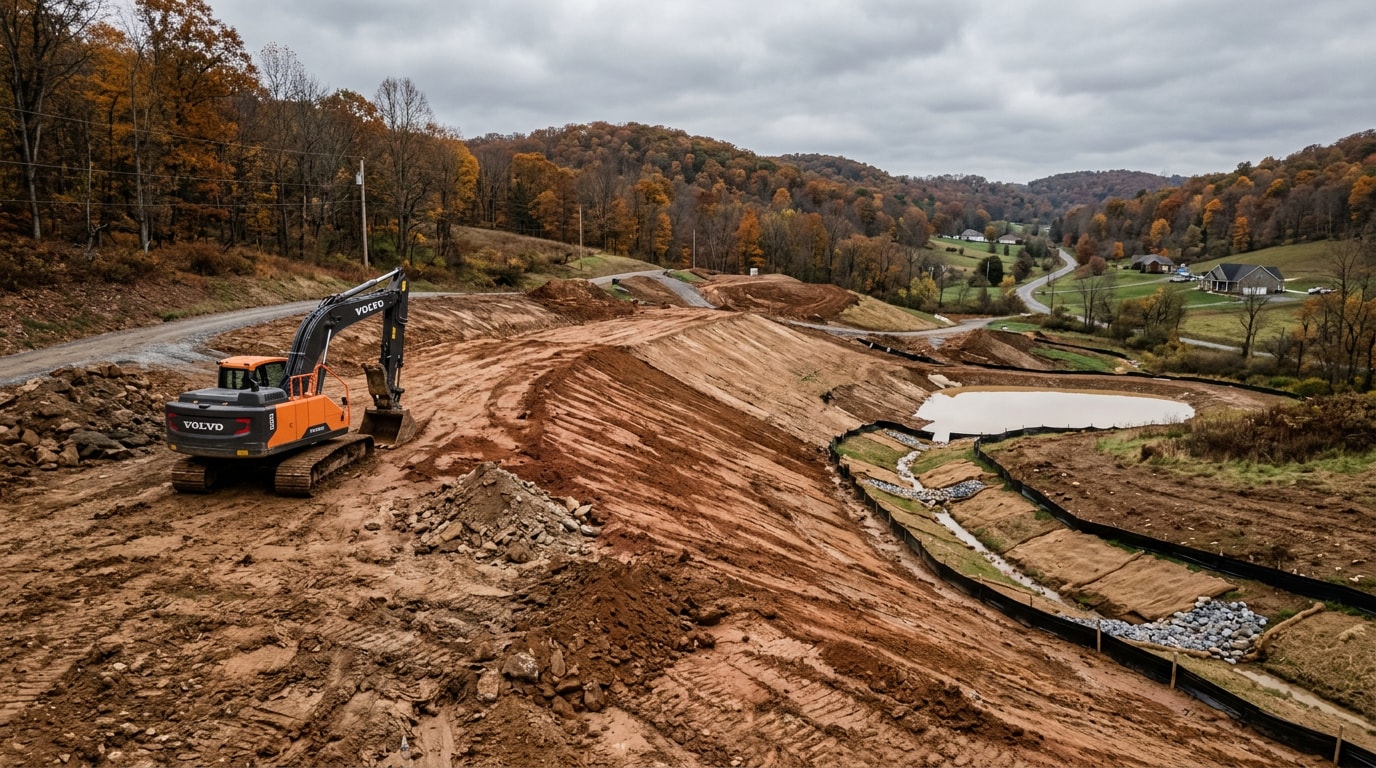
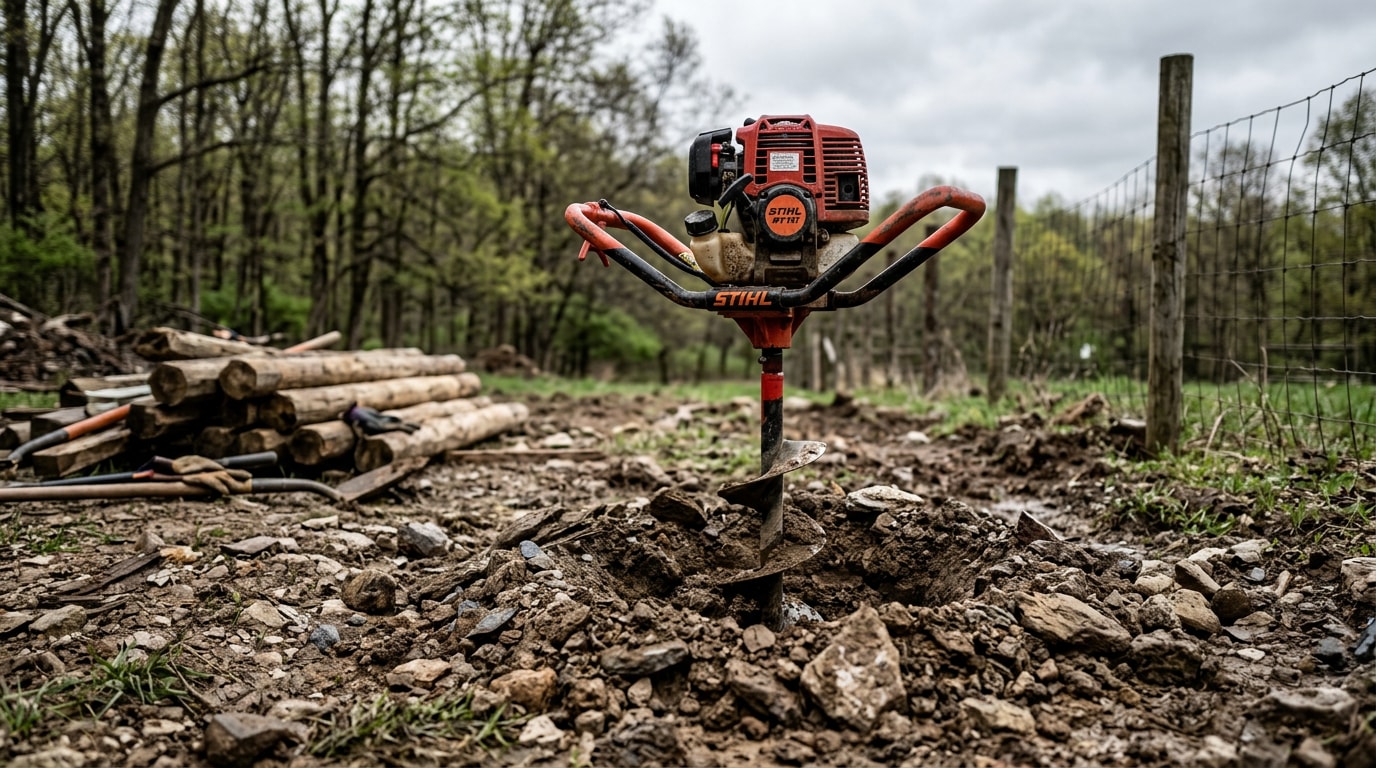
An auger tool in Jefferson County, PA can turn a weekend of shovel work into a 20-minute job, even through the area's clay, shale, and rocky soil. This guide covers the manual, electric, gas, and PTO options, the right bit size for your post, and the depth rules that keep posts from leaning after the first freeze-thaw cycle. Read through before you buy or rent, since the wrong tool for local ground wastes more time than it saves.
What an Earth Auger Actually Does
An earth auger is a powered or manual tool that bores round, evenly sized holes in soil using a rotating helical bit. It replaces the slower combination of a shovel and clamshell digger, cutting hole-digging time while producing a cleaner, more consistent hole for posts, footings, or plantings.
The bit's spiral flutes lift loosened soil up and out as it turns. That means less shoveling and less guesswork about hole shape. Most homeowners and contractors reach for an auger tool for fence post setting, deck footing holes, mailbox posts, and tree or shrub planting.
Properties across Jefferson County, PA tend to share a mix of clay, shale, and rock close to the surface, which is exactly where a well-matched auger earns its keep. If your fence line or planting area is overgrown first, our land clearing service crews can clear brush and small trees before you ever set up an auger.
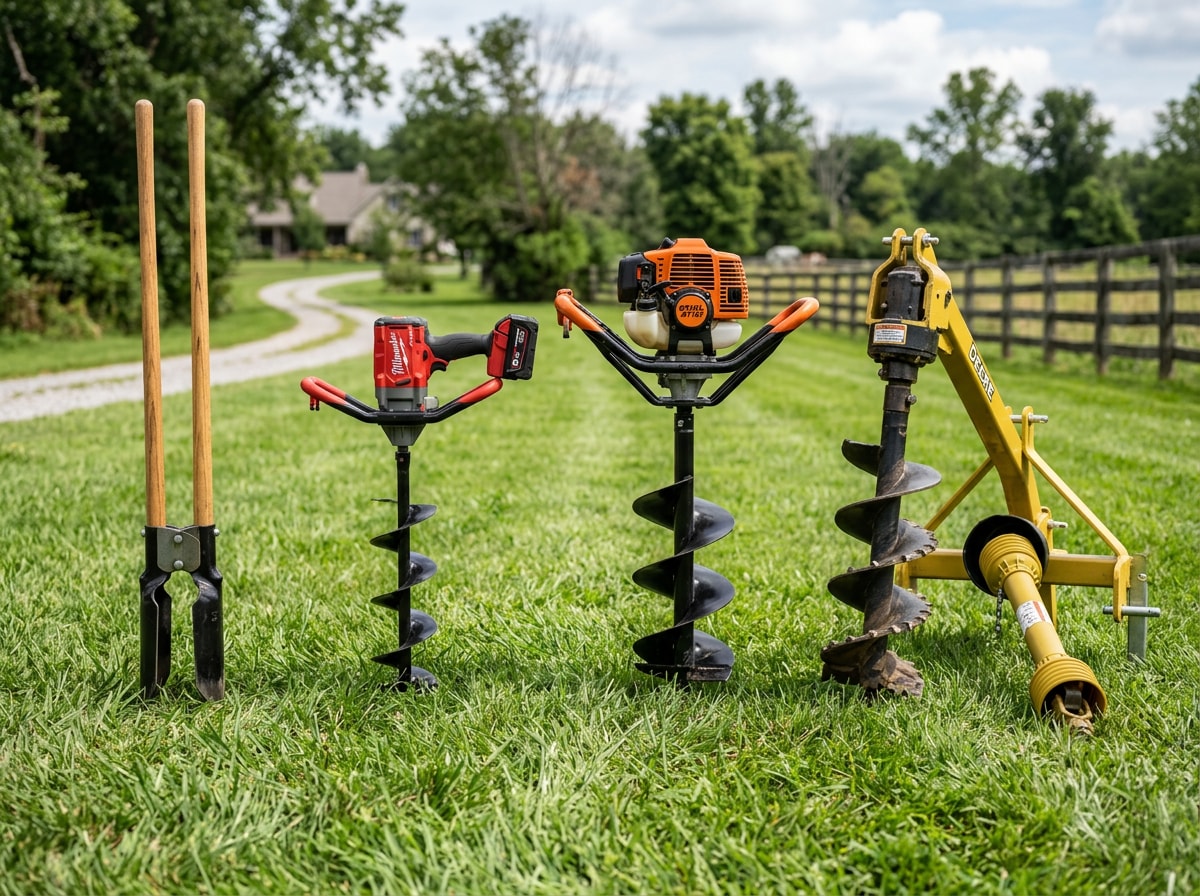
The Main Types of Post Hole Diggers
Not every hole calls for the same tool. The three categories below range from simple hand tools to full gas-powered rigs, and knowing where each one shines helps you avoid renting or buying more machine than the job needs.
Clamshell (Manual) Digger
A clamshell digger uses two hinged handles that scissor open and closed, scooping soil out a bite at a time. It works best in soft, sandy, or already-loosened soil and shines when you only need a handful of holes, such as a single mailbox post. Rocky or compacted clay, though, will wear out your arms fast.
Manual Auger
A manual auger uses a hand-cranked helical bit that threads itself into the ground, pulling loosened soil up as you turn. It outperforms a clamshell digger in loose or sandy soil, since the spiral bit grips and lifts material more efficiently than scooping jaws. A hand auger is also narrower and more precise for small-diameter holes like plant bulbs or fence stakes.
In Jefferson County's clay-heavy or rocky ground, a manual auger bogs down quickly. It isn't practical for more than a few holes.
Powered (Gas or Battery) Auger
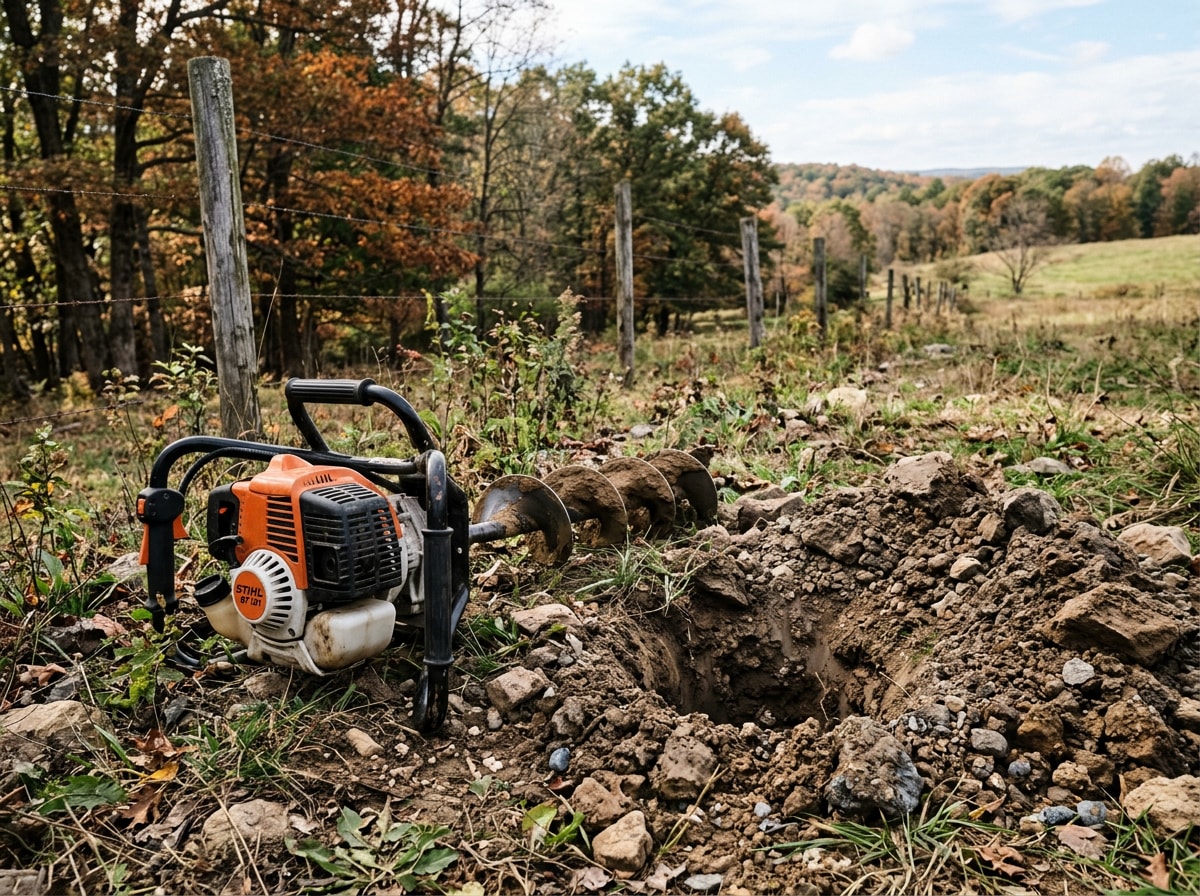
Powered augers remove the muscle work entirely. One-man gas augers are lighter and easier to maneuver solo, typically handling bits up to about 8 inches in diameter. Two-man gas augers pair a larger engine with two handles, delivering more torque for bigger bits and harder soil. Both operators need to brace against kickback together.
Battery-powered augers have closed the gap in recent years, offering enough torque for dozens of holes per charge without exhaust fumes or pull-starting. They're quieter and lighter than gas models, which makes them a reasonable choice for suburban lots.
Whichever powered post hole digger you choose, look for a model built to recognized outdoor power equipment safety standards, such as the ANSI-based guidelines maintained by the Outdoor Power Equipment Institute, for safe engine operation and guarding. For utility trenching tied to a post line, our trench excavation crews bring hydraulic equipment that handles clay and shale an auger can't touch.
Manual vs Electric vs Gas vs PTO Augers
Picking between these four power types comes down to how many holes you need, how hard your soil is, and whether you already own equipment that can run an attachment. The table below lines them up side by side.
| Auger Type | Power Source | Noise Level | Torque | Holes per Tank/Charge | Best Soil | Typical Rental Rate |
|---|---|---|---|---|---|---|
| Manual | Human (hand crank) | Silent | Low | N/A | Loose, sandy | $10–$25/day |
| Electric/Cordless | Battery or corded | Low | Moderate | 20–40 holes/charge | Loose to medium | $40–$60/day |
| Gas (one/two-man) | Small gas engine | High | High | 30–60 holes/tank | Medium to hard clay | $60–$110/day |
| PTO (tractor-mounted) | Tractor PTO shaft | High | Very high | Fuel-dependent | Hard clay, rocky, frozen | $75–$150/day |
Rental and purchase prices vary by vendor, season, and region, so treat these ranges as a starting point rather than a fixed quote.
Manual tools make sense for a handful of holes in forgiving soil. Electric and battery augers split the difference, offering enough torque for a weekend fence project without gas fumes or pull cords. Gas augers are the workhorse choice for most local fencing jobs, since Jefferson County's clay and shale soils need more consistent torque than a battery can deliver all day.
PTO augers mounted to a tractor are overkill for a short fence line but make sense for large-acreage post runs or deep agricultural post setting, where a tractor is already on site. That combination of torque, hole count, and cost makes a gas-powered auger the practical default for most residential post-setting jobs in the county.
Auger Bit Size by Post Type (Quick Reference)
As a general rule, bore the hole roughly 2 to 4 inches wider than the post itself on every side, leaving room for backfill or concrete around the base. That clearance is what keeps a post anchored instead of shifting with every freeze-thaw cycle.
| Post or Application | Recommended Auger Bit Diameter |
|---|---|
| T-post or small stake | 4 inches |
| 4x4 wood post | 6–8 inches |
| 6x6 wood post | 10–12 inches |
| Round/vinyl post (4"–6") | 8–10 inches |
| Bulbs, small shrubs | 2–3 inches |
This chart covers most residential jobs, but always check your local building code for structural posts like deck footings, since those often carry minimum diameter and depth requirements beyond what a simple fence needs.
How Deep and Wide to Dig
A good starting rule: set posts so roughly one-third to one-half of the total post length sits underground. A 6-foot post, for example, typically needs 2 to 3 feet of hole depth, though soil and load can shift that.
Frost line depth matters more than that general rule in most of Pennsylvania. Statewide, frost penetration typically runs around 36 inches, though your local building department sets the exact minimum for your jurisdiction, as detailed in Penn State's frost-protected shallow foundation research. If a post base sits above that line, seasonal freeze-thaw cycles can gradually heave it out of the ground.
Corner posts, gate posts, and anything carrying extra wind load should go a few inches deeper than a standard line post. That extra depth resists leaning over time.
Technique for Clean, Solid Holes
- Mark every hole location before you dig, using stakes and a string line for a straight fence run.
- Position the bit vertically over the mark, start the engine or begin cranking, and let the point pull itself into the ground rather than forcing it down.
- Back the auger out every 6 to 12 inches to clear loose spoil from the flutes. This keeps the bit cutting instead of spinning in packed dirt.
- Keep a firm two-handed grip on the handles at all times, since a bit that catches a root or rock can twist hard and fast.
- In loose soil, bore straight through in one pass. In hard clay or rocky ground, common across parts of the county, use several short in-and-out passes to avoid stalling the engine or binding the bit.
Good technique matters as much as horsepower when running any auger tool across Jefferson County's mixed soil types.
Common Post Hole Auger Mistakes
Leaning fence posts almost always trace back to a handful of avoidable habits:
- Over-boring the hole. Going far wider than the post leaves too much loose backfill and not enough solid soil contact to hold it straight.
- Digging too shallow. A hole that looks deep enough often isn't once you account for frost line and wind load.
- Skipping the tamping step. Backfill needs to be compacted in layers, not dumped in all at once, or it settles unevenly and lets the post shift.
- Ignoring soil type. Using the same depth and bit size in sandy soil as you would in dense clay sets posts up to fail early, regardless of how good the auger tool itself was.
DIY Auger Work or Hire a Site Prep Contractor?
The right call depends mostly on how often you'll use the tool and how tough your ground is. A one-time fence project with a dozen or fewer holes in workable soil almost always favors renting a powered auger for the day rather than buying equipment you'll use once.
If you're setting posts every year or doing fencing work professionally, owning starts to pencil out faster. The per-use cost drops the more holes you dig, but factor in blade sharpening, engine upkeep, and storage space before buying.
For large-acreage fence lines, drainage tie-ins, or sites with heavy rock close to the surface, many property owners skip the hand-held auger altogether and bring in an excavation crew with hydraulic equipment that powers through ground a one-man or two-man auger can't. If that sounds like your project, get a free estimate before you commit to renting gear for a job that may call for heavier machinery. If your project is tied to new construction, our guide to light builders in Jefferson County, PA covers site-prep and zoning considerations worth reviewing before you break ground.
Safety and Utility Checks Before You Dig
- Wear sturdy boots, eye protection, and gloves before starting any auger tool, and keep loose clothing or long hair away from the rotating bit.
- Always grip a powered auger with both hands, and on two-man units, make sure both operators have stable footing before engaging the engine.
- Never run a two-person auger solo. The second handle exists specifically to counter kickback torque.
- After each use, clean packed soil off the flutes and check the bit edges for nicks or dullness, since a sharp bit bores faster and strains the engine less.
Before digging anywhere in Pennsylvania, state law requires calling 811 at least three business days ahead so utility companies can mark underground lines, as outlined by the Pennsylvania Public Utility Commission. This applies even to a single mailbox post dug with a hand auger. If your project is near water, gas, or sewer lines, our drainage and utility installation team can safely relocate or protect those lines before you dig.
About the Author
This guide was written by the site operations team at Adirondack Land Management, a Pennsylvania-based land clearing and excavation contractor serving Jefferson County and the surrounding region. Our crews have pulled shale chunks and glacial rock fragments out of more post holes than we can count, and the depth and technique guidance above reflects what actually keeps a line of posts standing straight through a western Pennsylvania winter. Questions about a specific site? Contact us directly.
FAQ
What's the difference between manual, electric, gas, and PTO fence post augers?
Manual augers rely on hand-crank power and suit a few holes in soft soil. Electric and battery augers add torque without fumes, gas augers deliver the most consistent power for clay or rocky ground, and PTO augers run off a tractor for large-scale post setting.
How deep should fence post holes be?
Most fence post holes should be roughly one-third to one-half of the post's total length, commonly 2 to 3 feet for standard fencing. Always dig below your local frost line (around 36 inches across much of Pennsylvania), and go a few inches deeper for corner, gate, or high-wind posts to prevent leaning.
What auger bit size should I use for a 4x4 or round fence post?
A 6- to 8-inch auger bit typically works for a nominal 4x4 wood post, leaving enough clearance for backfill or concrete. For an exact recommendation based on your post material and soil, contact our team for project-specific guidance.
How much does it cost to rent a post hole auger?
Manual clamshell diggers typically run $10 to $25 a day, one-man gas augers run roughly $60 to $110 a day, and tractor-mounted PTO units can run $75 to $150 a day. Rates vary by rental yard, region, and season.
Can one person safely operate a two-man auger?
No. Two-man augers are built with a second handle specifically to counter kickback torque when the bit catches a root or rock. Running one solo significantly increases the risk of injury.
Do I need to call 811 before using an auger in Jefferson County, PA?
Yes. Pennsylvania law requires anyone planning to dig, including homeowners using a hand or powered auger, to contact 811 at least three business days in advance so utility lines can be marked.
Ready to plan your next site project? Visit the Adirondack Land Management homepage to see our full range of excavation, land clearing, and drainage services, or check our projects page for completed work across the region.