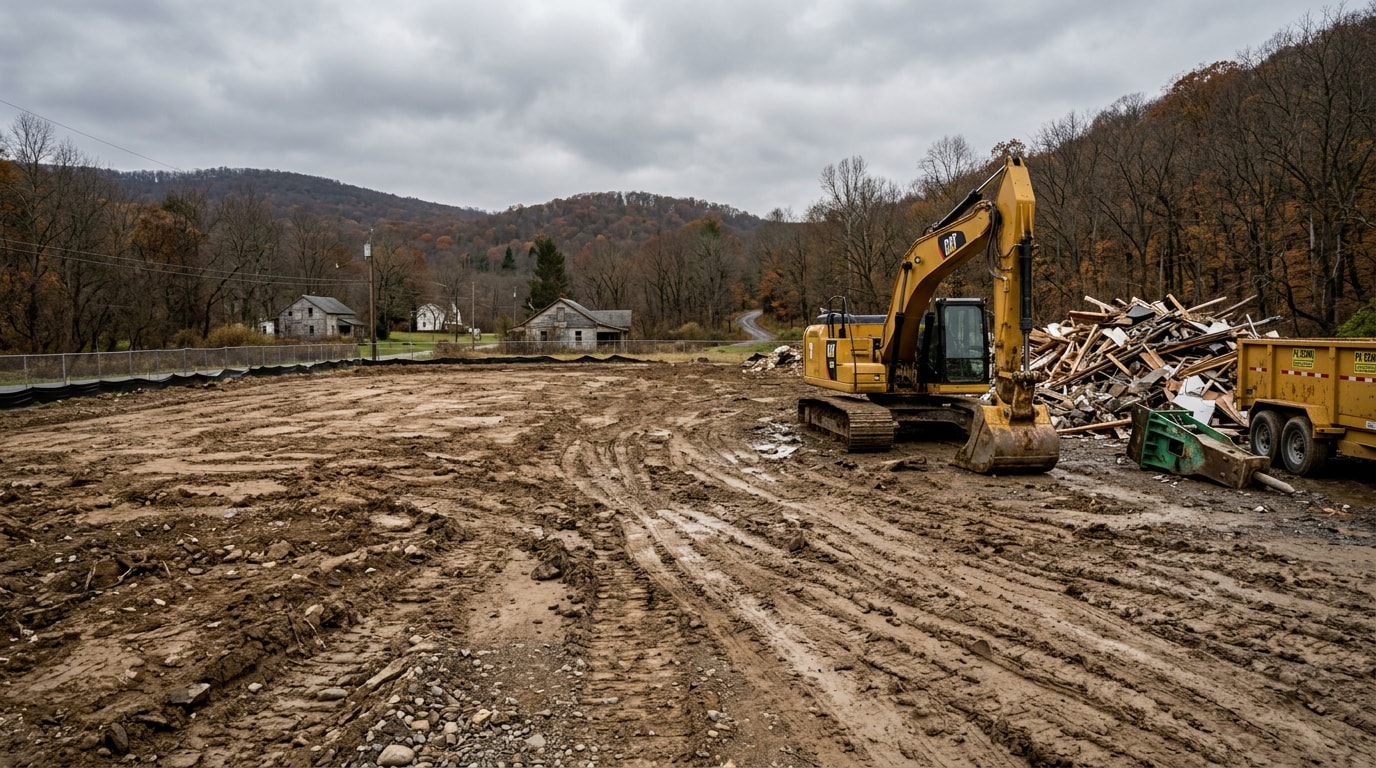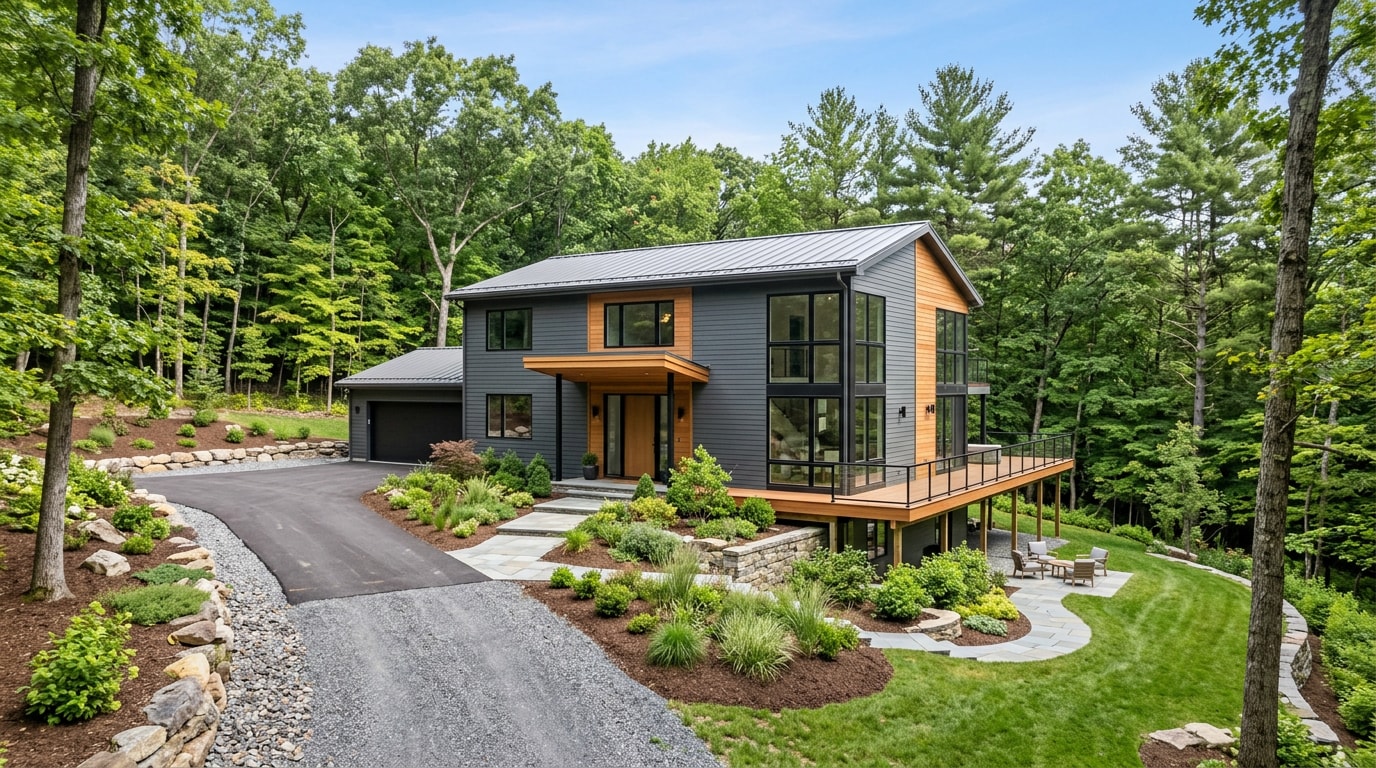
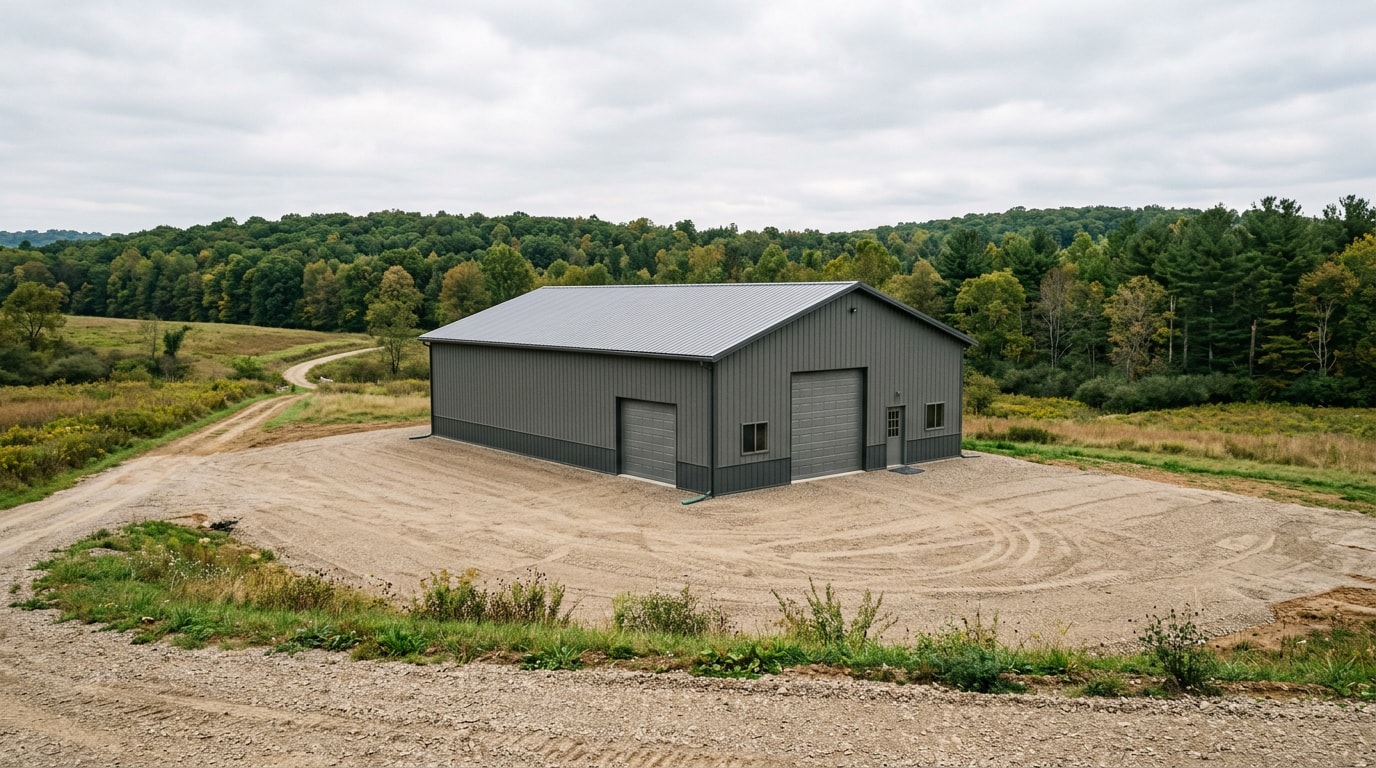
Most people searching for light builders Jefferson County, PA are really looking for someone to put up a pole barn, garage, or post-frame structure. That's the easy part to find. The part almost nobody budgets for is getting the ground underneath it ready to hold a building for the next 40 years.
We've graded and prepped building pads across Jefferson County for years, and the pattern is always the same: the structure goes up fast once the site is right, and it stalls for weeks when it isn't.
What "Light Builders" Actually Means in This Market
"Light-frame construction" is a real building-code term, not marketing fluff. Post-frame and pole-barn structures fall under this category because they use lighter structural framing than a stick-built home, which is exactly why they're faster and cheaper to put up. The 2018 International Building Code, adopted across Pennsylvania through the Uniform Construction Code, even draws a line at an area of 600 square feet or less for light-frame construction compared to 400 square feet or less for other than light-frame construction when it comes to frost-protection exceptions.
In plain terms: Jefferson County property owners searching for "light builders" usually mean garages, horse barns, equipment sheds, or small commercial pole buildings. The National Frame Building Association, which represents builders in this exact niche, notes that it is the only national trade association that represents post-frame industry professionals . That's the group most reputable local pole barn companies belong to or reference for engineering standards.
Why Site Prep Comes Before Any Light-Frame Build
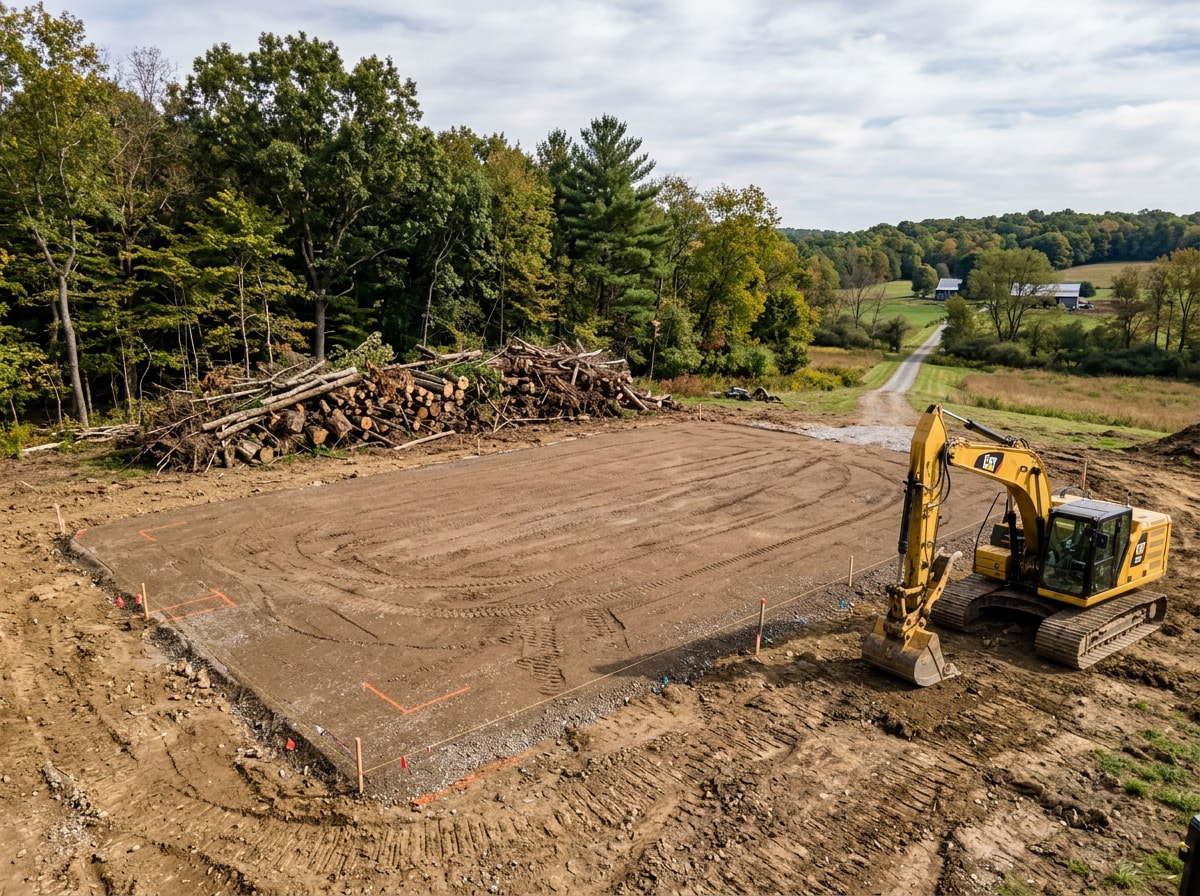
A light-frame builder can only work as well as the pad they're given. Jefferson County's mix of clay-heavy soil, rolling terrain, and wooded lots means very few properties are build-ready without some work first.
Here's what typically has to happen before a crew ever sets a post:
- Clear the footprint of trees, brush, and stumps so trusses and equipment have room to work
- Strip and stockpile topsoil so the building sits on stable subsoil, not organic material that will settle
- Grade the pad level with proper slope away from the structure to prevent standing water
- Address drainage before the slab or gravel base goes down, not after
- Rough in utilities like water, gas, or electrical trenching if the building will be heated or plumbed
Skipping any one of these steps is the single biggest reason post-frame projects run over schedule. Our crews routinely get called in after a property owner has already signed with a builder, only to discover the lot still needs land clearing or overgrown property cleanup before anyone can break ground.
Common Site Problems That Stall Pole Barn Projects
Not every lot has the same issues, but in Jefferson County these come up constantly:
| Site Condition | Why It's a Problem | What Fixes It |
|---|---|---|
| Overgrown tree line on the footprint | Builders can't survey or set trusses safely | Lot clearing |
| Dense brush or invasive growth | Hides slope, rock, and drainage issues until it's too late | Brush removal |
| Low spot or poor drainage | Causes standing water, frost heave, and post rot | Drainage system installation |
| Uneven or sloped pad | Trusses won't sit square, framing takes longer | [Site grading]({{SITE_URL}}/services/excavation-service/site-grading} |
| No water or electric run to the site | Builder can't finish interior work | Waterline installation |
Penn State Extension's guidance on rural property drainage backs this up directly: grading and re-grading can change how water moves across the land, and it's essential to leave natural drainage paths undisturbed when possible and never intentionally concentrate stormwater flows . That's exactly why site grading has to be planned, not improvised the week before the builder shows up.
The Site Prep Process, Start to Finish
Most Jefferson County projects follow the same sequence, whether it's a residential garage or a commercial pole building:
- Site walk and layout — mark the building footprint, access path, and any utility runs
- Clearing and mulching — remove trees, brush, and stumps using forestry mulching where selective clearing makes more sense than full removal
- Grading and compaction — level the pad and compact the base so it won't shift or settle
- Drainage work — install a French drain or grade a swale before the structure goes up, not after water starts pooling
- Trenching — run water, gas, or sewer lines using trench excavation if the building needs utilities
- Final site preparation — the pad is inspected, compacted, and handed off to your light-frame builder
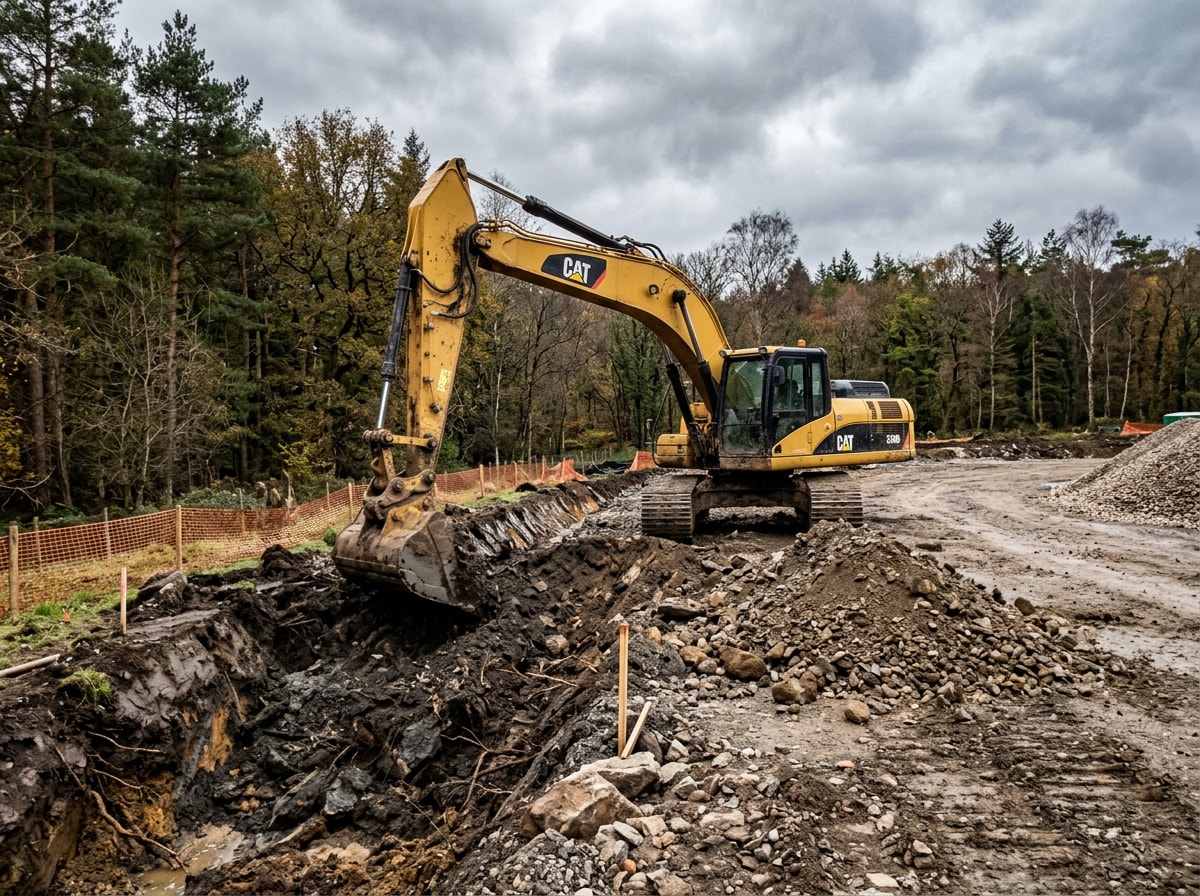
This is the same scope of work we cover under our excavation services and site preparation for residential and commercial projects across the region. You can see examples of completed site work on our projects page.
Hire the Site Contractor Before the Builder, Not After
Here's the part most people get backward: they hire the pole barn company first, then scramble to find someone to clear and grade the lot once a start date is already on the calendar.
It works better in reverse. A site contractor can walk the property, flag drainage or slope problems early, and hand your light-frame builder a pad that's actually ready. Pennsylvania's Uniform Construction Code applies to both the building and the site work supporting it, and this statewide building code has to be followed by builders in the state , so permitting and inspections move faster when the groundwork is already compliant.
If you're comparing quotes from pole barn or post-frame builders, ask them directly whether site prep is included or billed separately. Most aren't excavation contractors, and that gap is where timelines fall apart.
Ready to get your lot graded, cleared, and build-ready? Get a Free Estimate before you lock in a start date with your builder.
Service Area: Jefferson County and Beyond
We handle land clearing, grading, and drainage work throughout Jefferson County, PA, including properties feeding into pole barn and post-frame projects in surrounding areas. Our crews also regularly work in Armstrong County and Clarion County.
If your project involves a timber frame structure instead of post-frame, our breakdown of timber frame home builders in Washington County, PA covers how that process differs on the site-prep side.
Visit our homepage for a full look at how our land clearing, excavation, and drainage services fit together before any structure goes up.
FAQ
Do I need to clear my land before hiring a pole barn builder?
Yes, in almost every case. Most post-frame builders expect a cleared, graded, and accessible pad when they arrive. If your lot still has trees, brush, or uneven ground, that work needs to happen first through land clearing or lot clearing.
Who handles grading and drainage, the builder or a separate contractor?
Most light-frame builders focus on the structure itself, not excavation. Grading, drainage, and utility trenching are typically handled by a separate site contractor before the builder's crew shows up.
Do you need a permit for a pole barn in Pennsylvania?
Pennsylvania enforces the statewide Uniform Construction Code, but over 90% of Pennsylvania's 2,562 municipalities have elected to administer and enforce the UCC locally using their own staff or a certified third party. Confirm requirements with your township before clearing or grading begins, and check current rules through the Pennsylvania Department of Labor & Industry's UCC program.
Is a pole barn the same as a post-frame building?
Technically, pole buildings use round poles set into the ground, while post-frame buildings use square or rectangular treated posts. Both fall under the light-frame construction category in building codes, which is why local listings and builders use the terms interchangeably.
How long does a light-frame building project take?
The build itself can move quickly once the site is ready, often within a few weeks. The real variable is site prep. Properties that need clearing, grading, or drainage work added before the builder arrives routinely add days or weeks to the overall timeline.
What foundation depth does a pole barn need in Pennsylvania?
Pennsylvania's building code requires footings to extend below the local frost line. Per the International Building Code adopted statewide, foundations must meet frost protection requirements by extending below the frost line of the locality unless a specific code exception applies. Your local building department can confirm the exact depth required for your township.
About the Author
This guide was written by Derek Hausman, Site Development Lead at Adirondack Land Management, who has spent over a decade clearing, grading, and prepping rural building sites across western Pennsylvania. Questions about your property? Contact our team for a free site evaluation.