Cutter soil mixing in Butler County, PA turns soft, unstable ground into a solid base for foundations, shoring, and retaining walls without hauling a single truckload of soil off site. The method blends in-place soil with a cement-bentonite slurry using counter-rotating cutter wheels, forming rectangular panels strong enough to support an excavation or cut off groundwater. Here's how the process actually works, where it fits on a Western Pennsylvania job site, and when it beats the alternatives.
What Is Cutter Soil Mixing (CSM)?
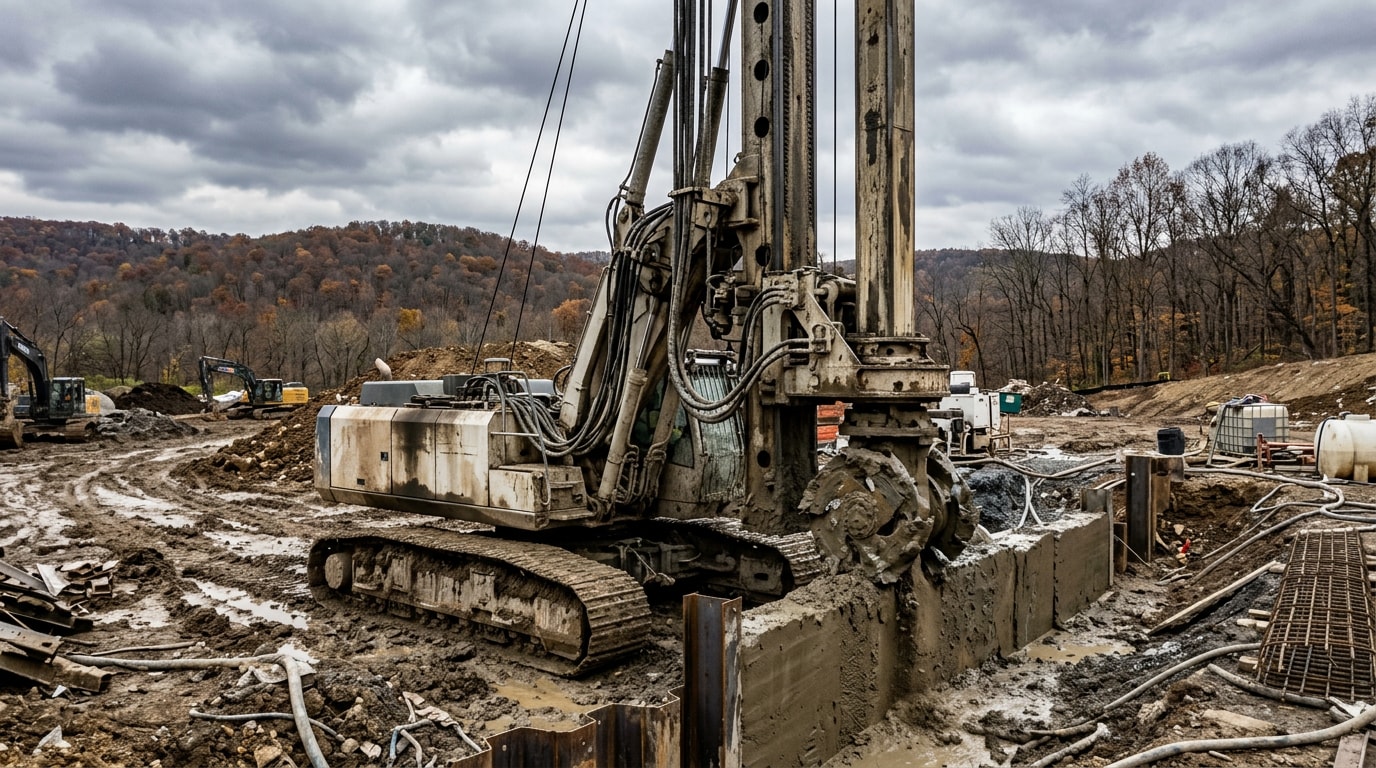
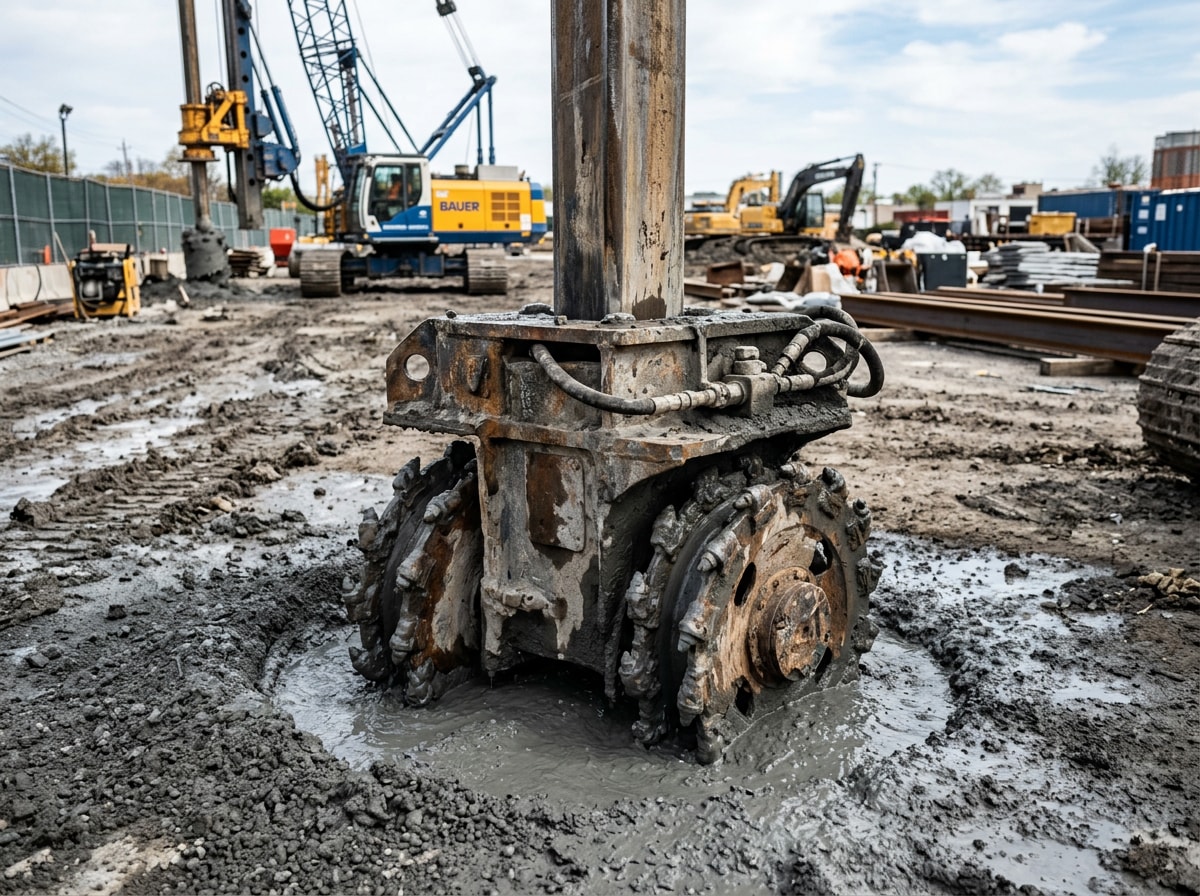
Cutter soil mixing is performed using vertically aligned cutter wheels that, as they rotate along a horizontal axis, penetrate the in situ soils and mix them with binder to form a rectangular element of improved soil. Rather than drilling and pouring individual round piles, cutter soil mixing employs two sets of counter rotating vertically mounted cutter wheels to form rectangular panels of soil mixed ground, 21 to 60 inches wide .
The panels interlock end to end, which is what makes CSM useful for continuous shoring walls and groundwater cutoffs instead of isolated columns. It's one of several ground improvement techniques we evaluate alongside our excavation services when a Butler County site has weak or saturated soil before construction begins.
How Cutter Soil Mixing Works
CSM installation happens in two passes on the same bore.
- Penetration:
The cutter wheels disaggregate the soil while a bentonite or light grout slurry is pumped through the tool and mixed with the soil.
- Withdrawal:
A cementitious slurry is pumped through the tool and blended with the soil at high rotation speed, creating a well-mixed in situ product commonly referred to as soilcrete.
A rectangular Kelly bar guides the cutter head to depth, and the mixing equipment for cutter soil mixing consists of a rectangular Kelly bar and the cutting head . Onboard sensors log penetration rate, torque, and grout flow in real time, giving the engineer a record of what actually went into the ground rather than an estimate.
Simultaneous Excavation and Mixing
What sets CSM apart mechanically is that excavation and mixing happen in one continuous pass. The rotating cutter wheels mechanically disaggregate the soil and blend it with the injected binder, creating a homogeneous soil-cement mass. That's different from digging a trench first and backfilling with treated material later, and it's a big part of why CSM moves faster than conventional slurry-wall construction.
Ideal Ground Conditions for Cutter Soil Mixing
Cutter soil mixing is applicable to most cohesive and granular soils; however, ease of mixing depends on soil type, strength, density, water content, plasticity, stratigraphy, and texture. Dense gravel or hard rock changes how much work the cutter wheels have to do, and equipment and tooling are selected based on the subsurface soil conditions .
Butler County's own geology adds variables an out-of-town spec sheet won't account for. Federal mapping of the county's bedrock shows cyclic sequences of shale, sandstone, red beds, and thin limestone and coal, with the Glenshaw Formation covering 54 percent of the county at the surface , a mix that doesn't cut uniformly. Add seasonal water-table swings near the Connoquenessing Creek corridor, and a proper boring program becomes the difference between a design that works on paper and one that works in the ground. Pulling parcel-level soil data from the USDA's Web Soil Survey is a useful first screen before borings are even scheduled.
Common Uses of Cutter Soil Mixing
Contractors specify CSM for a handful of recurring jobs:
- Temporary shoring on deep excavations next to existing structures
- Cut-off walls that control groundwater seepage
- Liquefaction mitigation in earthquake-sensitive soils
- Slope stability improvement
- Direct foundation support under new structures
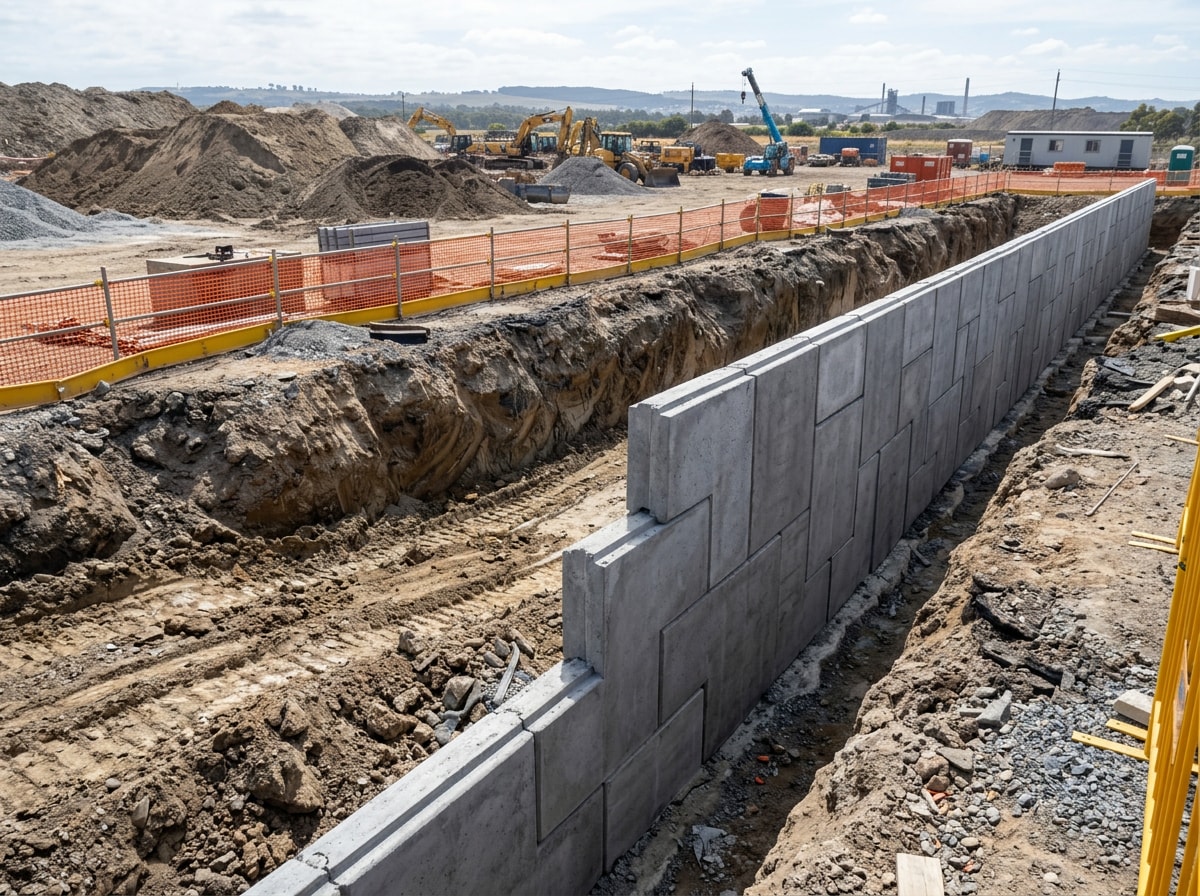
Common uses include temporary shoring for deep excavations and cut-off walls to mitigate seepage or contaminant transport , and in Butler County that most often shows up as shoring for commercial excavations close to neighboring buildings, or cutoff walls managing groundwater on sites near creeks and drainage corridors. Panels installed for shoring can frequently stay in place afterward as part of the permanent structure, which is also true of related techniques like trench excavation support and drainage system work where cutoff walls intersect utility corridors.
Thinking about a deeper shoring or ground-support problem on the same property? Our guide to shaft sinking in Butler County covers a related deep-excavation method worth comparing against CSM.
Advantages of Cutter Soil Mixing
CSM is quiet and low-vibration, which matters on sites near occupied buildings or residential neighbors; low vibration and noise levels are a documented advantage of the method, along with suitability for deep excavation and urban environments . It also uses soil already on site as the building material, cutting down on spoil removal and truck traffic.
Here's how CSM stacks up against two methods it's commonly compared against:
| Factor | Cutter Soil Mixing (CSM) | Secant Pile Walls | Jet Grouting |
|---|---|---|---|
| Wall shape | Continuous interlocking panels | Overlapping round piles | Column or fan-shaped elements |
| Installation speed | Faster (excavation + mixing in one pass) | Slower (drill, then pour each pile) | Moderate |
| Spoil generated | Low to moderate | High (drilled cuttings) | High (slurry return) |
| Best fit | Wide, relatively open sites | Tight urban lots | Irregular or hard-to-access spaces |
| Noise/vibration | Low | Moderate to high | Low to moderate |
The right method still depends on soil conditions, site access, and budget, not just what looks best on a comparison chart.
Quality Assurance in Cutter Soil Mixing
CSM isn't a guess-and-check process. A pre-production field test program is often conducted to validate grout mix and installation parameters (grout volume, mixing energy, penetration rate), as well as batching and pumping operations.
During installation, real-time data acquisition tracks grout volume, rotation speed, and depth for every panel, creating a documented record an engineer can review after the fact. These field practices line up with the quality-control framework laid out in the FHWA's Deep Mixing Design Manual, and lab testing of the resulting soil-cement typically follows ASTM's geotechnical testing standards for soil-cement mixtures.
Project Examples of Cutter Soil Mixing
CSM commonly appears on large commercial and industrial site developments needing ground improvement, on levee or dam projects where seepage control matters, and on roadway or embankment projects built over soft, compressible soils. A Butler County project could fall into any of these buckets: a commercial pad needing foundation support, a retaining structure near a slope, or a roadway embankment over soft ground.
Reviewing our Butler County service area page is a quick way to confirm whether a specific site falls within range before a crew mobilizes equipment. For a full picture of what we do across the region, visit our homepage.
Ready to find out if your site qualifies? Request a free estimate and we'll walk the ground with you before any equipment shows up.
FAQ
What Is the Difference Between Cutter Soil Mixing and Deep Soil Mixing?
Cutter soil mixing (CSM) uses horizontal-axis, counter-rotating cutter wheels to form rectangular soil-cement panels, while traditional deep soil mixing (DSM) relies on vertical augers to create round columns. Both belong to the same family of ground improvement methods, but panel shape and equipment differ.
How Deep Can Cutter Soil Mixing Reach?
Soil treatment is possible at depths of up to 165 ft; however, typical panel depths are 80 to 115 ft. Actual depth on any Butler County project depends on local soil and bedrock conditions, since hard rock layers slow the cutter head and can cap how deep a given rig can reach economically.
How Much Does Cutter Soil Mixing Cost?
Cost depends on panel depth, soil and rock hardness, site access, binder volume, and overall project scale. There's no single price that applies across projects since ground conditions vary this much from one Butler County parcel to the next. A site-specific quote is the only reliable way to get accurate numbers, which you can request through our contact page.
Is Cutter Soil Mixing Noisy or Disruptive to Nearby Properties?
CSM is considerably quieter and lower-vibration than pile-driving or other impact-based ground improvement methods, making it practical for sites near occupied buildings or residential neighbors. It still involves heavy equipment, but the mixing process itself doesn't rely on repeated impact.
Can Cutter Soil Mixing Panels Stay in Place Permanently?
Yes. Panels installed for temporary shoring during excavation often remain in place afterward as part of the permanent structure, since the soil-cement material already meets the strength and permeability targets the design calls for.
How Long Does a Cutter Soil Mixing Project Take?
Timeline depends on panel count, depth, and how much pre-production testing the soil conditions call for. Because excavation and mixing happen in a single pass, CSM projects typically move faster than methods that require separate drilling and pouring steps for every element.