
A well digging machine in Armstrong County, PA has to work through sedimentary bedrock that shifts from property to property, with local wells running a median of 125 feet deep according to state well-completion records. Before that rig ever shows up, though, someone has to clear the access route, grade a level pad, and later trench the waterline back to the house. This guide breaks down the depth, cost, and licensing data you need for 2026, plus the site-prep work that happens before the driller arrives and after the rig pulls away.
How Deep Does a Well Digging Machine Need to Go in Armstrong County, PA?
Wells in Armstrong County have a median depth of 125 feet, with a typical range of 80 to 203 feet, based on verified state well-completion records. Median static water level sits around 48 feet, and median yield is about 6 gallons per minute.
Half of all recorded wells fall between 80 and 203 feet, and roughly 90% are shallower than 300 feet. Wells drilled since 2016 show a lower median depth of 90 feet, which likely reflects updated drilling techniques and newer development concentrated in shallower-yielding areas of the county.
Depth varies this much because bedrock and aquifer conditions aren't uniform across western Pennsylvania. Two properties a few miles apart can need very different well depths depending on where they sit on the Appalachian Plateau. The static water level is a separate number from total depth. It tells you how far below the surface the water sits when the pump isn't running, not how deep the borehole goes. A well can be 125 feet deep with water resting much higher, around 48 feet, since that figure reflects the groundwater table rather than the bottom of the hole.
Well Drilling Cost in Armstrong County, PA (2026 Pricing)
Expect to pay roughly $2,250 to $5,850 for drilling and casing alone at the local median depth of 90 feet, or $5,400 to $9,000 for a complete system with pump, pressure tank, and hookup. Site access, bedrock hardness, and casing requirements can push either number higher.
Regional per-foot pricing data for a deeper, 200-foot well puts a complete system, including pump, at roughly $6,000 to $16,000, with drilling alone running about $20 to $30 per foot. These figures look different at first glance, but they reconcile once you account for depth: the county-median estimate assumes a shallower 90-foot well, while the 200-foot example is more than double the footage and roughly double the cost.
| Estimate Basis | Drilling & Casing Only | Complete System (Pump + Tank) |
|---|---|---|
| County median depth (90 ft) | $2,250–$5,850 | $5,400–$9,000 |
| Deeper regional example (200 ft) | ~$4,000–$6,000 | $6,000–$16,000 |
The spread between any two quotes usually comes down to four factors: total depth, how much casing is required, local bedrock hardness, and the pump size needed for your household's water demand. For independent benchmarking, the National Ground Water Association publishes technical well-construction data worth cross-checking against any local quote.
Types of Well Digging Machines Used in Western Pennsylvania
Not every well digging machine is built the same way, and the equipment a contractor runs affects both the timeline and the quote. Western Pennsylvania drillers generally choose between two main approaches.
- Rotary rigs use a rotating bit, either with a mud or air circulation system, to cut through rock quickly. This is the dominant method for modern residential wells because it can drill through hundreds of feet of bedrock in a single day.
- Cable-tool (percussion) rigs raise and drop a heavy drill stem on a cable to pound through rock. It's slower than rotary drilling, but some drillers still favor it for certain bedrock conditions where fluid-based rotary methods struggle.
According to the National Ground Water Association's well construction guide, cable tool rigs raise and drop a string of tools on a wire cable to break up rock, while rotary rigs advance casing as they drill to keep the borehole from collapsing. Some mountainous or hard-rock sites also call for air rotary or downhole hammer drilling, which uses high-pressure air instead of mud to clear cuttings. The method a driller picks depends on your specific geology, which is part of why two quotes for the same property can list different equipment and different prices.
Site Prep Before the Rig Arrives: Where Our Crews Fit In
We'll be direct about this: Adirondack Land Management doesn't operate a well digging machine, and we don't hold a water well driller license. What our crews do handle is everything around the drilling itself, work that a licensed driller usually doesn't do and that often gets overlooked until it holds up the project.
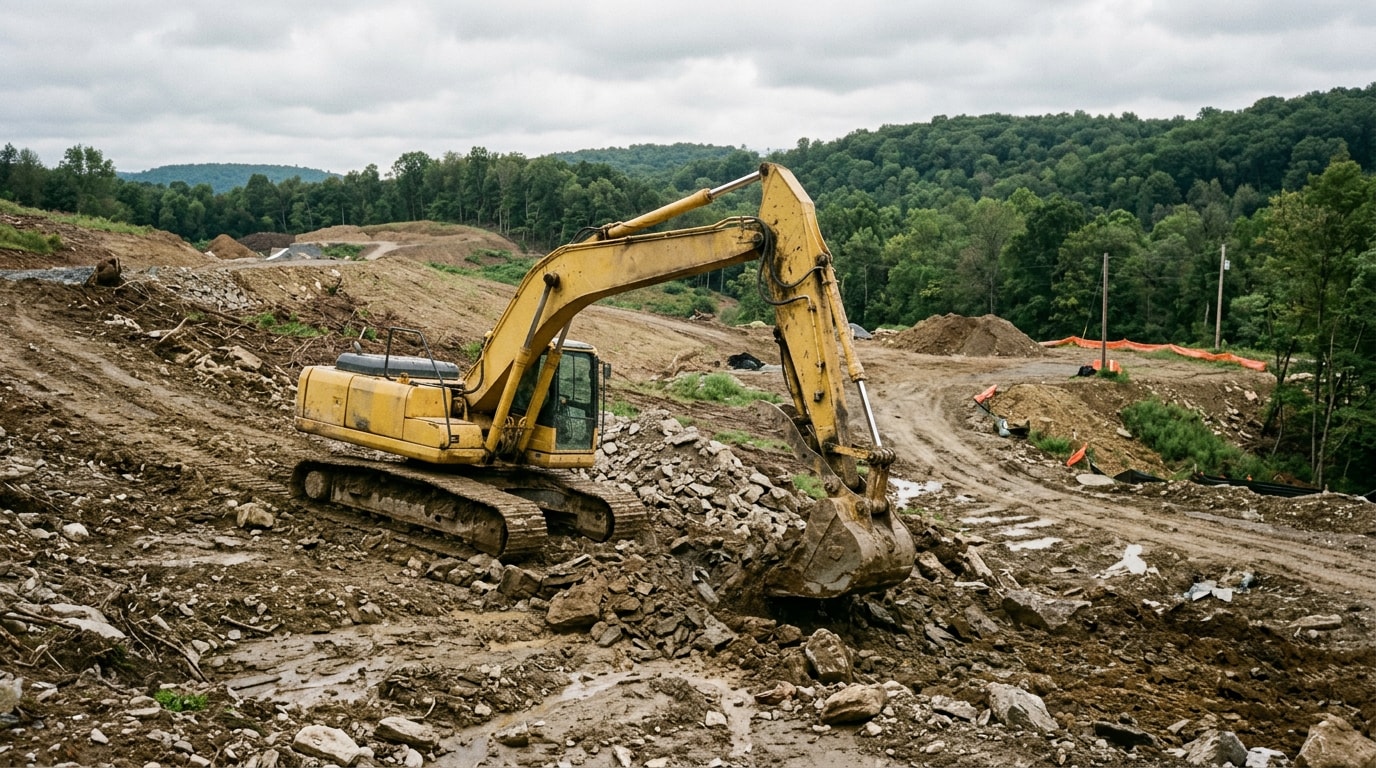
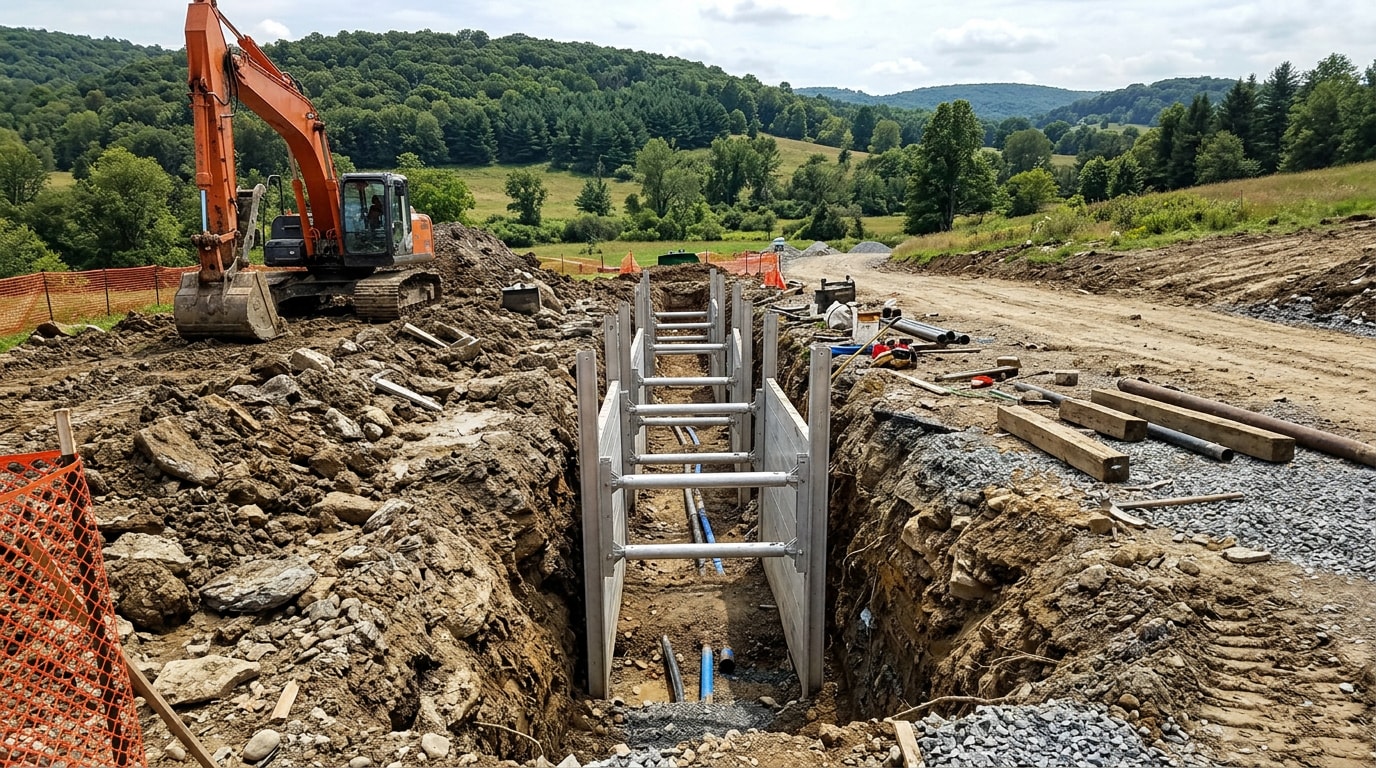
That includes clearing brush and trees from the access route so a drill rig can physically reach the drilling site, grading a level, stable pad for the rig to set up on, and trenching the waterline that runs from the finished wellhead back to the house once drilling is complete. On wooded or sloped Armstrong County lots, that access work can take longer than the drilling itself.
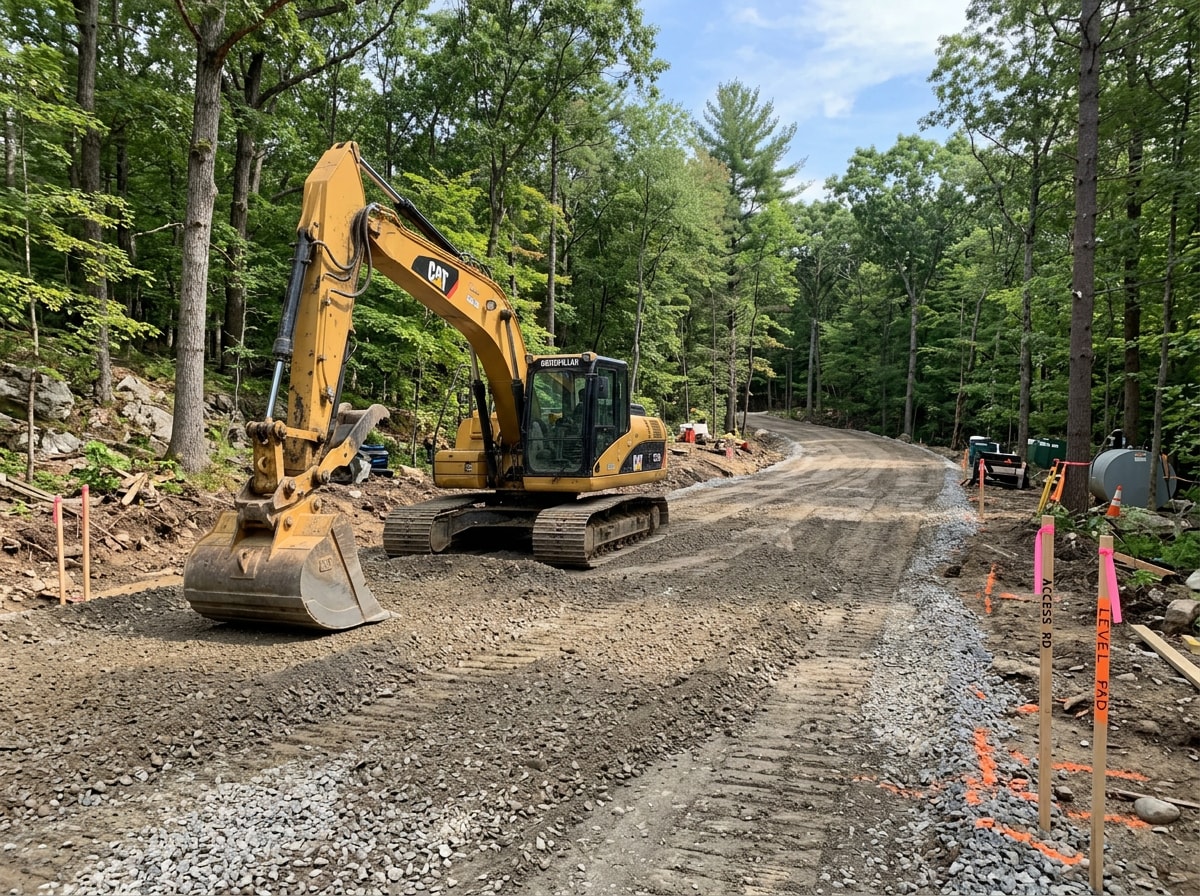
If your lot needs brush or tree clearing before a rig can get in, our Land Clearing and Site Preparation crews handle that groundwork. Once the well is in, we also cut the Trench Excavation and complete the Waterline Installation that connects the wellhead to your home's plumbing.
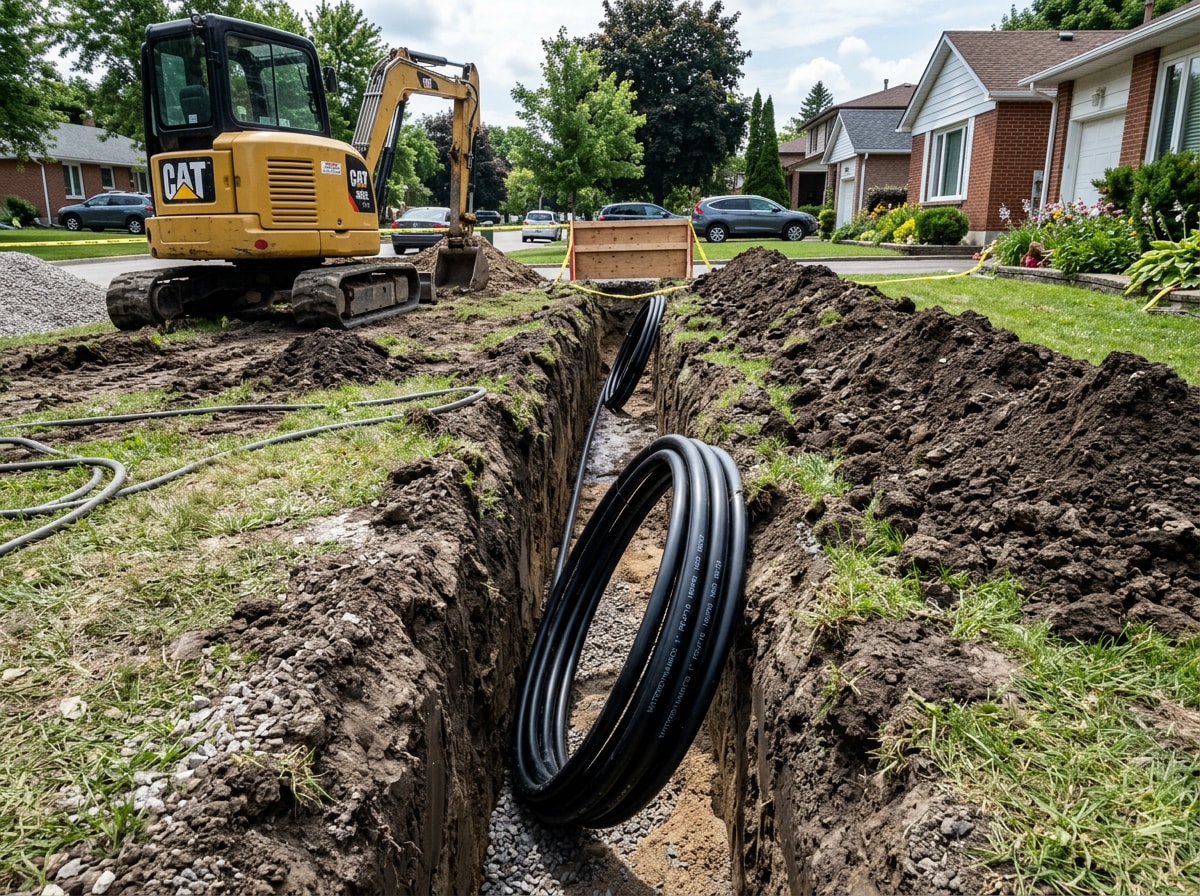
Ready to line up the access clearing, pad grading, or waterline trenching before your driller shows up? Get a free estimate from our excavation crew, and we'll coordinate timing so the site is ready when the rig arrives.
Who's Licensed to Operate a Well Digging Machine in Armstrong County?
Pennsylvania requires anyone drilling a well for someone else to hold a Water Well Driller license through the Department of Conservation and Natural Resources, under the state's Water Well Drillers License Act. Licensing costs a driller $60 per year plus $20 for each drilling rig permit, and it governs who may legally drill, not a specific construction standard.
Several drillers hold active state licenses that list Armstrong County in their service area, including Leighton Drilling Co, based in Kittanning and serving the county directly, along with regional outfits like Meinert Well Drilling, Myers Water Wells, and Natcher Drilling, which cover Armstrong among a wider multi-county footprint. Licensing and service areas change, so confirm current status before signing anything.
The PA DCNR Licensed Water Well Drillers database lets you search by county and pull a contractor's license number, services offered, and counties served directly from the state record. Pennsylvania's licensing rules are spelled out in 17 Pa. Code Chapter 47, including the requirement that drillers keep a well record for at least 10 years and file a copy with both the state and the well owner.
Communities We Support Throughout Armstrong County
Our site-prep and excavation crews work alongside well drillers serving towns throughout the county, including Kittanning, Ford City, Worthington, Elderton, Rural Valley, Dayton, Sarver, Freeport, and Apollo. If your property sits closer to the Westmoreland or Butler county line, we also cover those areas directly through our Westmoreland County and Butler County service pages.
For the full scope of what we handle locally, visit our Armstrong County, PA service area page, or browse our Excavation Service category to see every site-prep option available before your well goes in.
If you're coordinating a new well alongside a larger build, it's also worth reading our guide on construction project management services in Armstrong County, which covers how to sequence site work like drilling, grading, and utility trenching without one contractor holding up another.
FAQ
How deep are wells in Armstrong County, PA?
Wells here have a median depth of 125 feet, with most falling between 80 and 203 feet. Wells drilled since 2016 trend shallower, with a median around 90 feet.
How much does it cost to drill a well in Armstrong County, PA?
At the local median depth of 90 feet, expect $2,250 to $5,850 for drilling and casing alone, or $5,400 to $9,000 for a complete system with pump and pressure tank. Deeper wells cost proportionally more.
What type of well digging machine is used in Western Pennsylvania?
Most drillers use rotary rigs, either mud rotary or air rotary, because they cut through bedrock quickly. Cable-tool percussion rigs are slower but still used in certain rock conditions where rotary drilling fluid isn't ideal.
Do I need a permit to drill a well in Pennsylvania?
Pennsylvania doesn't require a statewide residential well permit, only a licensed driller. Some townships add their own local permit requirements, so check with your municipality before drilling starts.
What's the difference between a drilled well and a dug well?
A drilled well uses rotary or cable-tool equipment to reach deeper, more reliable aquifers. A dug well is an older, shallow, hand-excavated well that's generally less protected from surface contamination.
Does Adirondack Land Management drill water wells?
No. We handle the excavation side of a well project, including access clearing, pad grading, and trenching the waterline from the wellhead to your house. For the actual drilling, you'll need a PA DCNR-licensed water well driller.
How do I verify a well driller's license in PA?
Search the contractor's name or license number in the PA DCNR Licensed Water Well Drillers database. Confirm Armstrong County is listed in their current service area before signing a contract, since service areas can change year to year.
Have questions about site prep for your well project, or need a trench dug for the waterline once drilling wraps up? Visit our homepage to see our full range of excavation and site-prep services, or get a free estimate and we'll walk your property before the rig ever shows up.