Trenching and shoring in Armstrong County, PA is the difference between a utility trench that closes out safely and one that makes the news. Local clay, sandstone, and old mine-affected ground mean a trench that looks stable at the surface can shift fast once you're a few feet down. This guide walks through the OSHA depth rules, soil types, and shoring equipment that apply before anyone steps into a trench.
What Is Trench Shoring, and Why Armstrong County Trenches Need It
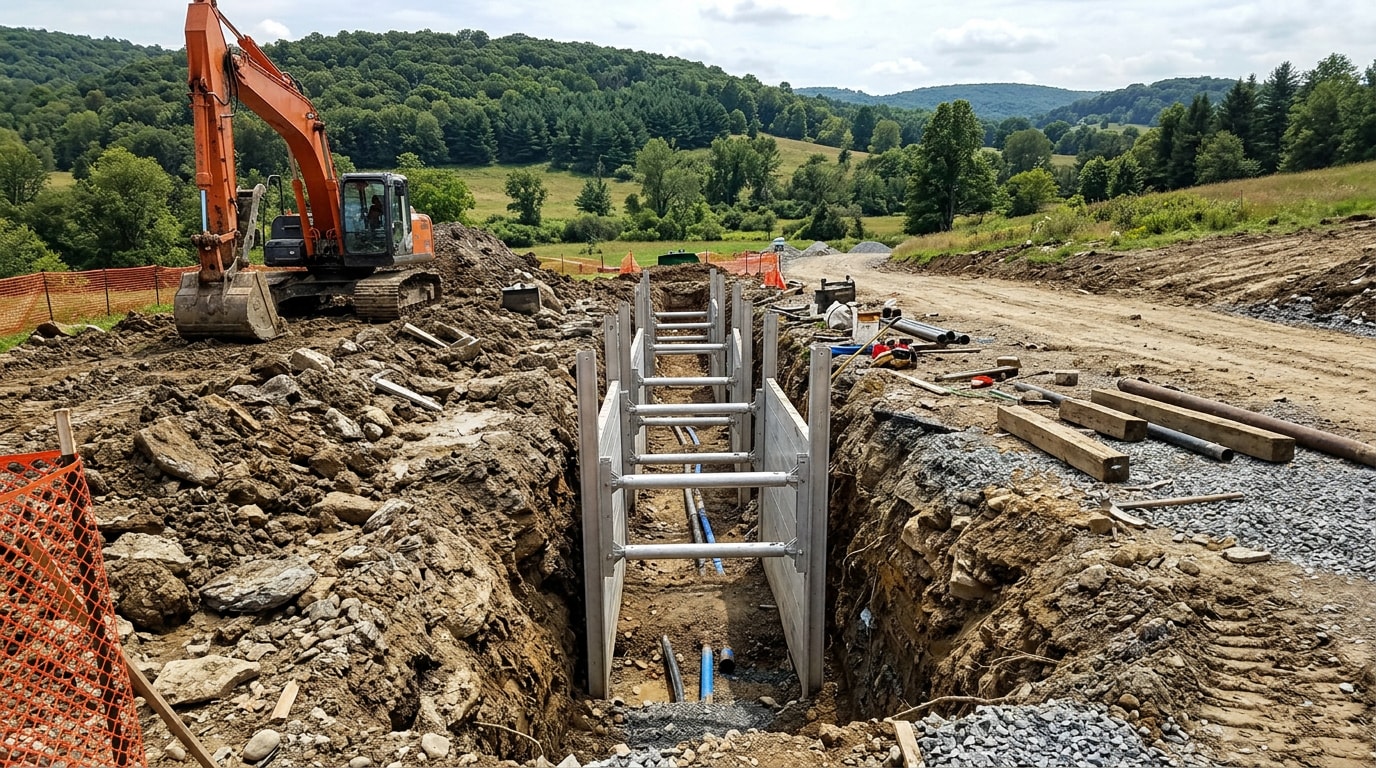
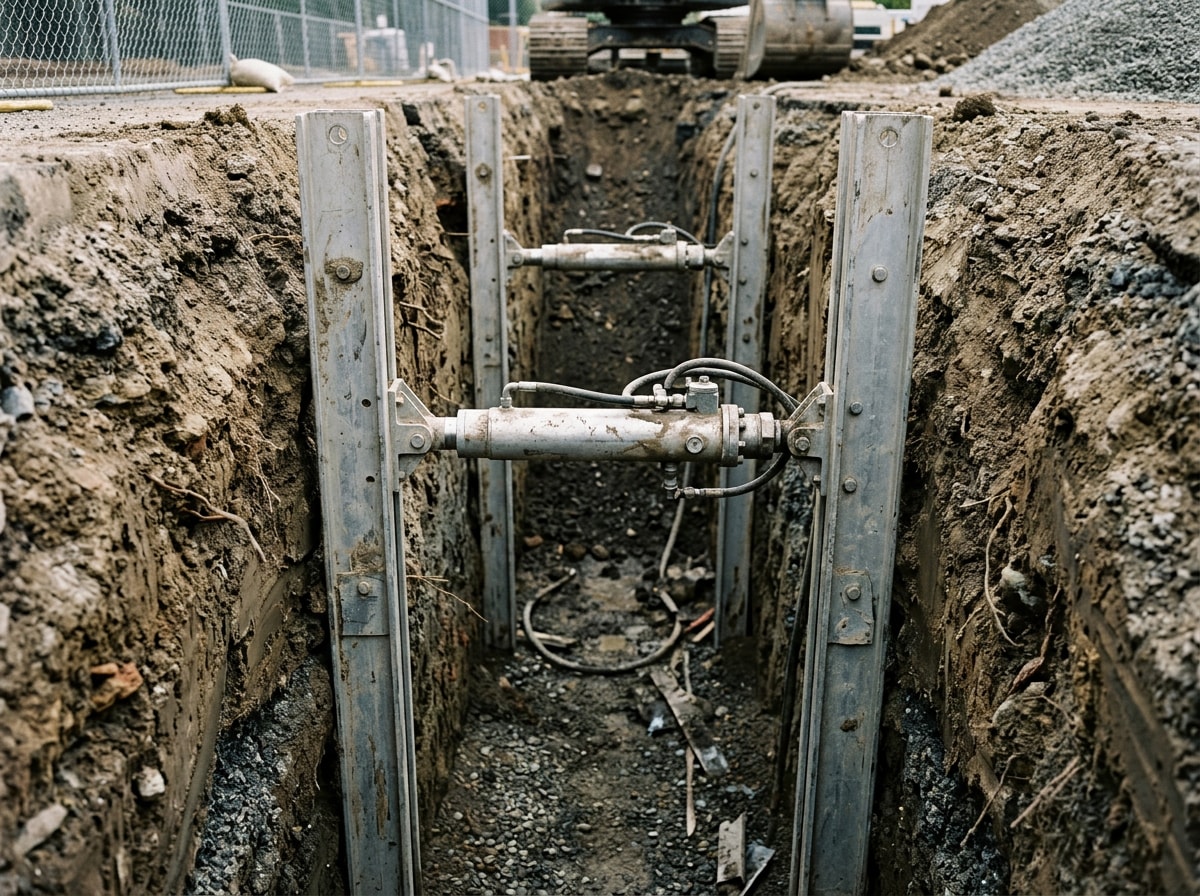
Trench shoring is a support system, built from hydraulic jacks, timber, or metal panels, that braces the walls of a trench to keep soil from collapsing inward. It's separate from the digging itself; shoring is the protection layer that makes the excavation safe to work in once it's open.
From 2000 to 2009, 350 workers died in trenching or excavation cave-ins, an average of 35 fatalities per year , and most collapses happen in seconds with no warning sign beforehand. That's exactly why protective systems aren't optional once a trench reaches a certain depth.
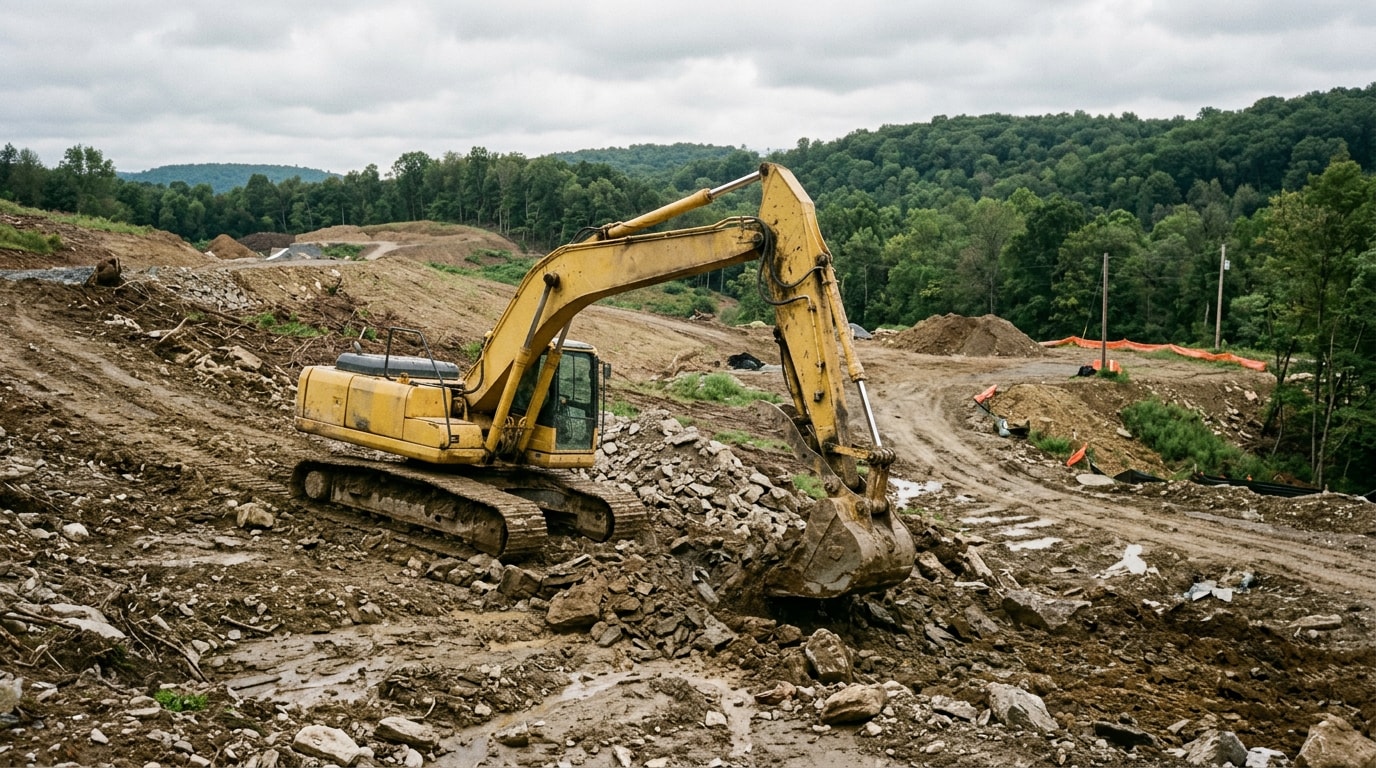
Across Armstrong County, this comes up constantly on waterline, gas line, and sewer line trenching, as well as French drain installation on sloped or rocky lots where soil behaves unpredictably. Crews working trench excavation projects here see the soil variability firsthand: ground that reads like stable clay at the surface can turn to loose, previously disturbed fill within just a few feet.
OSHA Depth Rules: The 5-Foot and 20-Foot Thresholds
Federal rules set clear depth triggers for when protection becomes mandatory, and they apply the same way in Armstrong County as anywhere else in the country.
Trenches 5 feet deep or greater require a protective system unless the excavation is made entirely in stable rock, and if less than 5 feet deep, a competent person may determine that a protective system is not required . At the other end of the scale, trenches 20 feet deep or greater require that the protective system be designed by a registered professional engineer or be based on tabulated data prepared and/or approved by a registered professional engineer .
Rather than treating these as two isolated facts, it helps to work through the decision in order:
- Check the trench depth.
- Classify the soil.
- Select a matching protective system.
- Inspect it before anyone enters.
Skipping a step in that sequence is usually where safety breaks down on real job sites.
Soil Classification: OSHA Types A, B, and C
OSHA groups soil into three categories based on how well it holds together, and this classification determines which protective systems are even allowed for a given trench.
| Soil Type | General Description | What It Usually Means for Shoring |
|---|---|---|
| Type A | Most stable (intact clay, hardpan) | May allow steeper slopes or lighter shoring, but still requires a protective system past 5 feet |
| Type B | Moderately stable (angular gravel, silt) | Typically needs shoring, shielding, or a less steep slope than Type A |
| Type C | Least stable (submerged soil, previously disturbed fill, sandy soil) | Almost always requires shoring or a trench box; sloping alone is rarely enough |
A competent person has to classify the soil before any shoring or shielding is chosen; guessing isn't an acceptable substitute. Much of Armstrong County sits on clay and sandstone-derived soils, and parts of the county have terrain shaped by past coal mining activity, which can leave inconsistent or previously disturbed soil pockets below the surface. Rocky, sloped lots common in the region also complicate a straightforward soil read, so ground that looks Type B at the surface can behave like Type C once the trench deepens.
When Does Shoring Need to Be Designed by an Engineer?
Most residential and utility trenches in Armstrong County stay under 20 feet, which means they can typically rely on manufacturer tabulated data rather than a custom engineering design. Tabulated data is pre-approved information, including load charts, configurations, and limits, supplied by the equipment manufacturer for a specific shoring product.
Once a trench passes 20 feet, or site conditions fall outside what the tabulated data covers, a registered professional engineer has to sign off on the protective system before work continues.
Types of Trench Shoring Systems
Shoring equipment isn't one-size-fits-all. The right choice depends on soil type, trench depth, and what the site allows for access and space.
- Timber shoring uses wood planks and braces. It's the traditional method and still shows up on smaller or irregular trenches where standard panels don't fit well.
- Aluminum hydraulic shoring uses aluminum or steel supports with hydraulic cylinders. It's become the more common choice for shallow-to-mid-depth utility trenches, including waterline and sewer line work on residential and small commercial sites, because it installs quickly and adjusts to slight depth changes.
- Pneumatic shoring relies on compressed air rather than hydraulic fluid to set and release supports, serving a similar role to hydraulic systems.
- Trench boxes (shields) are a related but different category covered below.
Trench Shoring vs. Trench Shielding (Trench Boxes)
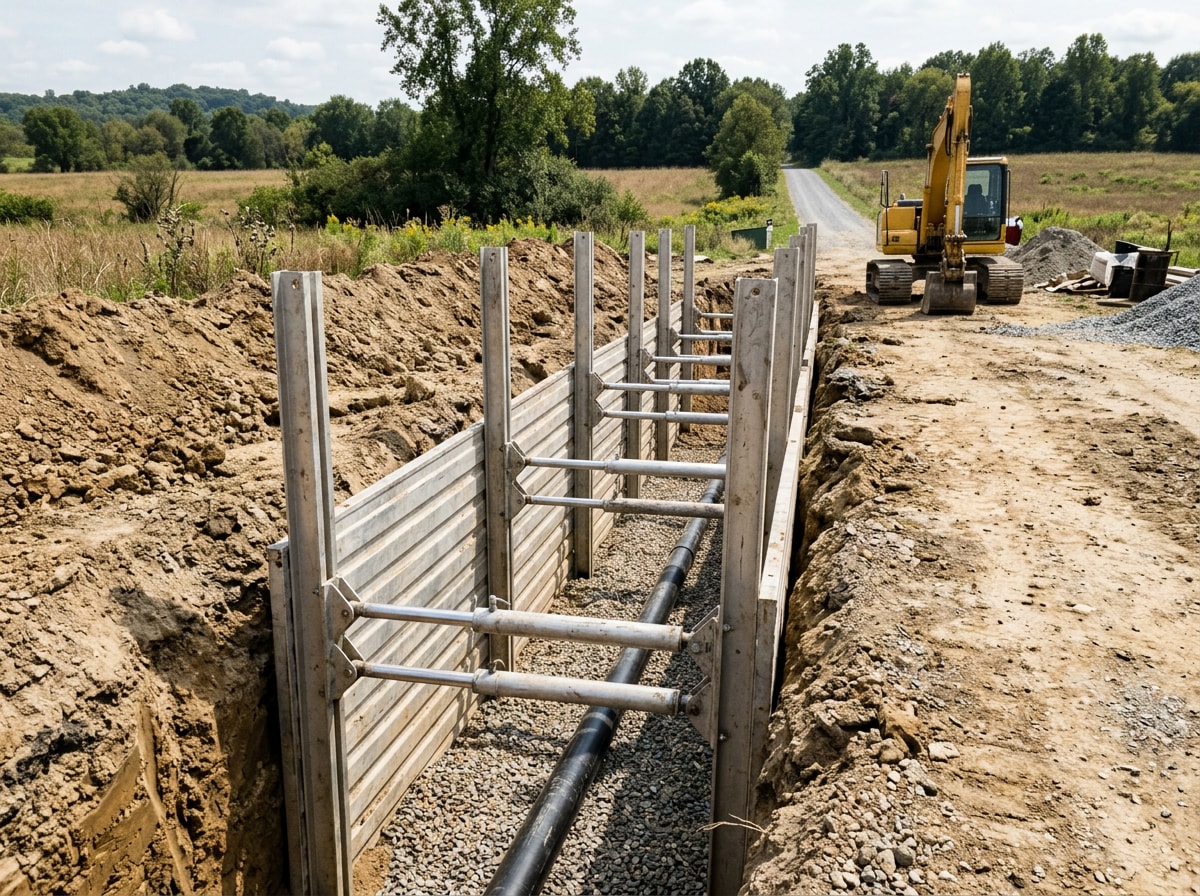
Shoring and shielding both protect workers, but they work in fundamentally different ways. Shoring actively braces the trench walls to prevent soil movement in the first place, while a trench box doesn't stop the walls from moving; it simply protects anyone inside if a collapse occurs.
Both are recognized protective systems under OSHA's trenching standard, but they're selected differently depending on soil conditions, trench depth, and how much the crew needs to move along the excavation. A trench shield is often faster to reposition on long utility runs, while shoring tends to suit tighter or more irregular excavations where a box won't seat properly against the walls. Neither option is automatically better. The right call depends on the specific trench, and that's a judgment the competent person on site has to make.
The Competent Person's Role in Trench Shoring
Every trenching job needs a designated competent person, someone trained to spot hazards, classify soil, choose the right protective system, and who has the authority to stop work if conditions turn unsafe. This isn't an honorary title; it carries real responsibility.
Employers must ensure that a competent person inspects all excavations, adjacent areas, and protective systems daily for possible cave-ins, indications of failures in protective systems and equipment, hazardous atmospheres, and other hazardous conditions, including after rainfall, nearby vibration, or visible cracking in the soil.
Before You Dig: PA One Call Comes Before Shoring
Trench protection only matters once you know what's actually below grade. Homeowners and contractors must call 8-1-1 at least three business days before starting any digging or excavation project, as required by law . Skipping this step risks striking a gas, water, or electric line before shoring even becomes a question. On rural Armstrong County parcels with older or undocumented utility runs, this call matters even more than it does on a typical in-town lot.
How to Choose the Right Trench Shoring System
Picking a system comes down to a handful of practical factors: trench depth and width, soil classification, how long the trench will stay open, nearby structures or traffic, and whether groundwater or seepage is an issue.
In Armstrong County, those factors often get more complicated than a flat, dry lot would suggest:
- Sloped or rocky terrain can change soil behavior within just a few feet of depth.
- Rural sites may call for longer open trench runs for waterline or septic work.
- In-town lots often add tighter clearances near foundations, sidewalks, or existing utilities.
- Variable clay-and-rock soil across the county means a system that worked on one property may not fit the next.
This is part of why drainage and utility installation for waterlines, gas lines, and sewer lines is typically scoped site by site rather than quoted from a generic template. If you're planning a trench on a sloped or rocky Armstrong County lot, get a free estimate before finalizing a protective system, so depth, soil, and equipment all get checked together instead of one at a time.
If your project also involves drilling a well, our well digging machine guide covers depth and site-prep factors that overlap with trench planning. You can see more of how this plays out across different site types on the homepage and the Armstrong County service area page.
FAQ
Is Shoring Always Required for a Trench Excavation?
No. Shoring is just one of several acceptable protective systems, alongside sloping, benching, and shielding. Some form of trench protection is required once an excavation reaches 5 feet deep, unless it's cut entirely into stable rock.
At What Depth Does a Trench Require Shoring or Another Protective System in Armstrong County?
Five feet. The same federal threshold applies statewide: once a trench hits 5 feet deep, a protective system is required unless the excavation sits entirely in stable rock.
Who Is Allowed to Classify Soil on a Trench Job?
Only a designated competent person can classify soil for the purposes of selecting a protective system. This isn't a guess made by whoever is on site that day; it requires specific knowledge of soil behavior and OSHA's classification criteria.
What's the Difference Between Shoring and a Trench Box?
Shoring actively braces the trench walls to stop soil movement. A trench box doesn't stop the walls from moving; it shields workers inside the trench if a collapse happens. Both are acceptable protective systems depending on site conditions.
Can Shoring Be Handled Together With the Excavation?
Yes. Shoring is typically installed as digging progresses rather than as a separate phase afterward. Using one contractor for both the excavation and the protective system installation usually keeps the sequencing tighter and reduces coordination gaps between crews.
Is Trenching and Shoring a Separate Line Item on a Project Estimate?
Generally, protective systems are priced as part of the overall trenching and excavation scope rather than billed as a standalone item, though this varies by project and site conditions. It's worth asking how a given excavation estimate accounts for shoring before work begins.