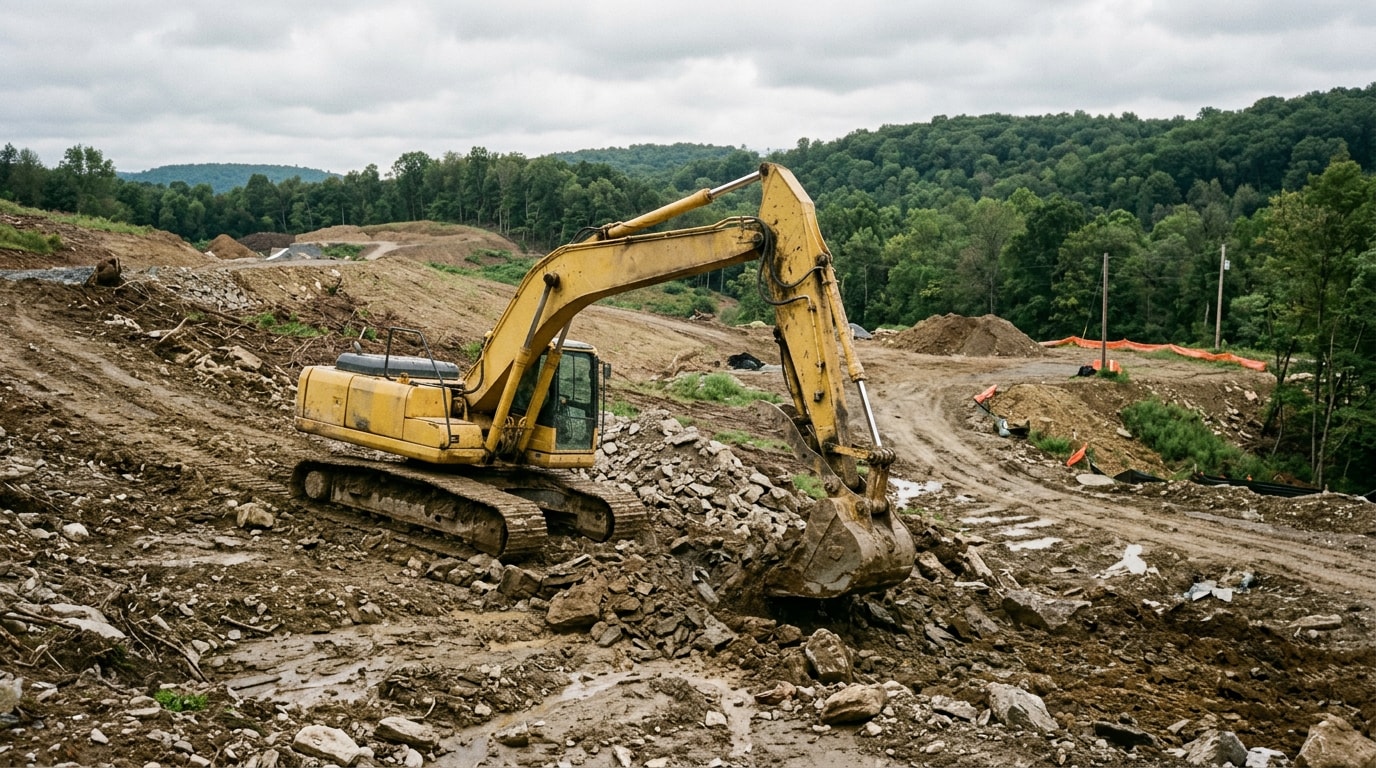

Footing excavation in Allegheny County, PA has to clear a hurdle most digging jobs skip: frost-depth and permit rules that change from one municipality to the next across the county's 130 local jurisdictions. Dig a trench a few inches too shallow and a failed footing inspection can stall an entire build for weeks. Here's what actually happens between the first scoop of dirt and a poured, inspected footing, and where homeowners most often get tripped up.
What Footing Excavation Covers on an Allegheny County Property
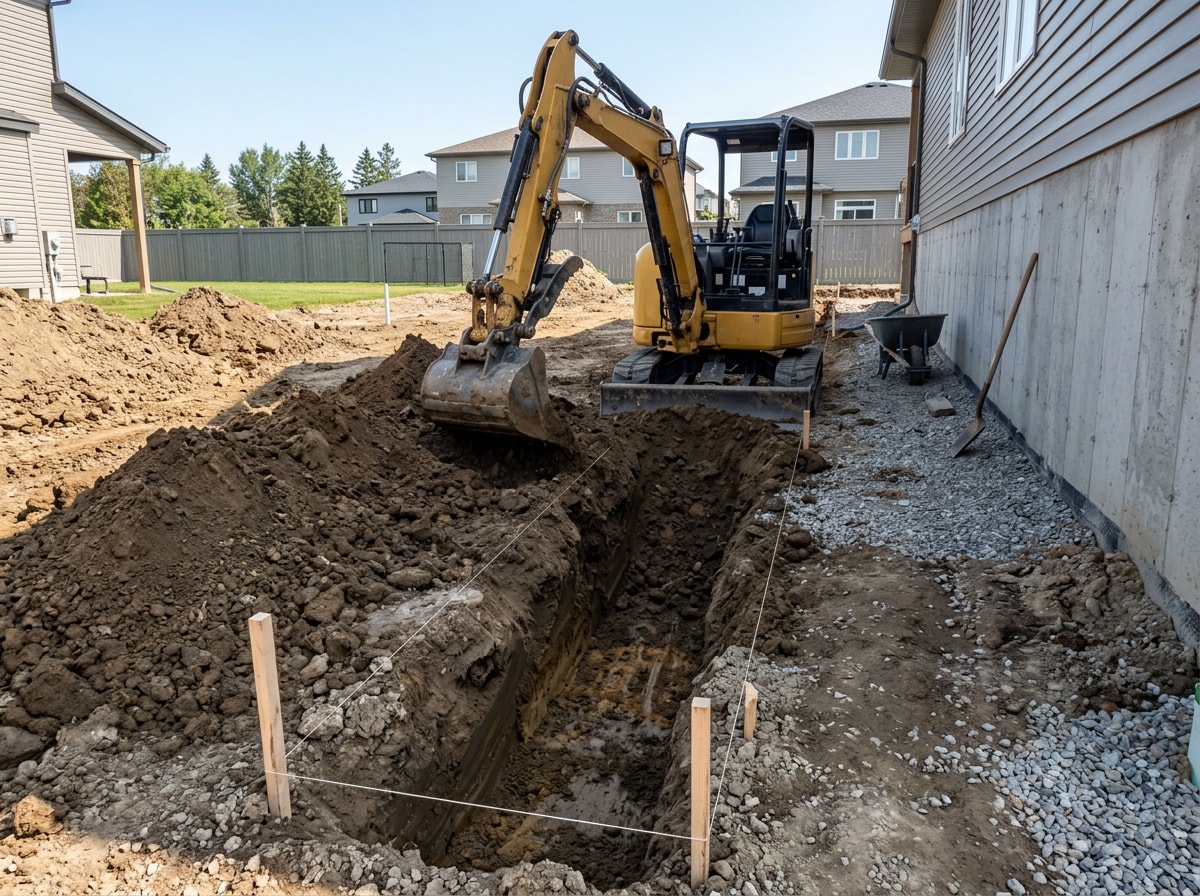
Footing excavation is the trench dug around the perimeter (and sometimes the interior load points) of a planned structure, sized and set deep enough to carry the building's weight down to stable soil. It's rarely a standalone job. On most residential projects it's one step inside a larger sequence that also includes clearing, grading, and utility work.
A hillside lot in a community like Mt. Lebanon presents different soil and slope problems than a flat parcel out toward Moon Township or a tight city lot squeezed between two houses in Pittsburgh. Dense boroughs with narrow lots and shared property lines usually call for smaller equipment and tighter staging. Suburban and semi-rural townships allow larger machinery but often bring more variable soil and drainage conditions. The right approach depends on the specific property, not a one-size-fits-all routine.
Permits and Utility Locates Before Anyone Digs
Before equipment touches the ground, two things need to happen: confirm whether the project needs a permit, and get underground utilities marked.
In the City of Pittsburgh, site grading work generally needs a Land Operations Permit once it exceeds 50 cubic yards , or when the project involves work on a steep slope, a utility easement, or a drainage channel. Other municipalities across the county set their own thresholds under their local grading ordinances, so a project that's exempt in one township can require sign-off in the next one over.
| Situation | Typical threshold | What it usually means |
|---|---|---|
| Small footing trench for a deck or shed | Under 50 cubic yards, outside the right-of-way | Often permit-exempt, but confirm locally |
| Footing/grading for an addition or garage | 50+ cubic yards, or on a steep slope | Land Operations Permit or local grading permit |
| Work near a public sewer, water main, or drainage channel | Any volume | Permit required regardless of cubic yards |
Pennsylvania law also requires anyone digging, including homeowners, to contact PA One Call at least three business days before breaking ground so utility lines get marked. Homeowners and contractors must call 8-1-1 at least three business days before starting any digging or excavation project, as required by law, and PA One Call then alerts facility owners of the intent to dig so they can mark their buried lines. Skipping this step isn't just risky, it's a legal liability if a line gets struck.
Get a free site estimate and we'll confirm permit status and utility locates as part of the first site visit, before any digging starts.
Frost Depth: Why the Same Footing Plan Doesn't Work Countywide
A proper footing has to sit below the local frost line so it rests on soil that stays stable through winter freeze-thaw cycles, rather than soil that expands and contracts as it freezes. Pennsylvania's Uniform Construction Code sets the statewide framework, but frost depth itself is a local call. Pennsylvania's statewide building code, generally known as the Uniform Construction Code (UCC), has to be followed by builders in the state.
Across Pennsylvania, required footing depths generally fall somewhere in the 30 to 42-inch range depending on the jurisdiction's adopted table and local soil and climate data. That range is wide enough that a number pulled from a neighboring township's permit shouldn't be assumed to apply to your own lot. The only reliable way to confirm the exact depth is to check with the local building department before the trench is dug, not after.
Many foundations also include a keyway, a groove formed into the top of the footing, to lock the foundation wall in place once it's poured. Getting the depth and the keyway right the first time avoids a second trip from the inspector.
The Footing Excavation Process, Step by Step
Once permits and locates are squared away, the physical dig follows a fairly consistent sequence regardless of which part of the county it's in:
- Clearing removes topsoil, roots, and debris from the build area.
- Grading sets the working elevation and controls where surface water moves once the site is disturbed.
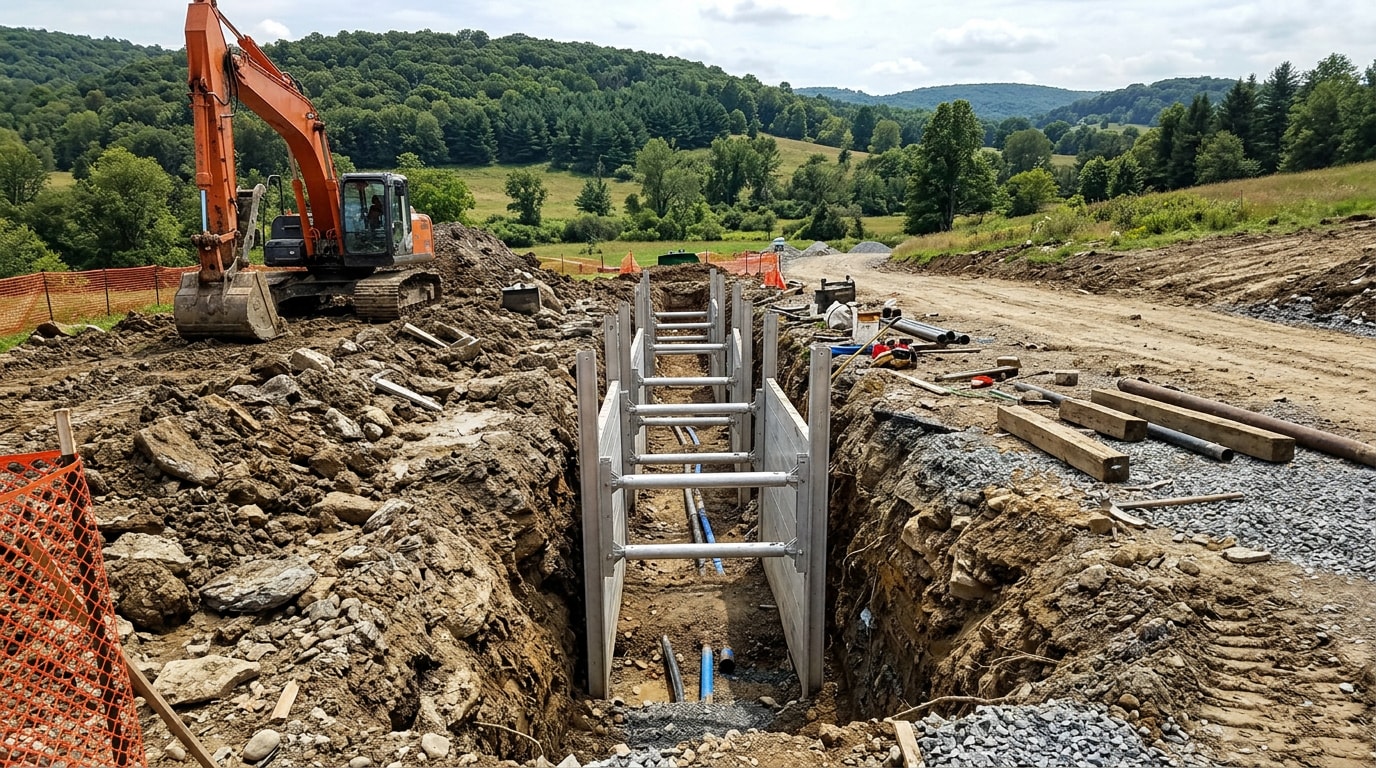
- Trenching cuts the footing line to the exact width and depth called for in the plans, below the local frost depth.
- Compaction packs the trench bottom so it won't settle unevenly once weight is added.
- Inspection by the local code official confirms depth, dimensions, and soil conditions before anything gets poured.
Skipping or rushing any one of these steps tends to show up later as cracking, settling, or water pooling against the foundation. On a basement excavation, the scope grows considerably since crews remove several feet of soil across the entire building footprint, rather than just a narrow perimeter trench, and shoring and drainage planning become part of the dig itself.
Forms, Rebar, and the Concrete Pour
Once the trench is excavated, inspected, and compacted, wall forms go up and rebar placement begins. Steel gives the footing its tensile backbone, since concrete handles compression well on its own but needs reinforcement to resist cracking under lateral soil pressure. Rebar needs to sit fully surrounded by concrete, not touching the forms or trench walls.
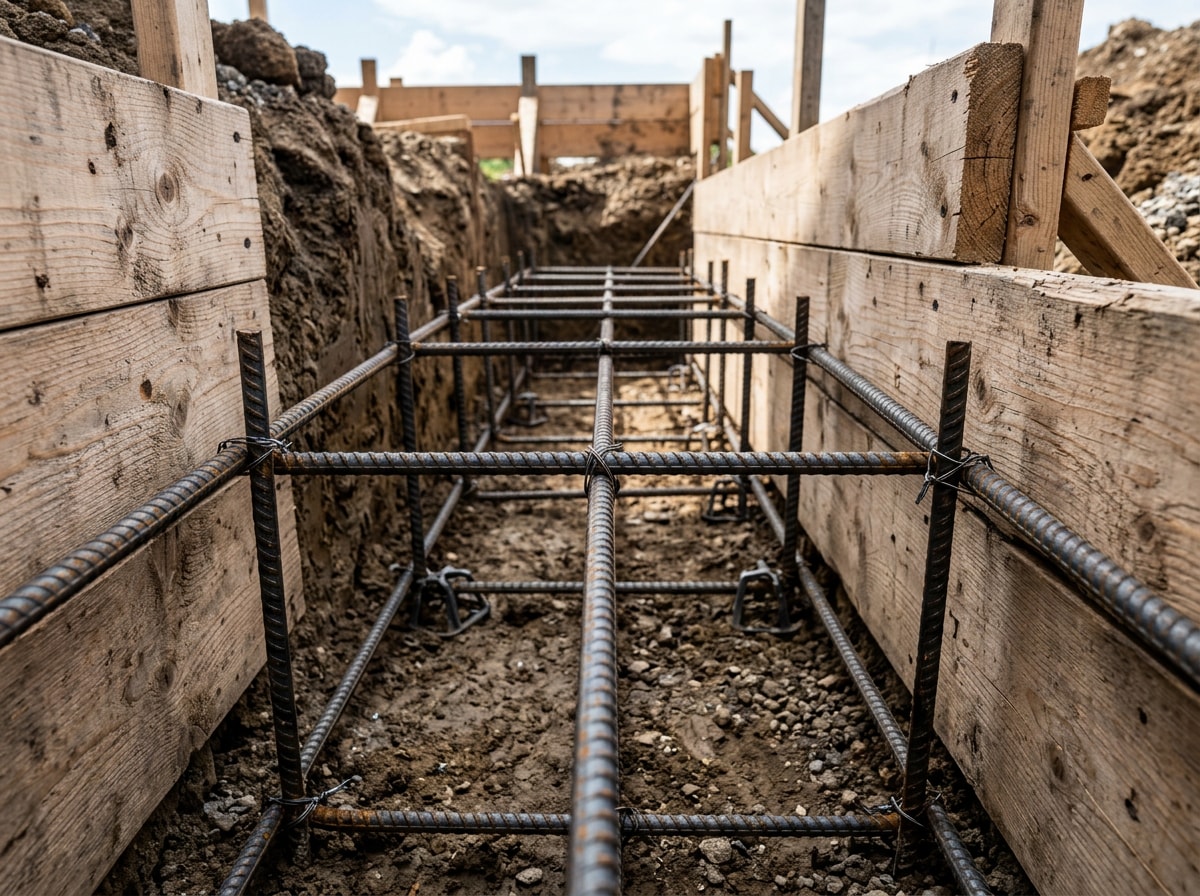
The pour itself moves fast. Crews work against the clock once the truck arrives, since concrete starts setting within a limited window, and proper vibration during placement drives trapped air pockets out of the mix. Skipping that consolidation step leaves voids inside the footing that weaken it even if the surface looks fine afterward.
Curing isn't the same as drying. It's a slow chemical reaction that continues for weeks after the surface feels solid, and it's what gives the concrete its final strength. Foundation walls typically need to wait for a set curing period before they're built on top of the footing. Rushing that timeline can weaken the footing-to-wall connection and leave the footing more likely to crack once it's carrying load.
Why Footing Excavation Isn't a DIY Project
Most municipalities require a footing inspection before concrete can be poured, and an inspector checking depth, dimensions, and rebar placement has the authority to halt work that doesn't meet code. A footing that's out of level throws off every wall and floor built above it, and a footing set above the frost line can heave as the ground freezes and thaws.
I've been running excavation crews across Western Pennsylvania since founding Adirondack Land Management in 2019, after years working bridge construction, commercial building, and utility pipelining. In practice, the jobs that go sideways almost always trace back to a footing depth that didn't match what the local code official actually enforces, not a flat statewide number. Confirming that detail with the municipality before digging has saved more than one project from a failed inspection.
A contractor who regularly works Allegheny County terrain can usually tell you which neighborhoods sit on clay-heavy soil prone to holding water, which drain fast, and how a stretch of wet weather is likely to affect the schedule, before the first shovel moves. That local read affects footing depth, trench slope, and whether extra compaction or stone base is needed before forms go in.
For related groundwork once the footing is in, our Site Preparation, Trench Excavation, and Land Grading pages cover the stages that typically surround a footing dig. You can also see recent work on our Projects page.
Excavation Services Across Allegheny County
Beyond footing work, most residential projects touch a few related tasks on the same site: land clearing, stump removal, utility trenching, soil hauling, or drainage improvements. Footing excavation is usually one line item inside that larger scope rather than a standalone task.
If a project also involves drainage planning, our guide on pond excavation contractors in Allegheny County covers a related type of large-scale digging that follows similar grading and drainage logic. For the full range of excavation work we handle locally, visit our Excavation Service page or our Allegheny County service area page.
Ready to get a footing depth and permit check for your property? Request a free estimate and we'll walk the site with you before anything is scheduled.
FAQ
How deep does a footing excavation need to be in Allegheny County, PA?
It depends on the municipality. Most jurisdictions in the region land somewhere between 30 and 42 inches below grade, but the exact figure comes from the local building department's adopted frost-depth table, not a single countywide number. Always confirm the specific depth with the municipality before digging.
Do I need a permit for residential excavation or grading in Allegheny County?
Many small projects, like digging a footing for a deck, are permit-exempt. In Pittsburgh, a Land Operations Permit is generally required once site grading exceeds 50 cubic yards , or when work happens on a steep slope or involves a utility easement. Other municipalities set their own thresholds, so check with the local building department before work starts.
What's the difference between footing excavation and foundation excavation?
Footing excavation is a narrower trench dug along the perimeter (and sometimes interior load points) of a structure, sized for the footing itself. Foundation or basement excavation removes a much larger volume of soil across the full building footprint, often several feet deep, to create usable below-grade space.
How do you protect underground utilities during footing excavation?
Standard practice is to request utility locates through PA One Call before digging starts. Homeowners and contractors must call 8-1-1 at least three business days before starting any digging or excavation project, as required by law. Near shared property lines, extra care also goes into staging equipment and keeping excavated material contained to the work area.
How long does footing excavation take?
Timelines vary with site access, soil conditions, weather, and permit approvals. A straight run of good weather can move a small residential footing dig along quickly, but a precise window is usually only possible after a contractor has seen the site and confirmed permit status.
Are you licensed and insured to perform excavation in Pennsylvania?
Yes. Before hiring any excavation contractor, ask to see proof of insurance and confirm their state licensing, since footing excavation carries real risk to underground utilities, neighboring structures, and the crew doing the digging.
Learn more about our full range of groundwork on the Adirondack Land Management homepage.