Finding trustworthy remodeling house contractors in Jefferson County, PA, takes more than a search and a phone call. The contractor you pick will shape your budget, your timeline, and your stress level for months, long before the first wall comes down. This guide walks through the exact steps local homeowners use to vet, compare, and hire a remodeling contractor who fits their project and their property.

Verify PA HIC Registration, Insurance, and Licensing First
Do this before you fall in love with anyone's portfolio. Pennsylvania doesn't license general contractors at the state level, but it does require registration, and skipping this step is how homeowners end up with no recourse when a job goes sideways.
Any contractor who performs at least $5,000 worth of home improvements per year must register with the Attorney General's Office . That's a different number than the one that triggers the written-contract requirement: Pennsylvania law requires written contracts between the contractor and consumer when the price of the project exceeds $500 . Mixing up those two thresholds is a common and costly misread of the law.
| Requirement | Threshold | Enforced By |
|---|---|---|
| Written contract required | Project price over $500 | PA Attorney General, Bureau of Consumer Protection |
| HIC registration required | $5,000+ in home improvement work per year | PA Attorney General, Bureau of Consumer Protection |
| Building permit required | Structural, electrical, plumbing, or mechanical changes | Local municipality under the PA Uniform Construction Code |
As of 2026, verification got easier: effective April 24, 2026, the online registration system is operational, and contractors may now register, renew, or update their registration online . That said, a registration number alone isn't proof of competence. A license requires passing exams and proving experience, while a registration only means the contractor filed their business information with the Attorney General's office and paid a fee , and it doesn't verify skills or confirm insurance.
That's why you still need to independently confirm general liability insurance and workers' compensation coverage directly with the contractor, and ask to see a current certificate. Request a free estimate once you've confirmed both pieces are in order, not before.
Start with Referrals and Local Word of Mouth
Begin your search by asking people you trust. Friends, family members, and neighbors who've recently completed similar projects can tell you about communication, reliability, and the quality of the finished work. Personal referrals carry extra weight because you can see the results firsthand instead of relying on a stranger's online review.
Once you have a few names, widen the net. In Jefferson County, local lumberyards, hardware suppliers, and regional home builders associations are worth a call too. They often know which crews show up on time and do solid work. Local word-of-mouth usually narrows the list faster than a generic online search.
See our Jefferson County service area to confirm your township is covered before you go further.
Narrow Your List: Service Area and Project Specialty
Not every contractor who turns up in a search actually serves Jefferson County, and not every one handles the exact type of remodel you're planning. Filter your list using two questions before you book consultations.
Do they serve your area? Some remodeling contractors work within a single county, while others cover a wider multi-county region. Rural townships and smaller boroughs aren't always covered by contractors based further out, so confirm your home actually falls inside their stated service footprint.
Do they specialize in your project type? A crew that excels at additions might not have deep experience with kitchen remodeling, and a bathroom specialist may not be the right fit for a whole-home remodel. A proven track record in your specific project type matters because experienced contractors have already solved the problems your project is likely to raise, like outdated plumbing, uneven subfloors, or load-bearing walls common in Jefferson County's older housing stock.
Review the Portfolio Carefully
A contractor's portfolio should show more than pretty photos. Look for:
- Consistency in quality across multiple projects
- Some variety, or a clear area of specialization
- Experience with homes similar in age and layout to yours
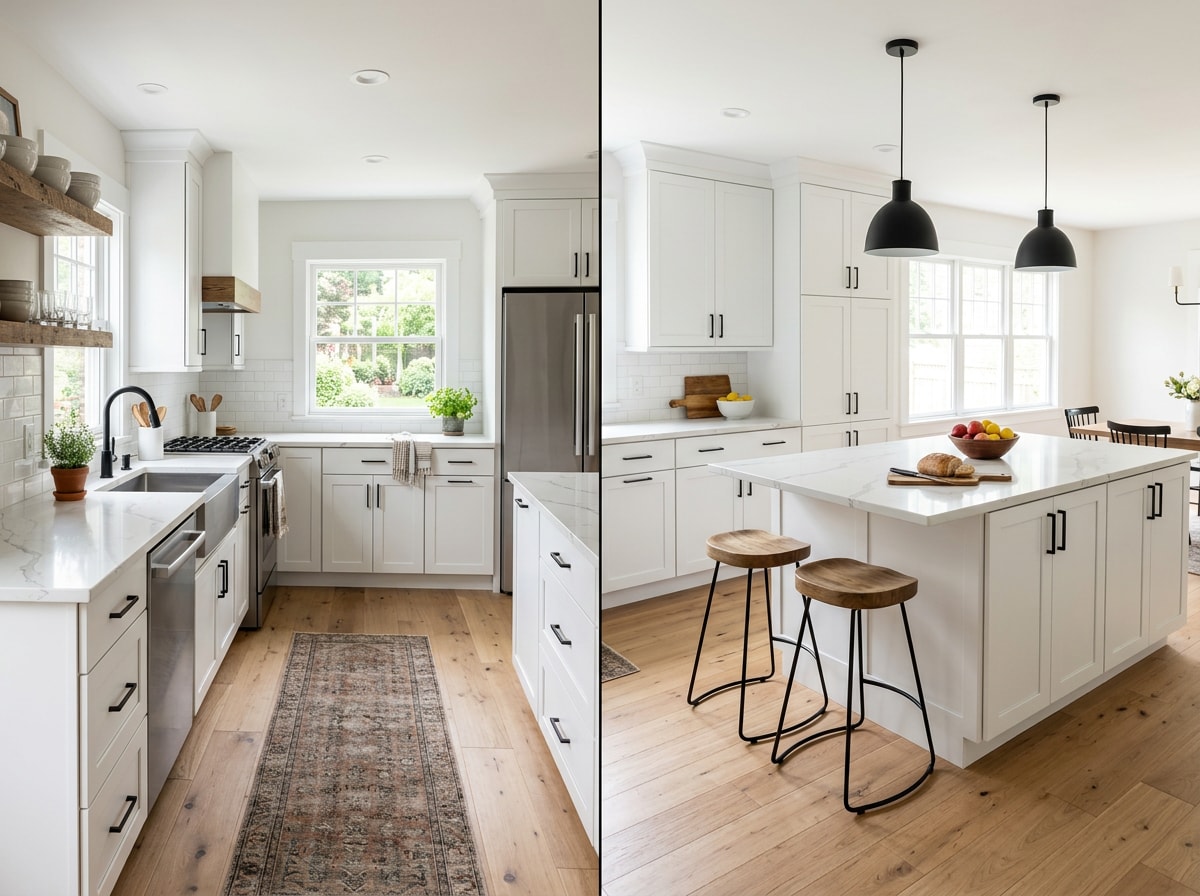
The strongest portfolios go further than before-and-after photos. They include short case studies that explain the design challenge, the solution the contractor proposed, and how the finished project met the homeowner's goals. That context tells you more about problem-solving ability than a photo gallery alone. Browse our completed projects for an example of what that documentation should look like.
Check Online Reviews, Read Between the Stars
Pull up reviews on Google, Houzz, Angi, and Yelp, and don't stop at the star average. Read the comments for details on communication, budget accuracy, timeline reliability, and how issues were handled when something didn't go as planned.
Look for patterns rather than isolated complaints. A high star average is a reasonable starting signal, but what reviewers consistently say about responsiveness, cleanup, or follow-through on punch lists tells you more than the number itself. One bad review buried among dozens of detailed positive ones is very different from a pattern of missed deadlines or ignored calls.
Evaluate Communication at First Contact
Your first conversation with a contractor tells you almost as much as their portfolio. Notice whether they responded promptly, answered your questions clearly, and seemed genuinely interested in your project rather than rushing to a quote.
Strong communication at the consultation stage is a reliable indicator of how the rest of the project will go. If a contractor is hard to reach or vague before you've signed anything, that pattern rarely improves once work begins.
Ask About Design-Build Capabilities
Some contractors handle construction only, while a design-build contractor manages everything from initial concept through final walkthrough under one roof. A design-build setup can simplify decision-making and cut down on the back-and-forth between separate designers and builders.
If design quality matters to your project, ask whether the contractor offers in-house design services or works with outside designers. Certified Kitchen and Bath Designer (CKBD) is an association certification available to practicing kitchen and bath designers who apply NKBA-recommended guidelines and drawing standards , and the Certified Master Kitchen & Bath Designer (CMKBD) recognizes extraordinary kitchen and bath experience and achievements . The NKBA certifications page outlines what each credential actually requires, which is a useful check against a contractor's design claims.
Where Site Work Often Hides Inside a Remodel
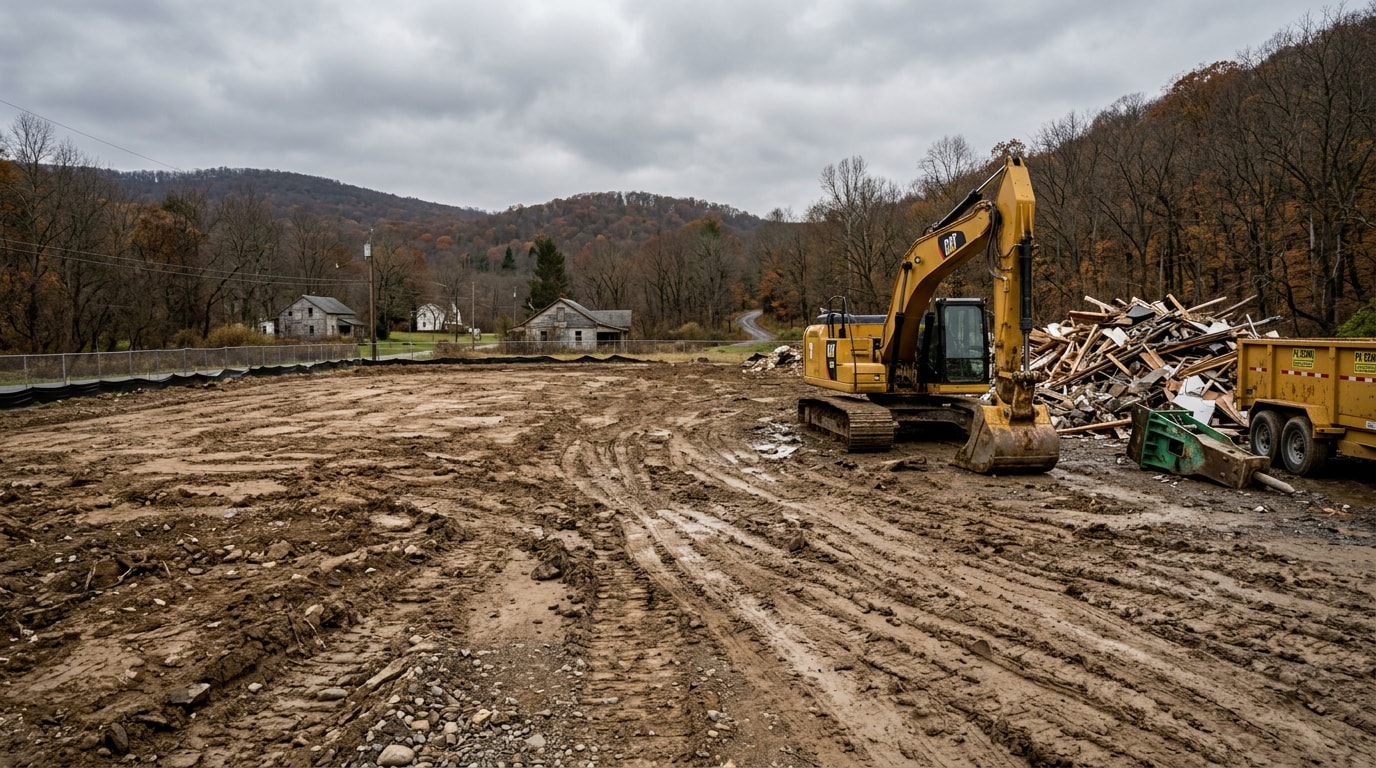
Here's something most hiring guides skip: a lot of "remodel" projects in Jefferson County aren't purely interior. Additions, sunrooms, mudroom bump-outs, and in-law suites usually need site prep before a framer ever shows up. Our crews get called in regularly after a homeowner has already hired a remodeling contractor, once that contractor realizes the project needs grading, a new trench for utilities, or drainage work to keep water away from the new footprint.
If your remodel includes any exterior footprint change, ask your contractor directly whether they handle this in-house or sub it out, and to whom. It affects both your timeline and your final bid. This is a step easy to miss until a permit reviewer or an excavator flags it mid-project. Related services worth asking about include site grading, trench excavation, and drainage system installation.
For a broader look at how site work and remodel timelines interact in neighboring counties, see our guide to site work contractors in Butler County.
Prepare the Right Questions for Your Consultation
Walk into your consultation with a clear list of questions:
- Are you licensed, registered, and insured, and can I see proof?
- Do you offer in-house design services, or work with outside designers?
- How do you manage budgets and prevent overruns?
- What does your process look like from contract to final walkthrough?
- How will we communicate during the project, and do you use project management software?
- Do you rely on subcontractors or an in-house crew?
- Have you worked in my municipality before, and do you know its permit process?
- What warranty do you provide on finished work?
Come prepared with your own details, too: your project goals, realistic timeline expectations, a budget range, and a few inspiration photos. The more specific you are upfront, the more accurate the contractor's answers will be.

Ready to talk through your project? Get a free estimate and we'll walk you through what site prep, if any, your remodel will need. You can also visit our homepage to see the full range of services we coordinate alongside local remodeling crews.
FAQ
How much does it cost to remodel a house in Pennsylvania?
Costs vary widely by project scope, materials, and how much of the existing structure changes. Kitchen and bathroom remodels typically range from the low five figures for cosmetic updates to well into six figures for full gut renovations. National benchmark tools like Remodeling magazine's Cost vs. Value report are a useful reference point for comparing project types, but average costs and typical recoup values for types of projects are presented by region and city , so a local bid from a Jefferson County contractor is always the more accurate number for your specific home.
Do I need a permit to remodel my house in Pennsylvania?
Yes, for almost any remodel involving structural, electrical, plumbing, or mechanical changes. The Pennsylvania Department of Labor & Industry enforces the Uniform Construction Code (UCC), which includes standards for building, plumbing, mechanical, electrical, energy conservation, and accessibility, and requires permits for most construction projects . Purely cosmetic work like painting usually doesn't require one, but permits are issued and inspected locally, so check with your township before assuming a project is cosmetic-only.
How do I find a reliable remodeling contractor near me?
Start with referrals from people you trust, then confirm the contractor serves your area and specializes in your project type. Cross-check their portfolio, read reviews for patterns rather than star counts, and verify their PA HIC registration and insurance before signing anything.
Do contractors need a license in Pennsylvania?
Pennsylvania doesn't license general contractors at the state level. Pennsylvania does not license general contractors at the state level; instead, it requires HIC registration for anyone doing $5,000 or more in home improvement work per year. Registration confirms a business filed paperwork and paid a fee. It does not test skill, so independent reference checks still matter.
What questions should I ask before hiring a remodeling contractor?
Ask about licensing and insurance, in-house design services, how they handle budgets and overruns, their typical project timeline, how they'll communicate during the job, and what warranty covers their finished work.
How many estimates should I get before choosing a contractor?
Most industry guidance recommends getting at least three estimates. Comparing multiple bids helps you spot unusually low quotes that may signal corner-cutting, and unusually high ones that may not reflect fair local pricing.
Adirondack Land Management coordinates site grading, drainage, and excavation work alongside remodeling crews throughout Jefferson, Clarion, Armstrong, and the surrounding counties. If your project includes any exterior footprint change, contact us and we'll help you map out the site-prep side before you finalize your contractor.